Link building is one of the oldest and most common methods of optimizing your website for search engine visibility, but not all link builders know how to get it right. In this article, we’ll look at some common link-building mistakes and the best ways to avoid them.
TL;DR
- Google flags patterns like link schemes, spam networks, and over-optimized anchor text as link spam
- Link-related issues typically appear as manual actions, algorithmic devaluation, or targeted ranking drops
- The safest strategy is structured link building: relevant donors, diversified anchors, gradual velocity, and continuous quality control
Google Toxic Backlinks Policy
When talking about bad link building, Google itself rarely uses the term “toxic backlinks.” In official documentation, the search engine talks about link spam and link schemes instead.
Basically, Google considers a backlink problematic when it exists primarily to manipulate rankings rather than to provide value to users.
As Google states in its documentation:
“Any links intended to manipulate PageRank or a site’s ranking in Google search results may be considered part of a link scheme.” (Google Search Essentials)
Google’s policies outline several patterns that may lead to algorithmic filtering or manual actions:
1. Paid links used purely to manipulate rankings
Google’s spam policies target links created primarily to influence rankings rather than provide editorial value. This usually includes links placed without contextual relevance, sold at scale across unrelated sites, or inserted purely to pass authority signals.
Google recommends marking advertising or sponsored placements with attributes like rel=”sponsored” or rel=”nofollow” to clarify their purpose.
2. Large-scale link exchanges
Reciprocal links between partners are normal. But excessive link exchanges (especially organized networks where websites systematically link to each other) can be treated as link schemes, which is bad news for SEO.
3. Automated link creation
Google flags links generated through automated tools or scripts. Examples include mass blog comment spam, automated forum profile links, large-scale directory submissions, or software-generated backlink campaigns.
4. Links from link farms
Links from websites built simply to pass authority signals are another common risk factor. Typical indicators include pages filled with outbound links, thin or automatically generated content, and networks of domains linking to the same targets.
5. Manipulative anchor text patterns
Over-optimized anchor text can also raise red flags. If a large share of backlinks uses identical keyword-rich anchors, the pattern may look artificial. Natural link profiles usually contain a mix of branded anchors, URLs, and descriptive phrases.
If you want a deeper explanation of how to identify and deal with problematic backlinks, see our guide on toxic backlinks.
That said, most of the time, Google just ignores suspicious links. But when the pattern looks manipulative at scale, rankings can drop, or a manual action may appear in Google Search Console.
Most Common Link Building Mistakes to Avoid
Backlinking mistakes are one of the fastest ways to undo months of SEO work. Let’s break down the mistakes that cause the most problems.
1. Treating all paid links the same
Google’s penalties, link spam guidelines and some so-called “white-hat” SEOs, have propagated the myth that buying links is against the rules. While this misconception is deeply entrenched, perhaps there isn’t a single SEO or major website in the world that has not directly or indirectly broken this “rule.”
Yes, there is a thing called “link spam” and it’s very real. It’s necessary for SEOs to fight against bad links to offer a better experience to everyone on the internet.
Google understands this very well, and that’s why their link guidelines clearly state:
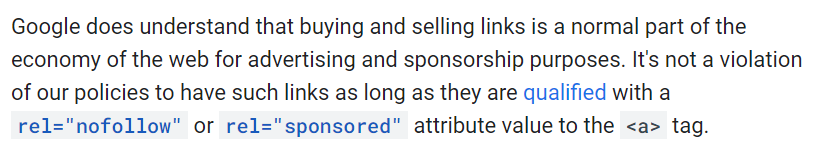
No surprise, then, that a Serpzilla study found that over 75% of SEOs buy links in the routine course of their job. Perhaps, it’s the most straightforward and honest (“ethical” is too deep a word) way to build links. If you’re not buying links yet, check this out.
The risk starts when a paid link is placed mainly to manipulate rankings, hidden as a purely editorial recommendation, scaled through weak donors, or left without the right attribute.
That’s why the question is not simply “Can you buy links?” A better question is what kind of placement you’re buying, where it’s placed, how it’s marked, and whther it makes sense for the reader.
Paid link building becomes risky when the placement is irrelevant, over-optimized, unmarked, scaled too aggressively, or built only to manipulate rankings. Done with quality control, it becomes a controlled acquisition channel. Done blindly, it becomes a link scheme.
— Sergei Pankov, CEO at Serpzilla
2. Spreading comment spam
Somehow, SEOs never tend to get over the habit of trying to comment on blog posts and leaving a link in the text or “website” field, even though this technique has been dead and buried for many years.
Commenting on a blog post used to be a rewarding form of engagement and learning in the 2000s. However, SEOs ruined this beautiful medium of feedback and interaction by leaving unimaginative comments just for the sake – nay, “hope” – of a link.
Blog owners and editors are so tired of spammy comments that most publications today have closed their comments forever. Congrats, SEOs, you killed it. Literally.

Of course, hardcore spammers won’t ever give up. They frequently try to hack blogs and forums to insert thousands of backlinks — if not from posts, then from comments (this is easily prevented by keeping your CMS updated).
Google’s latest SpamBrain algorithm is built precisely to target such links. At a minimum, Google will simply devalue these links. If worst comes to worst, they might flag a site that uses such link building strategies.
3. Counting links instead of weighing them
Every now and then, you see a claim from an SEO or content marketer that they are ranking for this keyword or that without building a single link to their page. Many experts also claim that you can rank well with a combination of fresh content, good internal linking, great on-page SEO, and so on. Plus, Google constantly tells us that it is moving towards a future where links will be increasingly less important as a ranking signal.
So can you rank your site without building links?
“Fuhgeddaboudit,” says Cyrus Shepard of Moz.
However!
The mistake is thinking the answer to all SEO problems is simply more links.
A hundred weak links from irrelevant donors, thin pages, spammy directories, or overloaded websites won’t do the same job as a smaller number of quality links from relevant, trusted pages. In some cases, they’ll just create white noise.
A strong backlink usually:
- Comes from a relevant donor
- Sits inside real editorial content
- Makes sense in context
- Points to a page that deserves the reference
A weak link is the opposite: random, low-value, disconnected from the topic, or placed on a page built mostly to sell outbound links.
So yes, quantity is a factor. From our internal studies, Serpzilla experts agree that you need links from at least 30 to 50 unique referring domains for notable results. But don’t come after volume blindly. The real goal is enough quality links to move the page, not a pile of cheap links that only makes the profile look worse.
4. Building only topical links
Yes, the more links you have from thematically related sites, the better it is for Google to understand the context of your content and its relevance to appropriate keywords, and the better chances you have of ranking higher.
No, you need not focus on getting links only from sites with thematically or semantically relevant content. Some websites (even though not related closely to your topic) might present the opportunity for high-quality links that you simply can’t (or shouldn’t) miss.
Of course, you must build most of your links from topically relevant pages. But how do you define relevant? At what point does a piece of content stop being relevant or contextual? Can you link to a page with formats for a dissertation from a site that has programming tutorials? There are no correct or clear answers. The lines are blurry, whether you are a bot or a human.
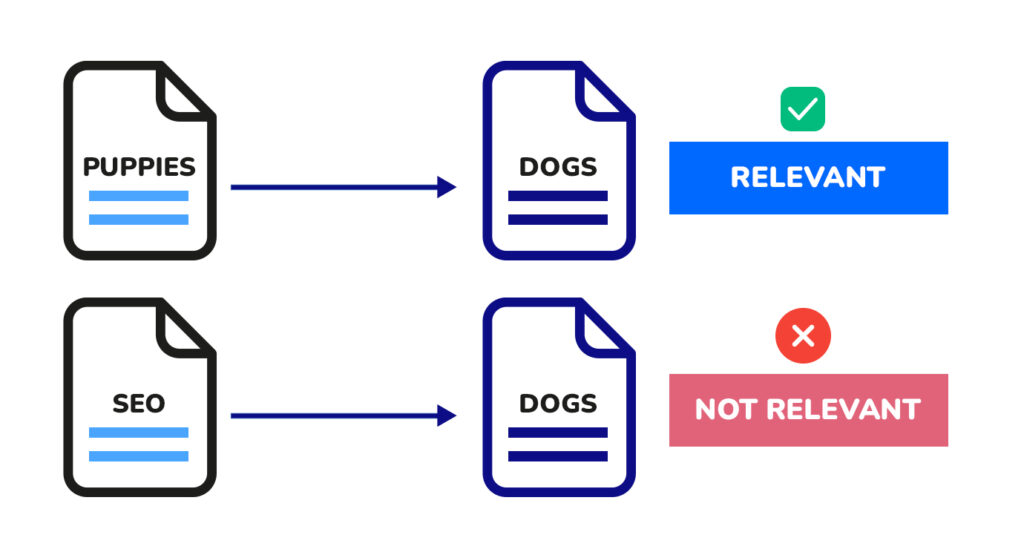
A Serpzilla case study proved beyond doubt that simply building high-performance links can get you the kind of results you want without the need to focus on topical relevance. It’s the link parameters and metrics that matter most.
Remember, we DO NOT recommend ignoring context and relevance. We simply want you to go beyond your mental blocks and preconceptions on what helps your page rank higher in the SERPs.
5. Building links too fast
Proud of your ability to build 1000 links a month? It might be better to tread slowly. The faster you rise, the harder you fall.
Building links too fast is a blinking red flag for search bots and crawlers. You need to control the pace and add links at a speed that isn’t higher than the average for your niche or industry. Just because you have a significant link building budget, you don’t need to burn it.
This is where Serpzilla can be super-useful to you. You can use it to buy a bunch of backlinks in seconds, but take them live at a regulated pace. There’s a great feature called “auto mode” that uses machine learning to pick up your link building style and then place your kind of links automatically.
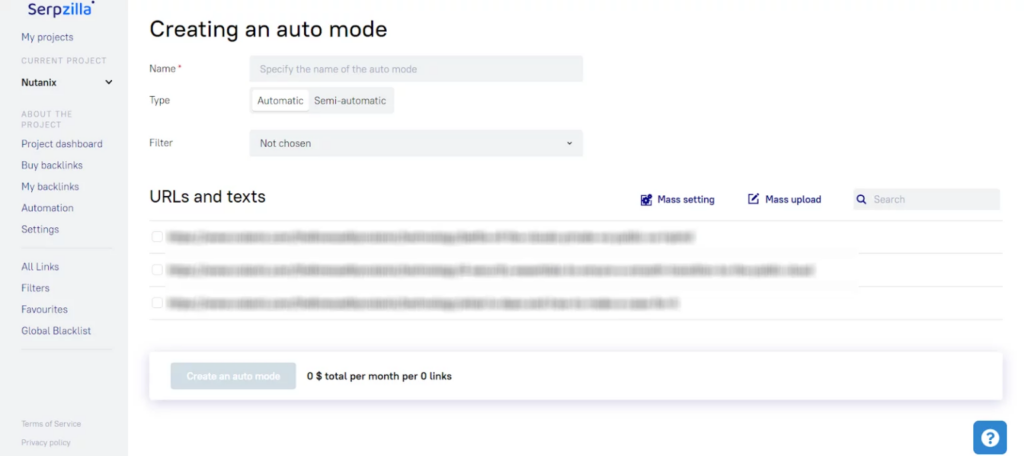
The auto mode is smart: it always stays within your budget. It also has built-in limits on the number of links to build within a specified period. This way, you can increase your link footprint incrementally. Say if your site has 500 links at the moment, auto mode won’t buy 5000 in the next month; it will start with 10 in the first week, 20 in the next, 50 in the week after that, and so on.
Lastly, once you buy, earn, or build a link, make sure it’s indexed quickly.
6. Using hidden links
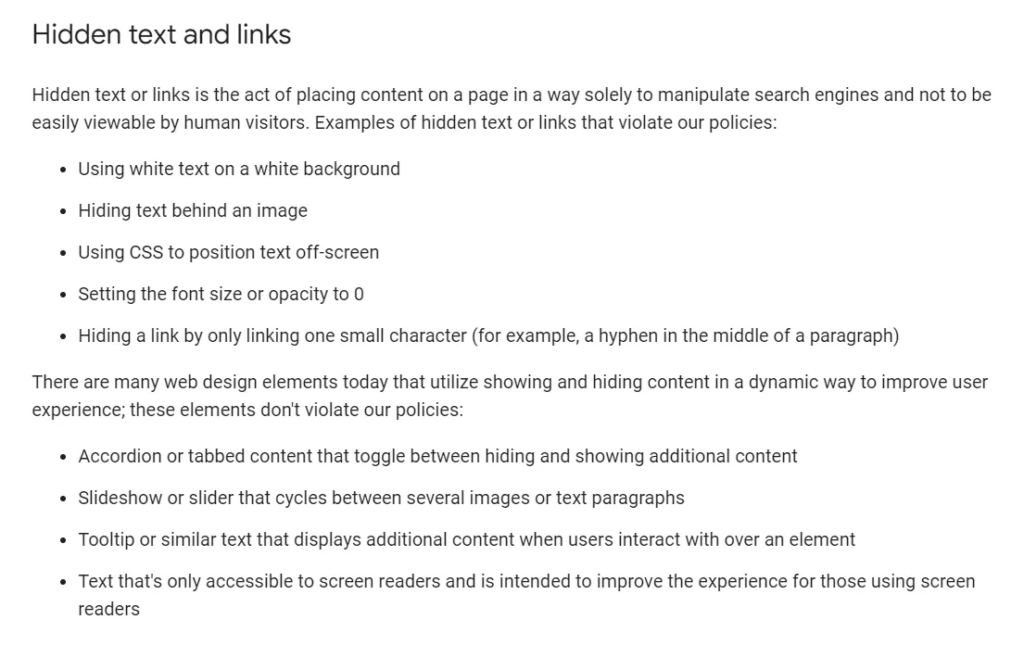
Another spammy practice that Google can (and does) easily detect and penalize these days – black hat SEOs are known to use concealed links (links with hidden anchor text or anchor text that isn’t underlined or changes color when the mouse hovers over it) to insert links without the knowledge of website owners or editors.
While this tactic may fool site visitors for some time, Google is well aware of it (and forbids it):
Our advice: Just don’t do it. The juice is not worth the squeeze.
7. Not paying attention to link diversity
As with people, so with links, it takes all sorts to make a world. You need links of all kinds and authority to make up a natural backlink profile.
Your links should:
- Originate from different types of websites – blogs, forums, social media, etc.
- Come from various kinds of pages – homepage, landing pages, service pages, product pages, category pages, etc.
- Be in various sections of the page – footer, sidebar, content, etc.
- Be in different forms – text, image, JavaScript, etc.
- Go to various pages of your website – homepage, product pages, blog posts, etc.
The more natural and varied your backlink profile is, the less chances you have of ending up with a Google penalty.
8. Getting links from weak donors
A weak donor is a site with low metrics, sure, but not only that. It’s also a site that looks like it exists mainly to sell or host links.
- Check the page before you buy the placement. Thin content is the first warning sign: short generic articles, no real examples, no author expertise, no original angle, and paragraphs that could fit any niche.
- Then look at outbound links. If the page links to casinos, crypto, SaaS tools, dentists, essay services, and local plumbers in the same article, that’s not editorial linking. That’s a link dump.
- Site-level patterns are worth looking into as well. Be careful with donors that publish dozens of unrelated guest posts, use the same template across many articles, have poor indexation, or belong to a network of nearly identical sites. A spammy footprint is often easy to spot through repeated layouts, repeated author names, unnatural internal linking, and the same outbound domains appearing across several “different” websites.
- Relevance is another filter. A high-metric site can still be a bad donor if the topic, audience, language, or geography don’t match your target page.
But that’s not all. Make sure the sites you target for backlinks have their technical and on-page SEO in order. No matter how good the content of a page is, if it doesn’t load quickly, isn’t secure, or doesn’t display well on mobile devices, Google is not going to classify it as valuable. This is the key to building effective backlinks.
9. Ignoring social media
There’s no need to churn out 100 Reels or TikToks with a backlink to your page. There are two great ways to use social media for link building:
- Share your content strategically to reach and engage the right influencers, webmasters, and content creators. If it appeals to them, they will naturally link to it from their websites.
- Actively build relationships with and reach out to webmasters and editors of prominent blogs and publications in your industry through the social network they use. Ask them to publish your content and link to you when the time is right.
10. Failing to create a healthy anchor text mix
Anchor text helps Google understand what the linked page is about. But if you overdo it, anchors quickly start working against you.
The biggest mistake is using the same exact-match anchor again and again across different websites. If 30 sites link to your page with the same phrase, this just doesn’t look natural. Real editors don’t all describe the same page in identical words.
A healthy anchor list should include a mix of:
- Exact-match anchors: your target keyword
Partial-match anchors: a natural phrase that includes the keyword
Branded anchors: your company or product name
URL anchors: the naked URL
Neutral anchors: phrases like “learn more,” “this guide,” or “click here”
No need to try to avoid keyword anchors completely. A few exact-match and partial-match anchors can support relevance. The problem is when your anchor profile becomes too predictable, too commercial, or too repetitive.
Before building links, check your current anchor list and plan the next placements around what’s missing. If you already have enough keyword-heavy anchors, add branded, URL, or neutral ones instead.
11. Ignoring link attributes
Not every backlink should look the same. A natural backlink profile usually includes different link attributes, including dofollow, nofollow, sponsored, and UGC.
- Dofollow links are regular links that can pass ranking signals.
- Nofollow links don’t fully endorse the target page, though Google may still treat them as hints.
- Sponsored links are used for paid placements, ads, and affiliate links.
- UGC links are used for user-generated content, like comments, forums, and community posts.
The mistake is caring only about dofollow links or using the wrong attribute for the wrong placement. If almost every backlink is a clean dofollow link from a commercial article, the profile may look too rigid.
For a better balance, prioritize strong dofollow links, but don’t dismiss nofollow, sponsored, or UGC links.
12. Choosing the wrong target pages
Not every page on your site needs backlinks for the same reason:
- Your homepage builds general brand authority
- Commercial pages need links to compete for buyer-intent keywords
- Informational articles need links to earn trust, support topical authority, and pass value deeper into the site
Treating all of them the same is a classic mistake.
I often see SEOs placing a link first and thinking about the target URL later. That’s simply backwards. The target page should match the job of the link. The wrong target page weakens the whole placement. The link may be indexed, but it won’t support the right keyword, journey stage, or page cluster.
— Sergei Pankov, SEO at Serpzilla
Before choosing a URL, decide what the link is supposed to strengthen: brand authority, commercial rankings, or topical depth. Then pick the page that can really use this signal.
Follow the basic SEO logic to avoid this backlink building trap.
- If the donor article is educational, link to a guide, checklist, or research piece
- If the donor content compares tools, services, or vendors, a commercial page may make more sense
- If the donor mentions your brand broadly, the homepage can be enough
Google Link-Related Penalties
Backlinking mistakes can be costly. If you’re among the unlucky ones whose toxic links were not ignored by Google, you’re likely to experience one (or more) of the four most common Google penalties.
Manual actions
A manual action means Google’s spam team has reviewed your site and confirmed that it violates link spam policies. When this happens, you’ll see a notification in Google Search Console under Security & Manual Actions → Manual Actions. The message typically mentions “unnatural links to your site” or “unnatural links from your site.”
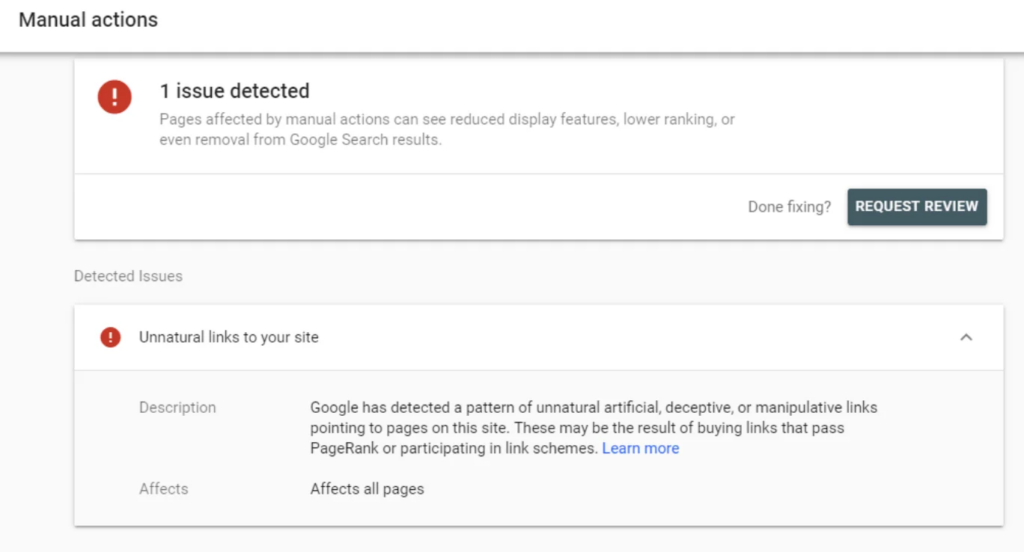
Manual actions can wipe out rankings for large parts of your site until the issue is resolved.
To recover, you need to:
- Find the manipulative links
- Request removals where possible
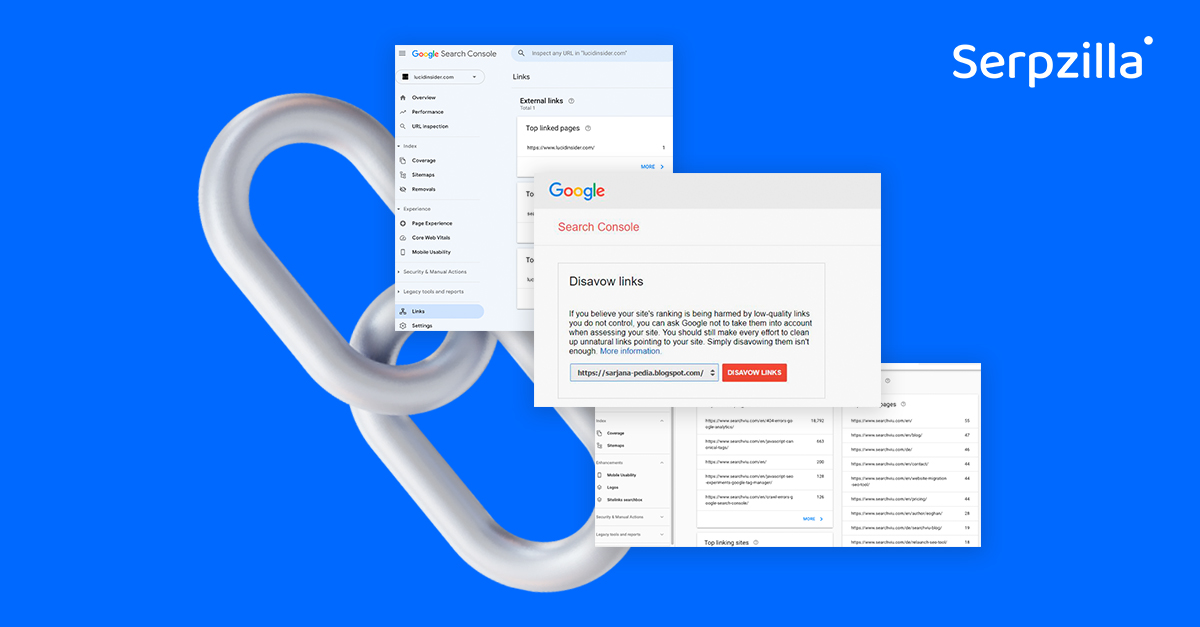
- Sisavow the remaining spam links
- Submit a reconsideration request to Google
Algorithmic link devaluation
This is probably the most common scenario. Instead of penalizing a website, Google simply decides that certain links don’t count anymore. The algorithm ignores them, so they stop passing ranking signals. If those links were doing the heavy lifting for your rankings, once Google stops counting them, the results can get noticeably less impressive.
What usually helps:
- Auditing the backlink profile
- Focusing on relevant, contextual links
- Diversifying anchors and linking domains
Keyword- or URL-level drops
Sometimes the impact is very targeted. Google won’t affect the whole site, but instead will suppress rankings for a specific page or keyword. Push too many links to one landing page, and Google may respond by pushing that page down instead. The rest of the site usually stays untouched.
To avoid this penalty, you should:
- Reduce exact-match anchors
- Build links to multiple pages instead of one
- Strengthen topical relevance around the page
Sitewide or domainwide ranking drops
If spammy link patterns appear across a big part of the site, the entire domain can take the hit. Large link schemes, spam networks, or massive batches of low-quality backlinks are common triggers. At this point, the damage spreads quickly: rankings can drop across dozens or even hundreds of keywords. Multiple sections of the site lose positions simultaneously.
Here’s a good way to avoid running into this issue or resolve it once it’s manifested:
- Run a full backlink audit
- Remove or disavow toxic links
- Rebuild authority gradually with relevant editorial placements
A Low-Risk Step-by-Step Link Building Approach with Serpzilla
Structuring your campaign before the first link is placed helps avoid most (if not all) backlinking mistakes we’ve discussed.
Use this simple workflow to keep link building controlled, scalable, and in sync with Google’s guidelines. We’ll illustrate it using Serpzilla.
Step 1. Define your goal and link strategy
Before opening any marketplace or outreach tool, clarify what role the links should play in your SEO strategy. Different projects require different link types. For example:
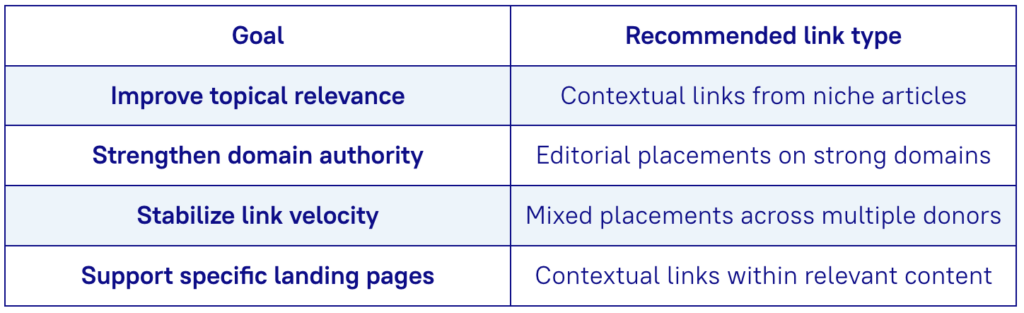
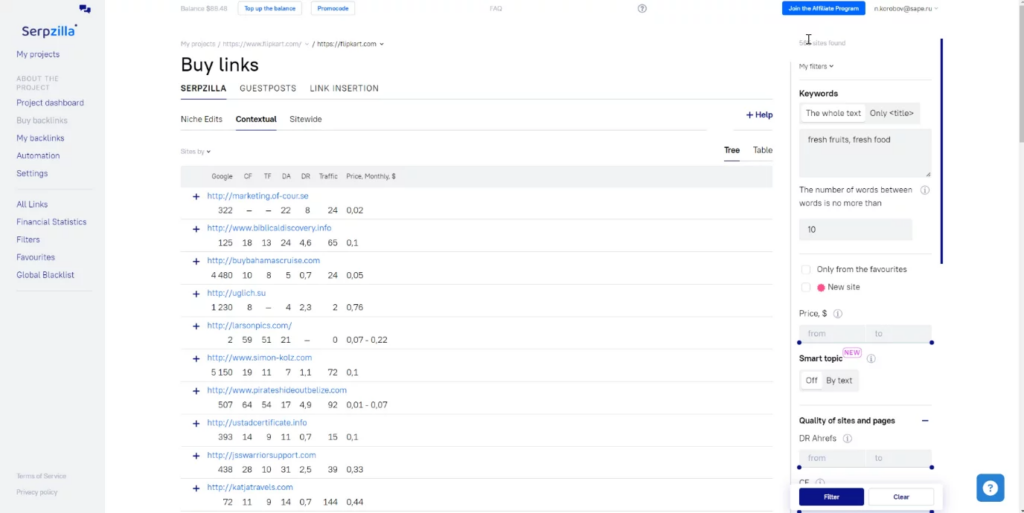
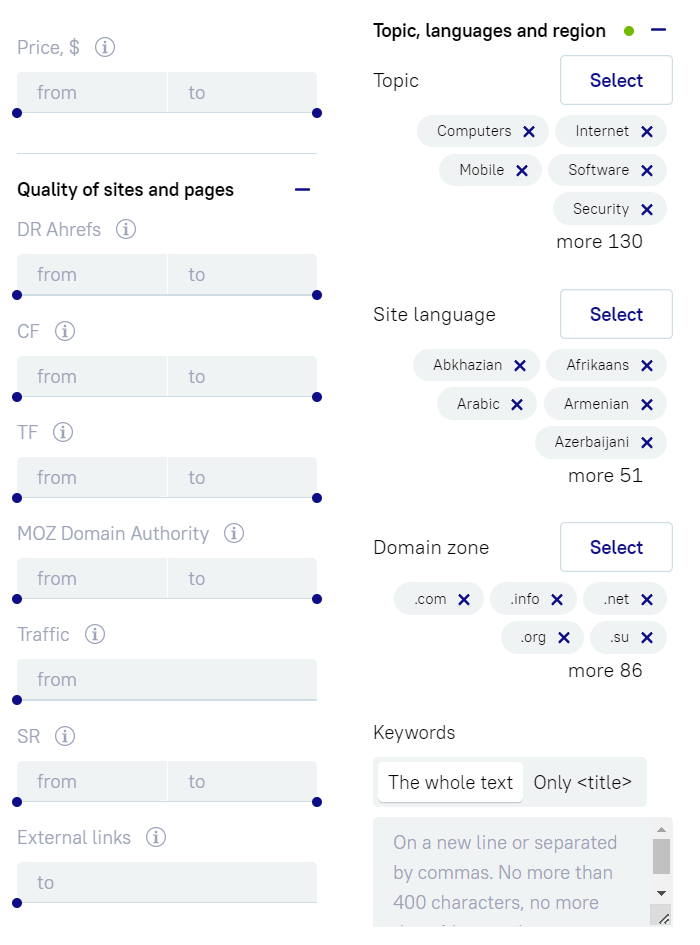
In Serpzilla, you can immediately filter link opportunities by category, domain metrics, traffic, link type, and placement format. This approach makes it easier to match links to the specific goal of the campaign.
Step 2. Build a safe donor shortlist
The biggest risk in link building is poor donor selection. Instead of picking sites randomly, build a shortlist based on several signals:
- Topical relevance
- Organic traffic stability
- Domain history and indexation
- Reasonable outbound link volume
You can narrow down the catalog using Serpzilla filters like:
- Domain rating/authority
- Niche category
- Traffic thresholds
- Language and geography
This helps avoid classic mistakes such as buying links from spam networks or irrelevant sites.
Step 3. Choose the right target pages
Another big one on the list of link-building errors is linking only to the homepage. A healthy link profile distributes authority across multiple pages.
Typical targets include:
- Cornerstone articles
- Category pages
- Strategic landing pages
- Supporting blog posts
When placing links in Serpzilla, make sure the target page matches the context of the article where the link will appear. This improves both relevance and click potential.
Step 4. Create a natural anchor plan
Anchor text distribution is one of the easiest signals for search engines to analyze. If too many links use identical keyword anchors, the pattern becomes way too obvious.
Play it safe when building your anchor strategy. Mix and match with roles in mind:
| Anchor type | Suggested role |
| Branded | Core anchor base |
| Naked URL | Natural variation |
| Partial match | Topical relevance |
| Generic anchors | Diversity |
| Exact match | Limited usage |
Vary anchors so the link profile looks editorial. Otherwise, it will feel too engineered, and you already know that’s a red flag.
Step 5. Place links gradually and monitor results
Remember mistake #4? Even high-quality links can create risk if they appear too quickly.
So the safest approach is to pace link acquisition:
- Start with a small batch
- Observe ranking movement
- Adjust anchor distribution or donor types
- Scale only the placements that show positive results
Serpzilla helps manage this process: you can track placements, manage orders, and control link velocity inside a single dashboard.
Final Word
Link building is an essential component of SEO. However, it is easy to go down the wrong path and build links that attract Google’s wrath instead of link love and qualified traffic. As an SEO, you should focus on building not just links but also trust, credibility, and authority for your website. That is the key to beating your competition out of the SERPs.