Margins across digital businesses are tightening in nearly every vertical. ROI is down. The cost of mistakes is up. A single flawed test or strategic misstep today can cost significantly more than it did just a few years ago.
In that environment, companies are looking for channels that generate sustainable, controllable growth rather than short-term spikes. That’s why in 2026 many founders are doubling down on SEO — a channel with long-term economics, predictable unit performance, and compounding returns.
But SEO is no longer about “publishing content and waiting for traffic.” It has evolved into a fully operational business unit. Reaching meaningful monthly revenue requires more than a collection of freelancers or agencies. It requires a structured, system-driven team.

What Has Fundamentally Changed
The broader performance landscape has become harsher. As Yan K., founder of the RiK team, puts it:
“In 2026, both pricing structures and ad formats have changed. Old approaches simply don’t work anymore. You have to rebuild every year. The market has become tougher — and you can see it in the numbers.”
Organic traffic is no exception.
Search algorithms are more sensitive to content quality, technical health, and user behavior. Competition has intensified across nearly every niche. Time-to-profit for new projects has lengthened.
A solo specialist may deliver isolated wins. But scaling SEO in a stable, repeatable way without structure is nearly impossible.
No analytics — no control.
No processes — no repeatability.
No internal alignment — no growth.
SEO is no longer a craft practiced by one expert. It’s a coordinated system where results depend on how well core functions are integrated.
The Team as a Product
High-performing SEO teams increasingly resemble product teams in tech companies rather than traditional “marketing departments.”
Titles matter less than functions. If even one core function breaks down, scaling stalls long before the team reaches serious monthly revenue.
1. The Technical Function — The Foundation
This includes:
- Technical audits and issue resolution
- Site speed and Core Web Vitals
- Proper indexing
- Crawl budget optimization
- Automation of repetitive workflows
A systemic technical issue in SEO doesn’t cause a bad week — it can cost months of lost traffic.
Automation and AI are now critical components. From clustering and SERP analysis to hypothesis generation and faster brief creation, AI has shifted from competitive edge to operational necessity.
As Yan K. explains:
“AI and automation are now mission-critical. Without someone responsible for technical integrations with AI tools and workflow optimization, it’s hard to imagine reaching serious numbers. In 2026, this isn’t a luxury — it’s a requirement.”
2. The Commercial and Strategic Function
SEO is not about traffic — it’s about revenue.
A strong team must be able to:
- Select niches with viable economics
- Model content ROI
- Prioritize clusters strategically
- Manage link-building budgets
- Align SEO with adjacent acquisition channels
Without strategic oversight, it’s easy to grow traffic for years without translating it into meaningful revenue.
3. The Production Function
Content and link acquisition operate at scale.
High-performing teams build:
- Structured briefing systems
- Quality control pipelines
- Fast publishing cycles
- Continuous format testing
- Cluster-level performance analytics
Creativity in SEO is not inspiration — it’s iteration. The winner isn’t the team that writes “the perfect article,” but the one that tests dozens of hypotheses quickly and scales what works.
The Missing Layer: Operational Integration
Even with strong technical, strategic, and production units, growth can stall if processes aren’t synchronized.
Yan K. notes:
“People often underestimate those who systematically connect processes. Without a project manager, scaling quickly turns into chaos.”
Without operational leadership:
- Technical teams work in isolation
- Editorial operates on its own timeline
- Analytics arrives too late
- Strategy becomes reactive
In 2026, speed of iteration is a decisive advantage. The shorter the cycle from hypothesis to implementation to measurement, the stronger the compounding effect.
Why Founders Need to Go Offline
SEO evolves faster than most public playbooks. Many practical approaches are never shared openly — they circulate in conversations, not blog posts.
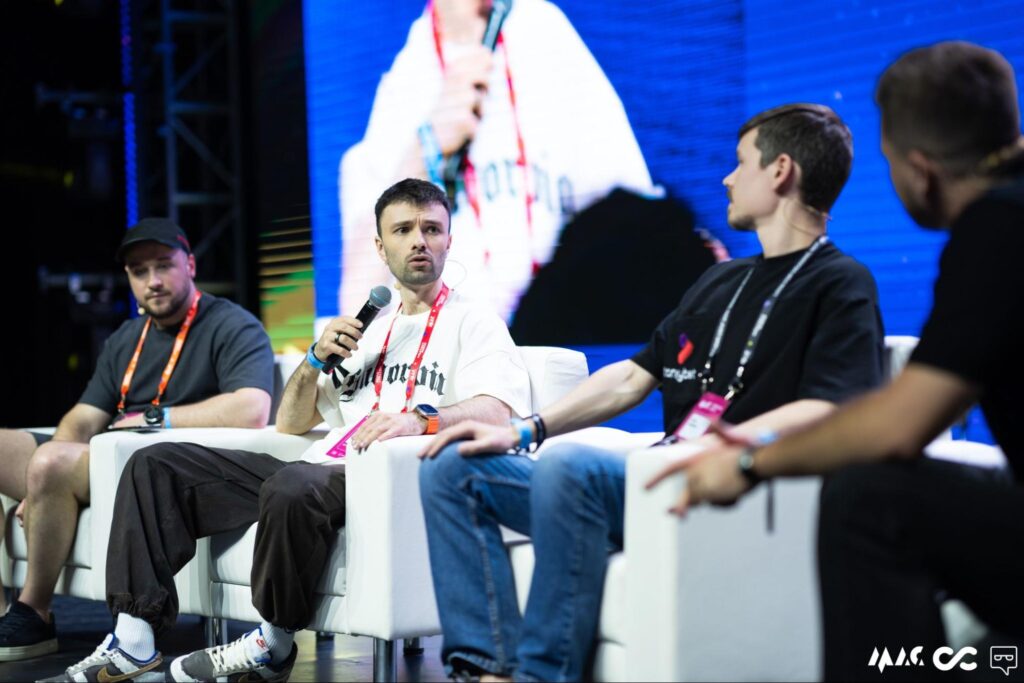
Industry conferences such as MAC have become hubs of applied experience. What’s discussed there isn’t surface-level theory but operational detail:
- How large content networks are structured
- Realistic timeframes to profitability
- Internal team architecture
- Automation stacks
- Costly mistakes others have already made
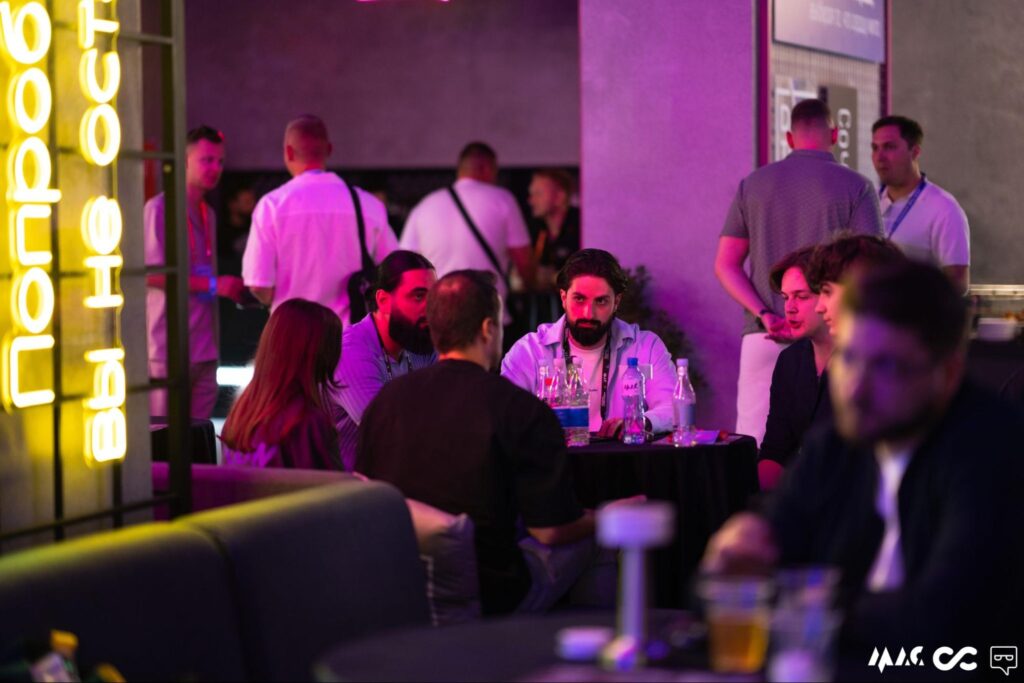
Online content often highlights success stories. Offline conversations include failures — and those are often more valuable.
Yan K. puts it bluntly:
“Eighty percent of people exaggerate their results. I trust maybe twenty percent — the ones whose real campaigns and trackers I’ve seen myself. Offline, you immediately understand who you’re talking to and whether you can work together. Online, everyone looks like a hero.”
For founders, this isn’t just networking. It’s recalibration.
Offline environments provide:
- A clearer sense of market standards
- Exposure to more mature operational models
- Access to strong partners and talent
- A chance to reassess internal priorities
After strong industry events, many founders revisit team structure, incentive systems, and scaling strategies.
As Nikolai Ho of AMILeads notes:
“No one hands out ready-made ‘golden formulas.’ But offline gives you access to contacts, testing approaches, and direction. It’s not about copying — it’s about expanding your capabilities.”
The Bottom Line
In 2026, SEO is no longer a secondary channel. It is a strategic asset.
Reaching meaningful monthly revenue requires:
- A team built around three core functions
- Integrated operational processes
- Fast experimentation cycles
- Deep automation and AI adoption
- Continuous alignment with the industry
“At conferences like MAC, you meet highly focused operators running serious teams. These are people you can brainstorm with, challenge ideas, and potentially build new projects alongside. Without that kind of environment, it’s extremely difficult to build a strong team — or launch a sustainable business in the first place,” says Yan K., founder of the RiK team.

Strong SEO teams are not built in isolation. They are shaped within active professional communities where knowledge is exchanged honestly and competition pushes standards higher.
For founders, going offline is no longer optional. It is part of the growth strategy itself.