So you begin a link building campaign. You do your keyword research. You choose landing pages. You create or tweak content accordingly. And then you go out and build, earn, buy and rent a lot of backlinks.
Whether you get the results you expect or not is another matter.The first question is, when do you get these results?
When will your links actually start to work?
The answer is, as with everything else in SEO, “It depends.” Read on.
How Soon Does Google Index New Pages?
There was this conversation between some random SEO guys and John Mueller of Google back in 2020. Somehow, there is a long-standing opinion that it might take about 30 to 60 days for a new web page to get indexed. Mueller refuted this theory and said that depending on multiple factors, Google could take anywhere from a few minutes to months to crawl and index a page.
Barry Schwartz surmised that the 30-60-days theory is a remnant of the pre-2003 days when it was common for Google rankings to undergo a change every month – the phenomenon was called Google Dance. Web pages were crawled, indexed and ranked within one or two Google Dances after they were published.
Here is a more recent video in which Mueller reiterates that indexing could take anywhere between several hours and several weeks:
Mueller also emphasizes three things that prove that you have to choose where to get your backlinks from very carefully. Otherwise you’ll end up with a wasted budget.
- There is no guarantee that all pages on a site will be indexed. There is too much of useless content on the internet.
- If a page is indexed, it doesn’t mean it will rank. Consequently, the links from that page might also not be very effective.
- Quality is the most important factor when it comes to indexing sites. Google tries its best to index pages on high-quality sites first.
The last point correlates with our own hypothesis that Google still uses its PageRank algorithm in various ways, including the speed and frequency of crawling and indexing pages with new links, as well as following those links.
Sites that have good domain authority naturally have pages that start out with a higher PageRank. Obviously, Google prioritizes sites with higher PR, such as 10, 9, 8, and so on in descending order.
At the other end of the spectrum, as the PR of a new web page rises like 1, 2, 3… so does the value and effectiveness of the outbound links on that page.
Factors That Affect Indexation
Naturally, PageRank isn’t the only factor that influences how fast a page is indexed. There are a lot of other direct and indirect signals that work in tandem to increase the effectiveness of your backlinks.
Page Experience
This includes the user friendliness, mobile usability and of course page loading speed of the website. Recently, Core Web Vitals have become increasingly important in Google’s crawling, indexing and ranking systems.
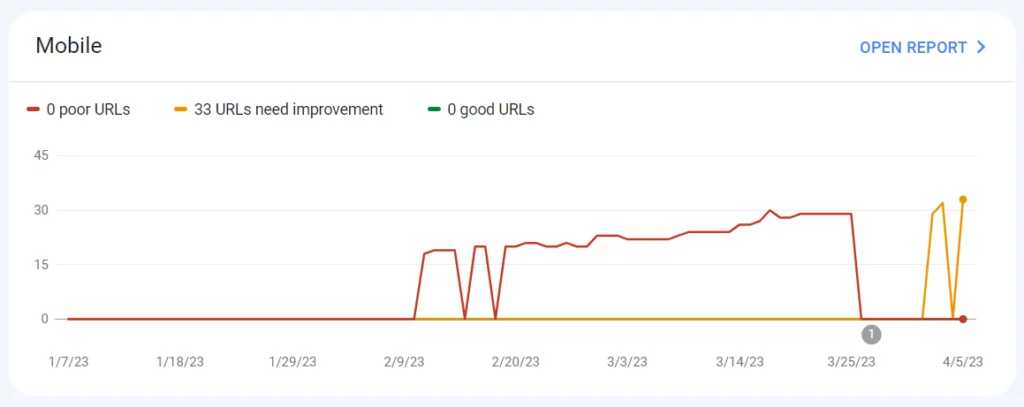
Technical SEO
While all the technical SEO factors of a site don’t need to be perfectly optimized, the sheer number of variables means that there could be a lot of issues preventing quick indexation of the page.
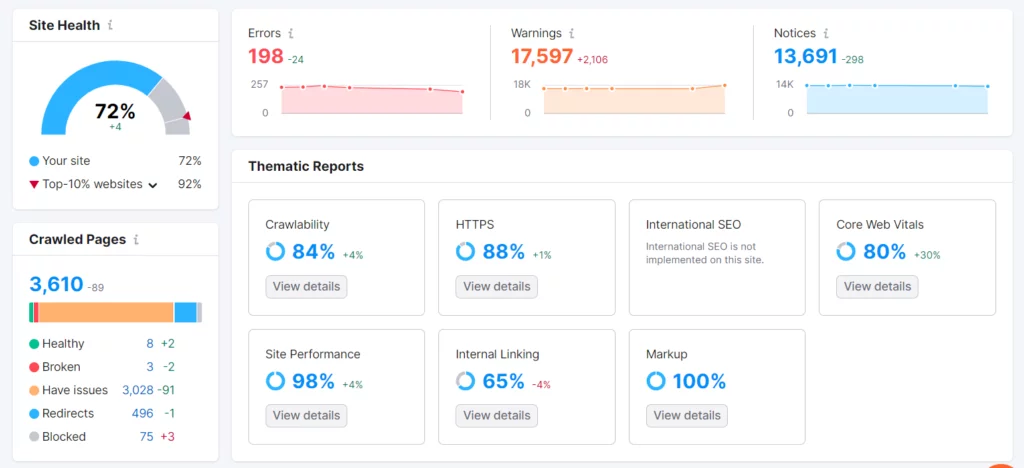
HTTPS
Security is paramount to any site on the web today. As a result, HTTPS is one of the few ranking factors that Google has publicly acknowledged and emphasized. There is no excuse for not running a site on HTTPS today. Always choose a HTTPS site for building backlinks.
Brand Popularity
The bigger or more popular a brand is, the more visitors you’ll get who search for the site by its brand name. This signals to Google that the site is important to users and it will crawl and index that site more frequently. After all, Google’s aim is to lead users where they want to go.
Level of Competition
If you operate in a very competitive industry, there could be a lot of well-established sites with thousands of pages. This means you have more options to get a link from pages that are indexed quickly and crawled frequently. Yes, this might increase your link budget but the advantages certainly justify the cost.
Getting Links from the Best Pages
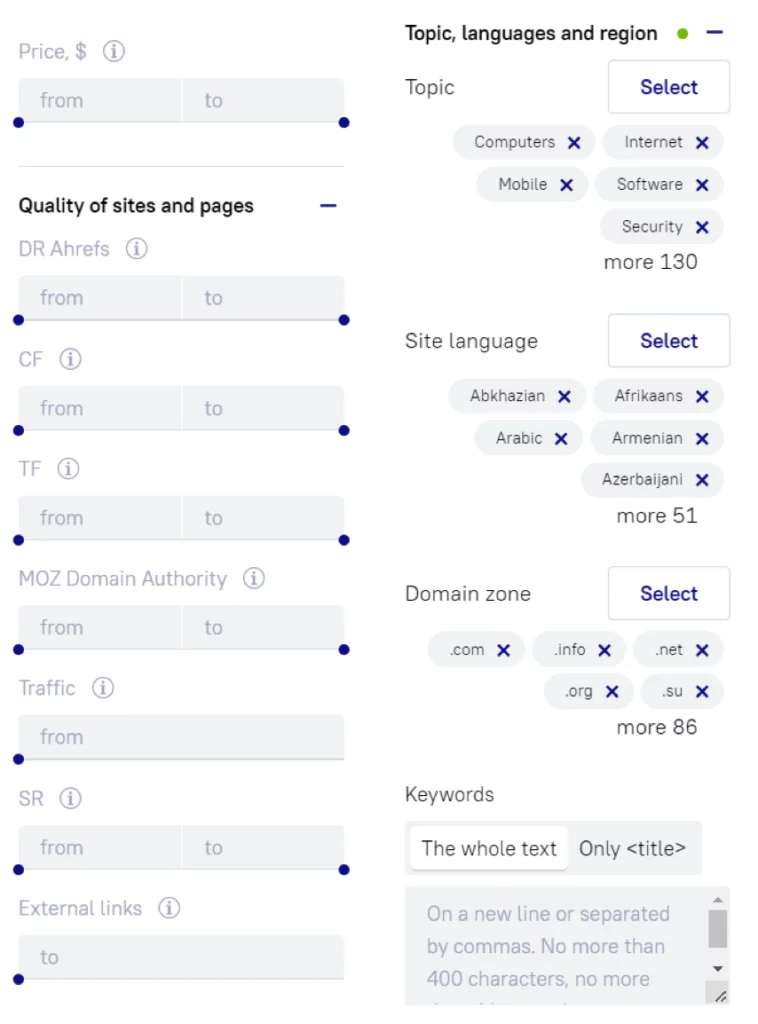
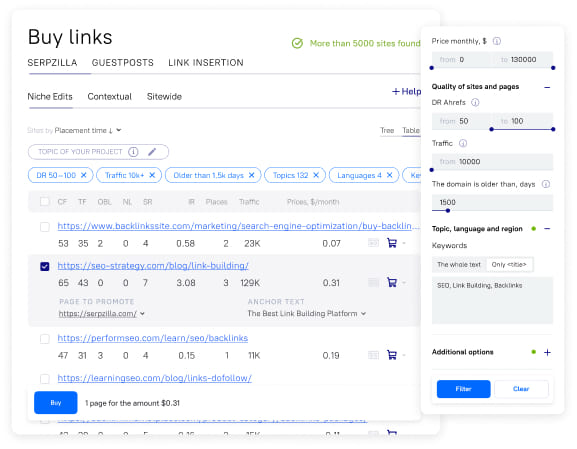
Serpzilla helps you make sense of the various factors that affect the indexation of your target websites. It also lets you set thresholds for important metrics including DA/DR, region, topics, keywords, and so on. This ensures that you can build the most effective links.
How do Ahrefs, Semrush and Other SEO Platforms Index Links?
While we frequently complain that Google’s algorithm is opaque, we also need to remember that tools such as Ahrefs and Semrush – which help us with varied SEO tasks – are also proprietary. They won’t reveal their precise crawling algorithms either.
That’s not a problem for you – you know that they don’t bother about your page experience or EEAT worthiness of your content. However, since they have their own crawlers and servers, it is likely that they too will prioritize crawling and indexing on basis of their own site authority ratings such as Domain Rating (DR) for Ahrefs and Authority Score (AS) for Semrush.
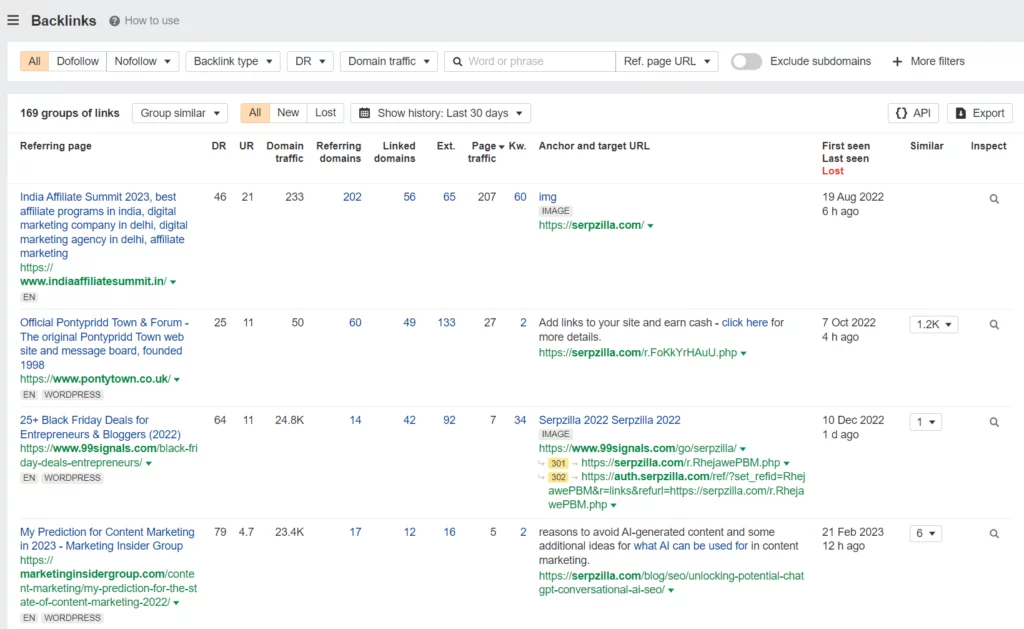
Further, Ahrefs and Semrush don’t require you to place any code directly on your website – like you need to do for Google Analytics or Google Search Console. Instead they use clickstream data from a variety of partner sites across the web. This means their data is not totally accurate. However, they give you a “range” of data that you can use to improve your visibility on Google.
The outcome is the same as with Google – Semrush and Ahrefs will crawl pages from high-quality websites more frequently and have more accurate SEO metrics about links from those pages.
For digital marketers working in the area of Search Engine Optimization (SEO), acquiring high-quality backlinks is absolutely vital for a website’s visibility and credibility. However, the process of simply obtaining backlinks is no longer enough ensuring healthy indexing routines is equally vital. The process of bac
Top Techniques for Indexing Backlinks Faster
Performing the process of indexing backlinks quickly is vital in being able to effectively maximize the impact of your SEO efforts. Here’s a few essential tips guiding your through the various steps you can take to speed up backlink indexing:
1. Google Search Console
Google Search Console is a powerful tool that allows website owners to monitor and manage their site’s presence in Google Search results. To utilize Google Search Console for faster backlink indexing, follow these steps:
Google Search Console serves as a powerful that fully allows website owners to be able to monitor and effectively manage their site’s presence within search results. In order to maximize the potential of Google Search Console for faster backlink indexing, follow these steps:
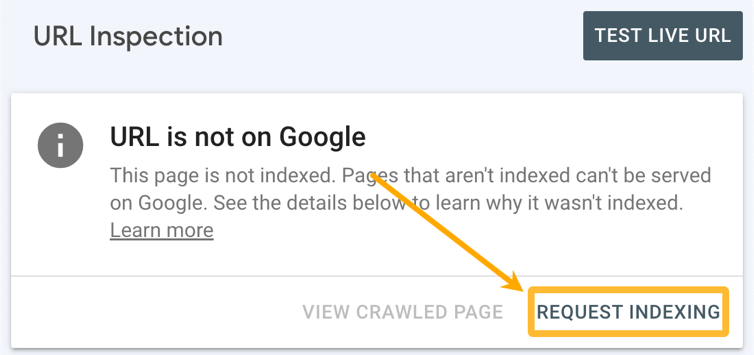
1. Submitting URLS for indexing. Access the URL inspection tool within Google Search Console and type in the URL of the page containing a backlink you want to index. Next, it’s as simple as requesting index to notify Google of the new or updated content structure, naturally including the backlink.
2. Monitoring Index Status: Focus on keeping track of the indexing status of any submitted URLS within Google Search Console. Check properly for any errors or issues that could prevent Google from indexing your pages effectively.
2. Creating High-Quality Content
Creating high-quality, valuable content is crucial for attracting natural backlinks and speeding up indexing. Follow these tips to create link-worthy content:
Already serving as the cornerstone of SEO efforts, creating high-quality, genuinely valuable content is essential for attracting natural backlinks and speeding the process of indexing. Check out our tips here:
1. Place a Focus on Relevance and Value: Write content that addresses your audience’s needs and interests. Think about how you can offer unique insights, solutions, or industry perspectives that make your content stand out from others in the niche.
2. Keyword Optimization: Conduct keyword research to fully identify relevant keywords and phrases that you can incorporate into your content structure. Optimize things like titles, heading, and any body text – doing so will increase visibility and attract organic backlinks.
3. Social Media Sharing and Engagement
Leveraging social media platforms is an effective way to increase the visibility and sharing of your backlinks. Here’s how to use social media for faster backlink indexing:
1. Utilize Visibility Across Platforms: Share all of your content, including backlinks, across as many social media platforms as possible – through this, you will reach a wider audience and encourage more engagement.
2. Sharing and Interaction: Encourage your followers to proactively share your content within their own networks. However, this strategy only works should you create compelling and shareable posts that attract attention. Similarly, engage with your audience through comments, questions, and feedback in a prompt manner.
4. Building Tiered Links
Tiered link building involves creating a network of interconnected links to facilitate faster indexing and improve the authority of your backlinks. Here’s how to implement tiered link building:
1. Creating Multiple Layers of Links: Focus on building a tiered structure of links, with tier 1 links pointing directly to your website or target pages, and tier 2 links pointing to tier 1 links.
2. Use Serpzilla’s Platform: Serpzilla is a fantastic SEO tool that offers features for purchases and monitoring. By utilizing Serpzilla’s capabilities, such as automated backlink placement and monitoring, you can streamline the process of indexing your backlinks and improve your site’s overall SEO performance.
Common Mistakes to Avoid in Backlink Indexing
When it comes to backlink indexing, certain mistakes can hinder your efforts and diminish the effectiveness of your SEO strategy. Here are some common pitfalls to avoid:
1. Neglecting Indexing Signals:
Failing to provide search engines with easy signals regarding your backlink profile, such as submitting URLs for indexing or focusing on metadata, which can result in slower indexing or even not being indexed.
2. Overlooking Quality of Backlinks: Prioritizing quantity over quality when acquiring backlinks can lead to links from low-quality or spammy websites, which may not get indexed or could harm your site’s reputation.
3. Ignoring Technical Issues: Technical issues tend to pop up naturally but focusing on things such as broken links or incorrect HTML tags, can effectively stop the hinderance of search engine crawlers and their ability to discover your site.
Monitoring Your Backlinks’ Indexing Status
In order to track whether your backlinks are being properly utilized, use tools like Google Search Console, or Ahrefs. These tools let you monitor the status of your backlinks and their indexing. Additionally, check your website’s server logs to ensure that search engine crawlers are accessing and indexing your backlinks fully.
Maximizing Your Backlinks’ SEO Impact
Whilst using social media to promote content and gain backlinks, focus on creating fully engaging and shareable material – content that resonates with your audience. Encourage social sharing by pushing social sharing buttons on your website and actively engaging with your audience on social media platforms.
Boost your SEO results! Link building has become fast and easy with Serpzilla. Buy quality backlinks on authority websites with high DR.
Conclusion
Conclusively, mastering the art of backlink indexing is essential for SEO success. Through understand the importance of fast indexing procedures, implementing effective techniques, and avoiding common mistakes, site owners can enhance both visibility and credibility. Utilizing tools like Google Search Console, Ahrefs, and Serpzilla for monitoring and optimizing backlinks can be a great step in staying ahead in the competitive digital landscape. Moreover, utilizing social media to promote content and attract backlinks further amplifies the impact of your SEO efforts.