Ranking #1 used to feel like winning the Google-related part of the SEO game. Now it’s more like getting to the VIP section of the club, while AI decides who actually gets quoted. And you may or may not get picked.
Google’s AI Overviews don’t reward the highest-ranking pages, if you check out what gives, you’ll see that a Reddit post from 2017 can get ahead of your #1 page. AI Overviews pull from sources that are clear, relevant, and trusted enough to stitch into an answer. In other words, you’re no longer just tweaking your SEO to rank, you’re writing to be cited. And yes, that’s a slightly different sport.
So, what are the rules of this game? How do you optimize for AI Overviews? Let’s take a closer look in this article.
What Actually Gets Picked for AI Overviews
If AI Overviews were a person, they’d be that friend who’s into too many things at once. They mash together opinions, facts, and that one oddly specific youtube video from a remote corner of the world thread you forgot existed but that answers your specific brand of question-making.
Here’s what tends to get pulled in:
- Top-ranking pages — yes, rankings still matter. They just don’t guarantee anything anymore.
- Hyper-relevant niche content — smaller sites can absolutely sneak in if they answer the question better.
- Recognizable entities — brands that show up consistently across the web get picked more often.
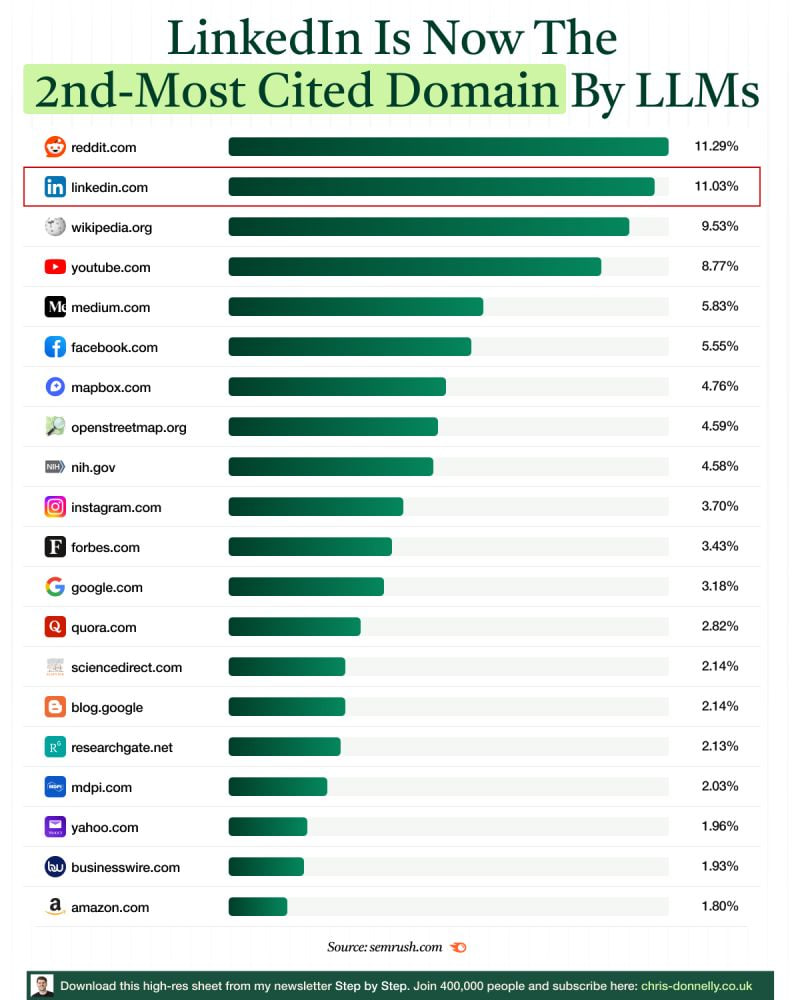
- UGC sites — LLMs seem to trust what they think are actual people’s honest opinions.
And here’s the part many people miss:
AI doesn’t care where your answer lives on the page. If it has to dig through 1,500 words of warm-up to find it, it’ll just grab someone else’s cleaner version.
That’s why you’ll sometimes see:
- a #5 ranking page cited over #1
- a forum thread sitting next to enterprise blogs
- a site with lower authority getting the spotlight
Because instead of checking out the rank AI Overviews are assembling answers.
Your job is to make sure your content is easy to pick, easy to trust, and hard to ignore.
5 Steps to Optimize for AI Overviews
Let’s just skip all the preliminary warm up and jump right to the action, shall we? Below are 5 steps you might want to observe if you want to do better in being cited by AI overviews.

Step 1: Structure Content for Extraction, Not Just Reading
If Google sort of “reads” your article, analyzing an array of parameters for rankings, for AI Overviews it scans, grabs, and moves on. Think of it like a very impatient researcher with 20 tabs open.
- Answer questions in 2–3 sentence blocks
- Use clear, question-based headings
- Put the answer right after the heading, don’t write a life story before
- Use lists, tables, and definitions
If your key point is buried somewhere in paragraph #7, it’s already lost.
Step 2: Build Topical Authority
One good article won’t cut it. AI looks for depth, doing one-hit wonders won’t help, your content needs to be systemic.
- Cover the topic from multiple angles (guides, comparisons, use cases)
- Interlink related content like it actually belongs together
- Stay consistent within one topic instead of jumping around
Think less “blog post” and more “mini Wikipedia on a niche.”
Step 3: Get Cited by Pages AI Already Trusts
Backlinks still matter. Just not in the “spray and pray DR 80” way.
- Prioritize relevant placements, not just strong domains
- Aim for pages already ranking for your target queries
- Look where competitors are getting cited—and go there too
If AI trusts the source that mentions you, your chances go up. Simple as that.
Step 4: Target Queries That Trigger AI Overviews
Not every query gets an AI Overview. You want the ones that do.
Focus on:
- “How to…”
- “What is…”
- Comparisons and decision queries
- Problem-solving searches
These are the queries where AI steps in and builds answers. Meet it there.
Step 5: Strengthen Your Brand Signals
AI doesn’t just pick content. It picks who to trust.
- Get consistent mentions across different sites
- Keep your positioning clear (what you’re actually known for)
- Show up in multiple contexts, not just your own blog
You don’t need to be a giant brand. But you do need to look like a real one.
Tools That Help You Optimize for AI Overviews
It would be a mistake to think that you need a completely new tech stack for AI Overviews.
First, many of the up-to-date tools already rolled out functionality that helps you analyze and prep your AI Overviews optimization processes.
Second, you rather need to look at your tools a bit differently, less “where do I rank?” and more “where do I show up as a source?”
Here are a few that actually help:
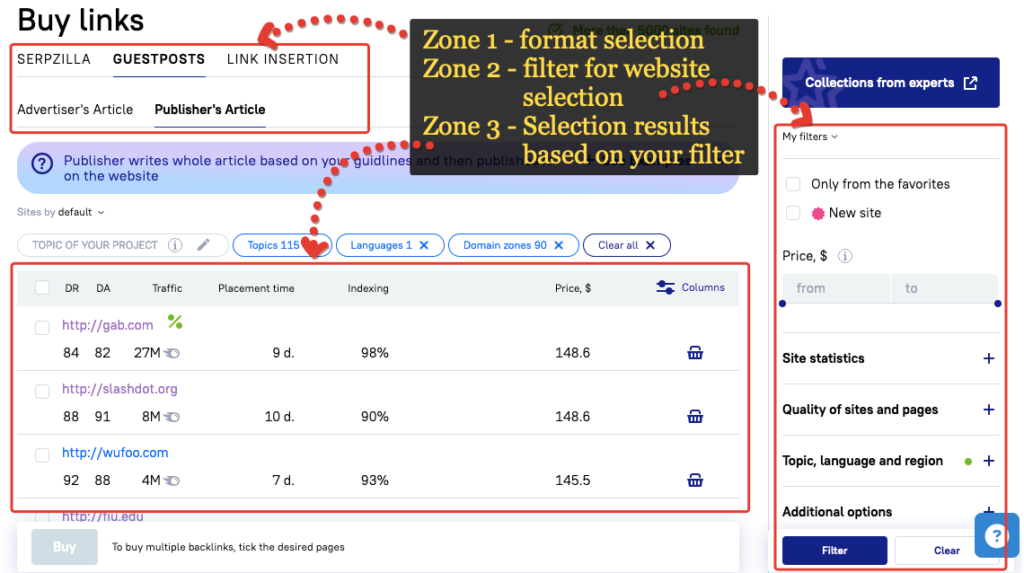
- Serpzilla — useful for finding relevant placements and spotting backlink gaps. Instead of chasing random high-DR sites, you can focus on sources that already influence your niche (and, by extension, AI answers).
- Ahrefs / Semrush — still your go-to for identifying top-ranking pages and competitors. Pay attention to which pages consistently rank for informational queries—those are often the ones AI pulls from.
- AlsoAsked / PAA tools — great for mapping how questions branch out. If AI builds answers around questions, this is your blueprint.
- Semrush AI Visibility (or similar tools) — helps track whether your domain actually appears in AI-generated answers. Rankings alone won’t tell you that.
- Google itself (yes, really) and its Search Console — search your target queries and study the AI Overview. See who gets cited, how answers are structured, and what patterns repeat. It’s still the most honest dataset you’ll get.
The goal here is to use the tools you already have to understand one thing: why certain sources get picked, and how to become one of them.
Common Mistakes That Keep You Out of AI Overviews
Most sites don’t get ignored by AI Overviews because they’re “bad.” They just miss the mark in very predictable ways.
- Writing for keywords, not answers
You hit the keyword, sure. But the actual answer is vague, buried, or stretched across five paragraphs. AI will just grab a cleaner version elsewhere. - Chasing DR instead of relevance
A backlink from a huge but unrelated site looks nice in a report. It does very little when AI is looking for context and topical alignment. - Publishing isolated articles
One solid piece isn’t enough. If there’s no surrounding content to support it, it doesn’t look like authority—it looks like a one-off. - Ignoring internal linking
If your own pages aren’t connected, you’re not helping search engines (or AI) understand what you actually specialize in. - Optimizing only for rankings and completely ignoring citations
Ranking high still matters. But if your content isn’t structured to be quoted, summarized, and reused, it’s easy to skip.
Fix these, and you’re already ahead of most pages competing for the same space. You may also want to check out our guide on link building mistakes in 2026.
FAQ: AI Overviews and Optimization
Can you appear in AI Overviews without ranking #1?
Yes. Quite often, actually. AI pulls from a mix of sources, and position #1 is just one of them. If your content answers the question more clearly or covers a specific angle better, it can still get cited.
Do backlinks still matter for AI Overviews? They do, but the emphasis shifts toward relevance. Links from pages that are closely related to your topic—and already trusted in that space—carry more weight than generic high-authority placements.
How do I know if my content appears in AI Overviews?
The simplest way is manual: search your target queries and check the AI Overview. For scale, tools like Semrush’s AI Visibility features can help track mentions across queries.
What type of content works best for AI Overviews?
Content that answers specific questions, breaks things down clearly, and is easy to extract. Think concise explanations, structured sections, and content that gets straight to the point.
Is optimizing for AI Overviews different from SEO?
It builds on SEO, but the focus shifts. You’re still aiming for visibility, but the goal is to become a source that can be cited, not just a page that ranks.