What Is eCommerce Link Building
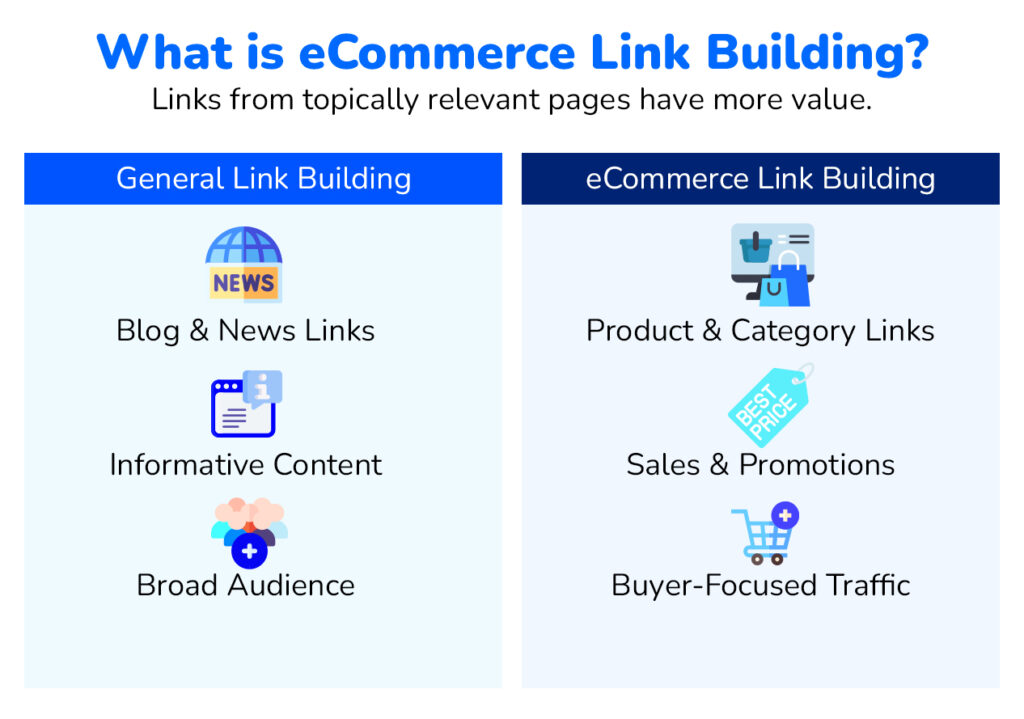
eCommerce link building means acquiring backlinks to an online store to improve organic visibility, strengthen page authority, and support revenue-driving pages in search.
The definition sounds simple, but e-commerce link building is not the same as link building for a SaaS blog, affiliate site, or local service business. A typical content site can push most of its efforts into informational articles. But an online store has a more complicated structure:
- Homepage
- Category pages
- Collection pages
- Product pages
- Guides, blog posts, comparison pages, and buying content
- Seasonal or campaign landing pages
Each of these page types plays a different role in search, and not all of them attract links equally well.
That’s why e-commerce link building is different from general link building in three major ways.
- First, it’s more page-specific. The goal is not just to get links, but to get them to pages that can drive rankings and revenue.
- Second, it’s more commercial. The pages that matter most (product, category, and collection pages) are harder to promote naturally. That is why an eCommerce SEO link building strategy usually combines direct links to commercial pages with links to content that can pass authority internally.
- Third, it has to scale. Large stores may have hundreds or thousands of URLs, so link building for eCommerce websites needs to be selective and tied to page priority.
In eCommerce, the biggest mistake is treating links like a vanity metric. A store can add referring domains every month and still see no commercial lift. Why? Because the links land on the wrong assets, point to weak pages, or sit on irrelevant domains. Good eCommerce backlinks do not just exist — they need to support a ranking path.
Sergei Pankov
Why eCommerce Websites Need Backlinks
Backlinks matter for eCommerce because they help your store compete where it counts:
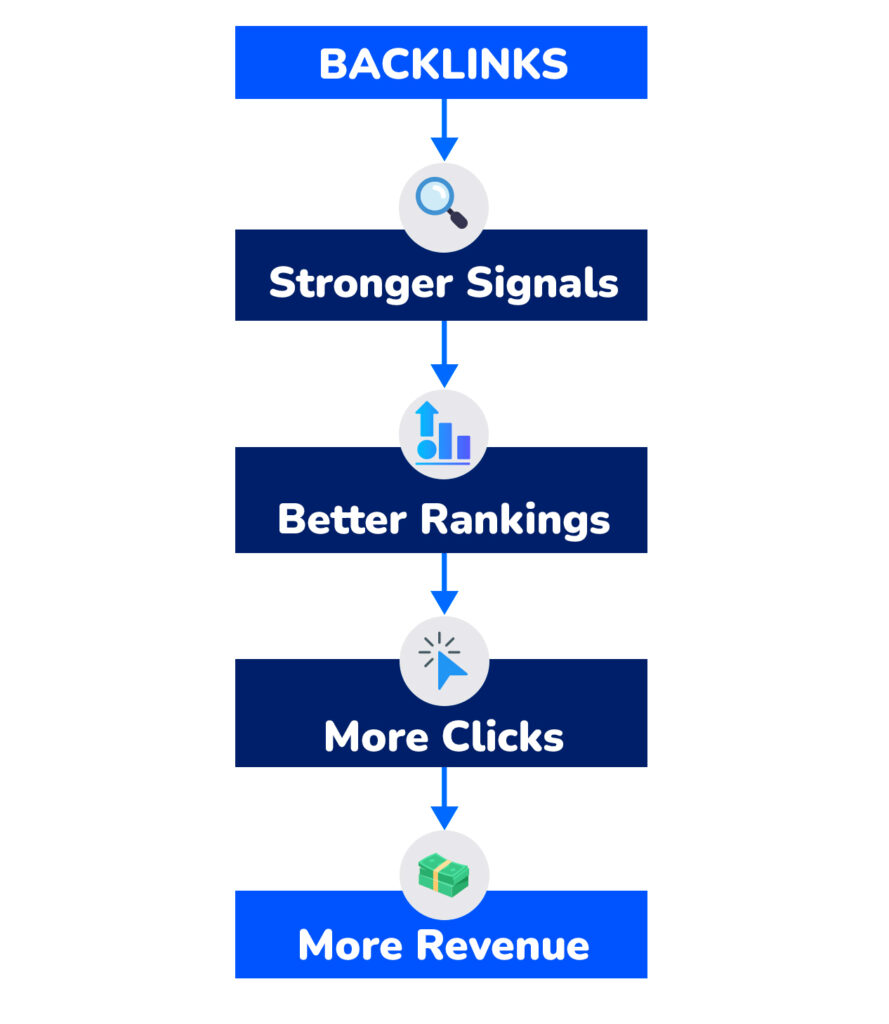
- They help you rank where buyers actually are. In eCommerce, the goal is stronger visibility for category, collection, and product-related searches that can lead to sales.
- They make competitive pages more credible. When several stores sell similar products, backlinks help search engines see which pages deserve more trust and visibility.
- They help smaller stores compete with bigger brands. Large retailers already have authority, mentions, and branded traffic. Good links help close part of this gap.
- They can bring traffic directly. Links from reviews, niche blogs, supplier pages, and media roundups send real visitors who are already interested your way.
- They make your whole site work harder. A strong backlink to the right page can support other pages too, especially when your internal linking is solid.
What Your eCommerce Site Needs Before You Build Links
Before you launch a serious backlink strategy for eCommerce, fix the pages and systems that determine whether links can actually produce a return. A lot of campaigns underperform because the store was simply not ready to benefit from them.
A clear site hierarchy
Your store should have a logical structure that moves from broad to specific, with the homepage, main categories, subcategories or collections, product pages, and supporting editorial content.
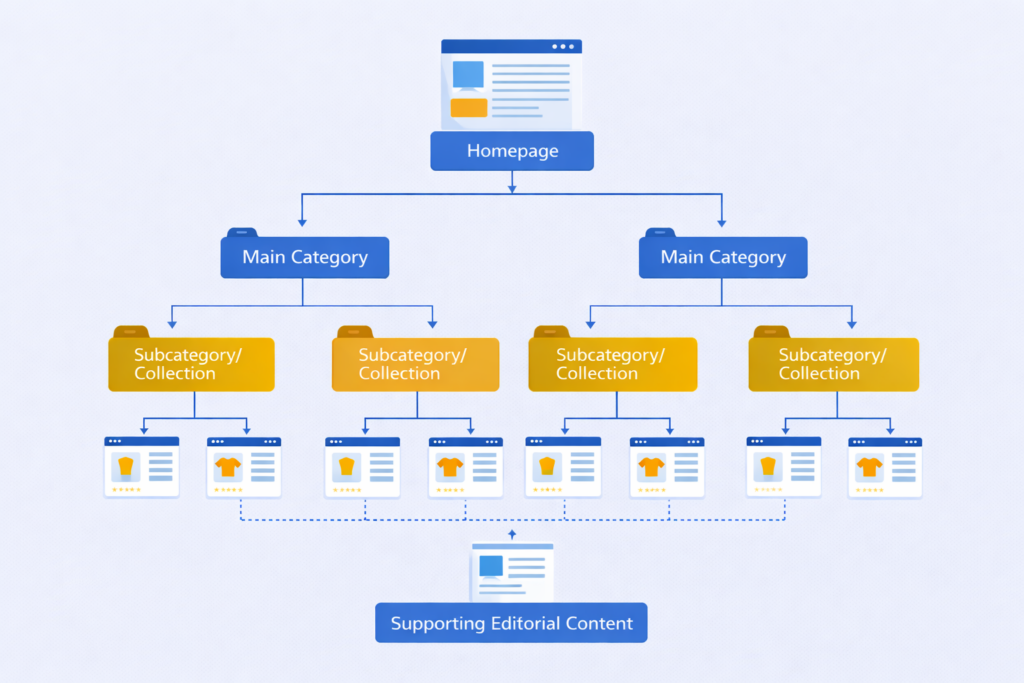
This hierarchy is important because backlinks strengthen what already exists. If your architecture is chaotic, pages compete with each other and search engines have a harder time understanding which URLs matter most.
A clean hierarchy also helps you decide where to point links. Often, category pages deserve more support than product pages because they target broader, repeatable search demand and remain stable over time. That’s why Google recommends making site structure and URLs easy to understand for both users and search engines.
Internal links that support priority pages
Your internal links determine whether value reaches the pages you actually want to rank.
For example, if a buying guide earns links but sits in a corner with weak internal pathways, the authority stays trapped. If that guide links to its parent category, relevant collections, and a few priority products, the link has a better chance of influencing commercial pages. Bottom line: link building for eCommerce sites should never be separated from internal linking. One without the other leaves money on the table.
Product and category pages built to rank
You need a clear understanding of which pages you need to build links to. If your target pages are thin, duplicated, or structurally weak, backlinks will have limited effect.
A category page built to rank should usually have:
- A clear search target
- Unique and useful intro copy
- Strong faceted navigation control
- Meaningful product organization
- Clean titles and metadata
As for product pages, make sure they come with
- Original descriptions
- Real product specs
- Strong media
- FAQs or use-case content
- Review signals where possible
- Structured relevance to parent categories
Pro tip: Your key URLs also need to be crawlable and indexable. That means no accidental noindex on money pages, no broken internal link paths, no key pages hidden behind scripts search engines struggle to interpret, and no duplicate parameter chaos swallowing crawl budget.
A backlink campaign should start with a hard question: “If this page gained ten good links tomorrow, would it deserve to rank?” If the answer is no, improve the page first. Too many brands use links to compensate for weak SEO foundations. That is expensive and usually temporary.
Sergei Pankov
12 eCommerce Link Building Strategies
Of course, there is no single best method for how to build backlinks for eCommerce. The right mix depends on your niche, brand strength, content resources, and the page types you want to support.
Let’s take a look at the 12 major strategies and where you can apply them.
1. Link-worthy content creation
This is the basis of sustainable e-commerce link building strategies, good content is simply a must. It gives people a reason to cite your site even when they are not ready to link to a product page. That may include:
- Original research
- Surveys
- Pricing studies
- Gift guides
- Trend reports
- Calculators
- Detailed buying guides
- Comparison pages
- Data-backed industry content
This tactic works best when your store can publish something useful enough to earn editorial links naturally or through outreach.
2. Guest posting
Guest posting is another big player. It remains one of the most controllable forms of link building for eCommerce website growth when done properly.
Just remember to cover the quality basics:
- The publication is genuinely relevant
- The article has standalone value
- The link fits naturally
- The target page matches the article context
Guest posting is extra useful for homepage, category, and content hub support. It gives you control over topic fit, anchor placement, and destination URL.
What it should not become, though, is low-grade article dumping on sites built mainly to host paid links. Google continues to warn against manipulative linking practices and improperly qualified commercial links.
3. Outreach
Classic outreach still works, but only when the pitch is worth sending. For eCommerce, this often means:
- Pitching a product comparison or guide as a helpful source
- Suggesting your category page as a relevant addition
- Asking publishers to include your brand in resource lists
- Reclaiming brand mentions that were not linked
This is where many brands miss the mark. They pitch pages that are too commercial or too self-serving. Outreach is strongest when the page genuinely improves the publisher’s article.
4. Niche edits
Niche edits place your link into existing content that already ranks, already gets crawled, or already has authority. These can work well for category pages, homepage support, and selected informational assets, especially when the host article is tightly aligned with the topic.
But low-quality link inserts are one of the fastest ways to waste budget. If the article has no topical fit, no traffic, no quality signals, or exists only to sell insertions, the placement is weak, no matter how nice the metric screenshot looks.
Pro tip: Use filtered acquisition to get quality niche edits. Serpzilla is a great tool for this approach: you can narrow prospects by niche, language, geography, and other quality criteria instead of buying blind.
[скриншот с фильтрами серпзиллы для нишевых плейстментов]
5. Skyscraper link building
The skyscraper model works wonders when the topic has real link demand.
The idea is simple:
- Find content in your niche that already earns links.
- Build a stronger version.
- Promote it to similar link sources.
For eCommerce brands, the strongest skyscraper assets are usually not product pages. Go for comparison articles, data content, deep buying guides, or “best of” resources. Use this when your vertical has visible publisher activity and linkable informational demand.
6. Broken link building
Broken link building is more selective, but it’s still one of the safest eCommerce link building techniques. Basically, you identify pages on other websites that link to dead resources, then offer your relevant replacement.
This works best when your store has:
- Evergreen guides
- Buying resources
- Educational pages
- Discontinued product replacement pages
- Strong category substitutes
It’s not glamorous, but it can produce highly relevant placements because the link already existed for a reason.
7. HARO and journalist outreach
Whether the request source is HARO-style, direct journalist outreach, or modern expert-source platforms, this tactic can earn some of the strongest editorial backlinks available.
Choose this strategy if your store can provide:
- Expert commentary
- Niche data
- Product trend insights
- Retail demand observations
- Founder quotes
- Category-specific expertise
These links often go to the homepage or a useful resource page rather than product URLs. That is fine. Strong homepage links can still reinforce the whole domain.
8. Partner and supplier links
This is probably one of the most underused effective link building tactics for eCommerce brands, but still a great one. If you stock third-party products, work with manufacturers, use specialist suppliers, or collaborate with complementary brands, you may already have link opportunities like:
- Stockist pages
- Distributor directories
- Partner pages
- “Where to buy” lists
- Approved reseller pages, etc.
9. Influencer review links
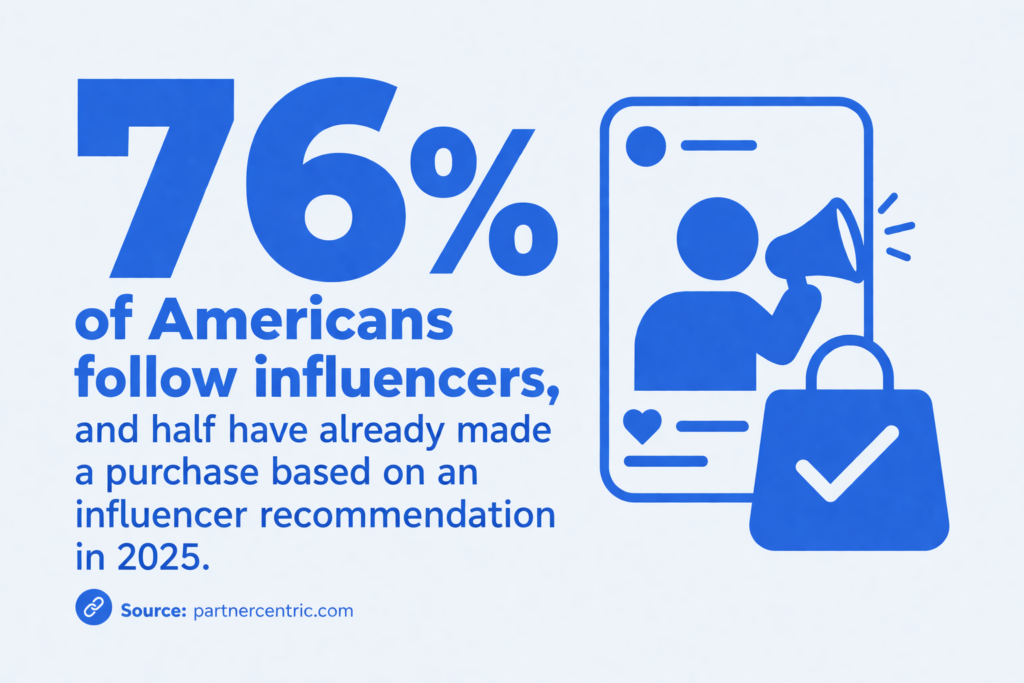
Consumers love influencer content. For product-led brands, review links can be one of the few realistic paths to links that are close to the commercial layer. When used the smart way, influencer or creator reviews can support both your pages and branded campaigns.
The key is selectivity. You want creators whose audiences overlap with your market and whose websites or publishing platforms actually matter from an SEO perspective. A social mention alone is not really a backlink strategy.
10. Donation and sponsorship links
These are a winning move when such links reflect a real relationship and a legitimate placement.
Examples include:
- Event sponsor pages
- Charity partner pages
- Local initiative sponsor pages
- Scholarship or program support pages
The SEO value depends on context, relevance, and editorial legitimacy. Random donations made purely to collect links are usually weak.
11. Google Business Profile links
Don’t abandon these. For stores with physical locations, local pickup, showroom presence, or hybrid retail operations, your Google Business Profile is a pretty big factor for visibility and local trust.
It’s not a substitute for editorial backlinks, but it’s part of a cleaner authority footprint for local or regional eCommerce operations. It supports brand validation and can reinforce discovery pathways.
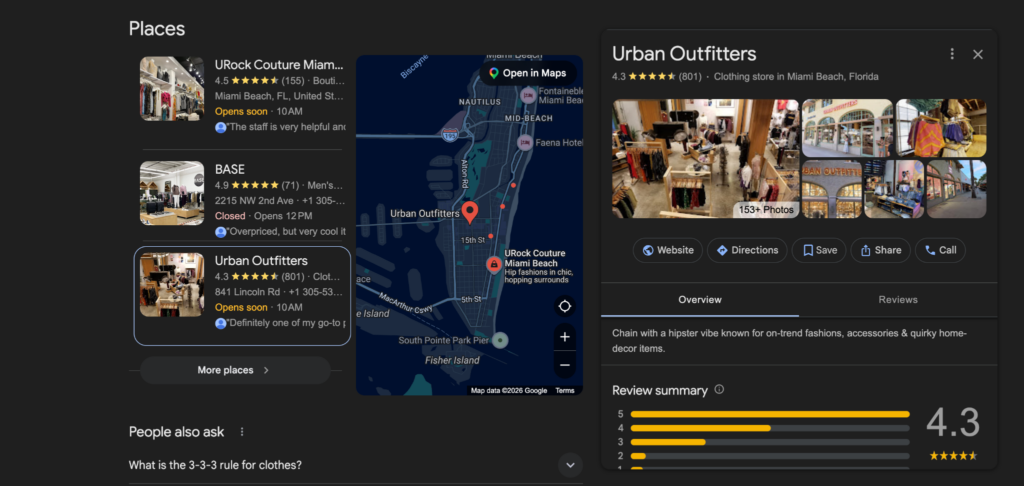
An example of a GBP page.
12. Resource pages
Finally, there are resource page links. These are still useful when the page is actually curated and topical. Good targets here include:
- Gift resource lists
- Niche directories
- Buying resource hubs
- Professional association pages
- Educational lists
- Community-curated vendor lists
Poor targets are generic “resources” pages that exist only as link farms. Avoid those as they bring zero value.
Which eCommerce Pages Deserve Link Building Support
Not every page on an eCommerce site deserves the same link-building effort. Some pages are strong long-term targets because they capture demand, stay live, and can turn extra authority into rankings and revenue. Others are harder to support directly, either because they are too narrow, too temporary, or too dependent on inventory changes.
That is why link building for eCommerce works best when you match the strategy to the page type instead of pushing every URL through the same process.
The table below breaks down which eCommerce pages are usually worth supporting, which best-fit link building strategies work for each, and what limitations to watch before you invest in links.
| Type of page | Best link building strategies | Main limitations |
| Homepage links | Guest posting, journalist outreach, partner and supplier links, brand mentions, sponsorship links | Broad impact, but less precise for ranking specific commercial queries |
| Category and collection pages | Guest posts, niche edits, outreach, resource pages, partner links | Harder to pitch than content assets; weak or thin pages won’t get much value from links |
| Product pages | Influencer review links, product roundups, supplier links, digital PR | Hard to scale; many product pages are too narrow or short-lived for active link building |
| Blog posts and content hubs | Link-worthy content creation, skyscraper campaigns, broken link building, journalist outreach, resource pages | Easier to earn links to, but indirect impact unless internal linking is strong |
eCommerce Link Building Tactics You Should Avoid
There are lots of link building mistakes to be made (and avoided!), but for eCommerce SEO, a few are especially worth watching out for.
Undisclosed sponsored placements
Sponsored placements that are passed off as editorial without proper qualification create risk and often leave a footprint. Even worse, the sites selling them in bulk are often low-trust environments.
Tip: If a placement is paid, treat transparency as part of quality control. Check how the site handles sponsored content, whether outbound links look over-commercialized, and whether the article still makes sense for real readers. If the whole page feels built for selling links rather than publishing useful content, skip it.
Low-quality link inserts
A niche edit on an irrelevant, decaying, or obviously monetized article is not a smart shortcut. It can turn into a budget leak faster than you might think.
Bad insertions tend to share the same pattern:
- Weak topical fit
- Awkward anchor placement
- Low-quality host content
- No visible audience value
Sitewide links in footers and sidebars
These types of links may look efficient because one agreement can produce dozens or hundreds of links. In reality, though, they’re usually a weak form of SEO eCommerce backlink acquisition. They have:
- Poor editorial context
- Repetitive anchors
- Sitewide footprint
- Low topical precision
You won’t get much out of such placements.
What Makes a High-Quality eCommerce Backlink
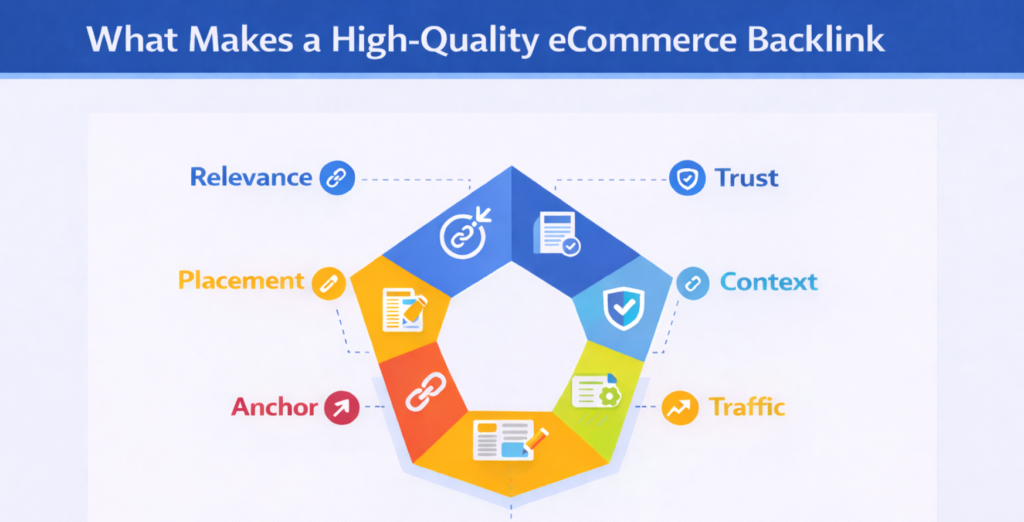
What makes a backlink trustworthy is usually a standard set of factors, and they’re all relevant for eCommerce SEO.
Relevance
Topical relevance is still one of the first filters for search engines.
A backlink from a page that genuinely overlaps with your niche usually has more value than a strong-on-paper domain in a random topic cluster. Google uses links to understand relevance, and modern link evaluation clearly goes beyond raw domain metrics.
Authority and trust
Authority is not just a DR-style score. Look beyond it and take into account:
- Publishing quality
- Niche coherence
- Historical stability
- Editorial standards
- Indexation patterns
- Visible trust signals
Anchor text and link context
The anchor should fit naturally, always. It should not look stuffed, forced, or overly optimized.
Don’t forget the surrounding paragraph either. A link placed in a strong context is easier for users and search engines to interpret than one dropped into generic filler text.
Editorial placement
You already know that footer links are weak, and so are author bios, footers, sidebars, or templated widgets. Links embedded in the main body of a relevant article carry much more weight.
Traffic
Traffic is not a perfect quality signal, but it still plays a role. A placement on a page that ranks, gets crawled, and attracts real visitors is obviously more defensible than a placement on a dead article nobody sees. On top of that, referral traffic also gives you a second layer of value beyond rankings.
Natural link profiles
One good link in a terrible pattern is still part of a terrible pattern. Natural-looking eCommerce backlink profiles usually include:
- Varied anchors
- Mixed destination pages
- Different link types
- Different domain types
- Different acquisition patterns over time
If every link points to one commercial page with near-match anchor text, the profile will just look synthetic.
How to Build Backlinks for eCommerce
To do the job right, you need a smart combo of goal-setting, asset selection, and link-building automation. Here are six simple steps to follow.
Step 1. Choose the right pages to build links to
This is the foundation of any serious backlinks for eCommerce plan. Start with page prioritization, not tactics, those will follow.
Pick pages based on:
- Revenue potential
- Ranking proximity
- Search intent alignment
- Page quality
- Ability to absorb and distribute authority
Most stores should prioritize:
- Key category pages.
- Collection pages.
- A few content assets.
- Selected product pages.
- Homepage support.
Step 2. Create or improve linkable assets
Before outreach, ask what the page offers the linker. If your target is a guide, make it cite-worthy. If your target is a category page, improve the supporting context around it. If you need indirect support, build a content hub that can earn links and pass value internally. This is where many link-building strategies for eCommerce live or die.
Pro tip: Don’t try to make every page linkable. If a category or product page won’t realistically earn links, stop forcing it. Just build a supporting asset (guide, comparison, use-case content) that can attract links, then route that authority internally to your commercial pages.
Step 3. Choose the right link type for each page
Match the strategy to the page:
- Homepage → partner links, media mentions, guest posts, journalist links
- Category pages → niche edits, guest posts, resource pages, outreach
- Product pages → reviews, roundups, supplier pages, PR
- Blog posts/content hubs → skyscraper, outreach, broken links, journalist pitching
This prevents the common mistake of pushing every page through the same tactic.
Step 4. Use Serpzilla to filter sites and launch placements at scale
Execution starts at this point, and you can make it much faster and easier with Serpzilla.
Once you know the target page and link type, Serpzilla helps turn strategy into a straightforward acquisition workflow. You won’t have to manually sift through random prospects. Simply use the platform to narrow your choices by niche, language, geography, and other placement criteria to build a clean shortlist and launch placements at scale.
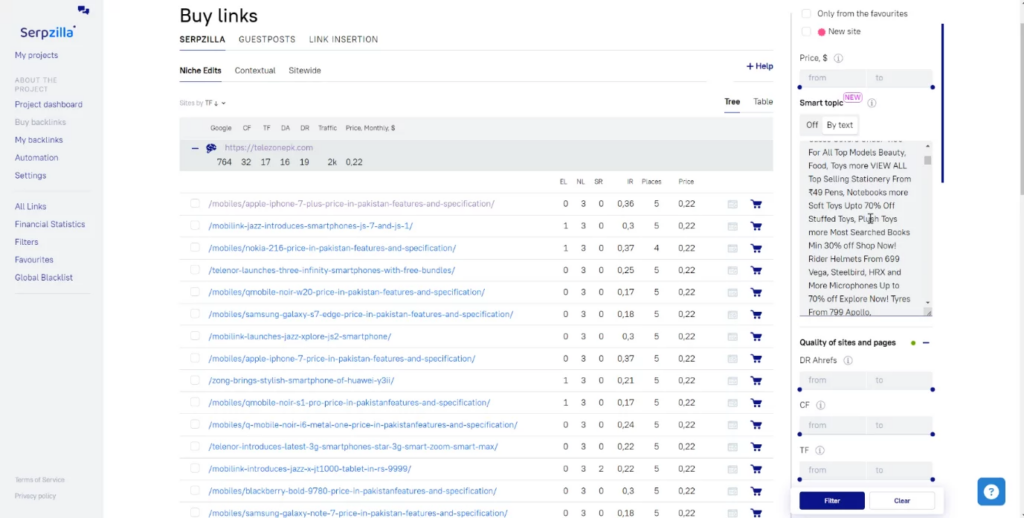
This speed is key in eCommerce. Otherwise, scale without filtering will leave you with bloated, low-impact backlink profiles. You can learn more about smart link-building in our detailed guide.
Step 5. Reinforce priority pages through internal linking
Once links are live, support them internally for better impact. Internal links help distribute value and improve the site’s topical structure.
For example:
- A linked guide should point to relevant categories
- A linked category page should sit in a strong hierarchy
- Related pages should reference each other where it makes sense
Step 6. Monitor live links to assess performance
It’s not enough to buy placements. To get backlinks for eCommerce website growth that brings in tangible results, you need ongoing visibility into live placements and the pages they support.
Track whether the links:
- Stay live
- Stay indexable
- Point to the right canonical
- Support ranking movement
- Send referral traffic
- Contribute to organic growth on the target page
How to Measure eCommerce Link Building ROI
A real eCommerce link building campaign should be measured by business-facing outcomes, not just by raw referring domain count. Watch a few key metrics to see how the links are doing.
Visibility growth for priority pages
Look into how supported pages change visibility for the terms they were chosen for. The things to watch include:
- Keyword footprint growth
- Movement into top 20, top 10, and top 3
- Improved visibility for category clusters
- Improved presence for money terms
Organic click growth on supported pages
Clicks will tell you whether the visibility gain is reaching users. Here, it’s a good idea to use Google Search Console and analytics to compare:
- Pre-link baseline
- Post-link trend
- Seasonality-adjusted performance
- Page groups versus unsupported controls
Pro tip: Map each link campaign to target query sets. This helps you see whether the linked page improved for the keywords it was supposed to win.
Referral traffic from new links
A good backlink can help rankings and still send direct visits. Track both. Referral traffic is especially useful for:
- Review links
- Resource page links
- Partner pages
- Media features
- Niche editorial placements
Assisted impact on leads or sales
After all, this is what you’re ultimately going for, right? Attribution here is never perfect, especially for SEO, but you can still look for assisted impact:
- Higher product discovery through supported categories
- Increased conversion pathways from organic landing pages
- Better assisted revenue from category or content hub entries
- Stronger branded search after media or review placements
Durability of SEO impact
One overlooked metric is durability. Did the supported page hold gains for months, or spike and vanish? Did links stay live? Did the target page remain competitive? Did rankings hold through refresh cycles?
Durability separates real eCommerce link building tactics from temporary surface-level steps.
Final Thoughts
The best eCommerce link building strategies start with page logic. First, decide what deserves support. Then make those pages worth supporting. Then choose the link type that fits each page. Then filter aggressively, review placements like an adult, and measure what changed in rankings, clicks, referral traffic, and commercial impact.
Use Serpzilla as infrastructure for clean prospect filtering, scalable placements, and a more controlled way to run link building for eCommerce without drowning in manual prospecting.