Backlink pricing has always been one of the murkiest parts of SEO. Ask ten specialists, “How much do backlinks cost?” and you’ll get ten wildly different answers, from $30 “links” on forgotten blogs to $2,000+ editorial placements on high-authority sites.
This guide breaks everything down with real numbers, clear examples, and a strategy for choosing the right link-building budget, link types, and partners.
You’ll learn:
- What influences link-building cost in 2026
- How much different types of backlinks cost (with real ranges)
- When a high backlink price is justified and when it’s a scam
- Whether it’s cheaper to DIY, hire an agency, or use a platform like Serpzilla, and more
Why Buy Backlinks
Buying backlinks is a realistic response to the market you’re trying to succeed in. Your competitors aren’t sitting around waiting for natural links to show up. They’re proactively earning and buying authoritative mentions to strengthen their domain. If you don’t match that pace, you fall behind even with great content. So backlinks are a part of SEO where intention meets results.
Here’s why businesses still invest serious money into SEO link-building cost in 2026:
1. Backlinks are still one of Google’s top ranking factors
Pages ranking at the top of Google’s SERP typically have ~3.8× more backlinks than positions 2–10.
Source: Backlinko.
Authoritative backlinks still:
- Pass trust
- Help pages appear in AI Overviews
- Improve crawl frequency
- Increase topical authority
A strong link profile is still the single clearest external signal that your site deserves to rank.
2. You can’t rely on natural links alone
Great content can earn links organically, but it’s slow, unpredictable, and niche-dependent. You’re competing against:
- Sites with a decade of link history
- Brands actively investing $5,000–$50,000/month into link building
- Competitors using agencies, PR teams, and platforms
3. AI search made link authority matter even more
Google’s AI Overviews pulls sources they trust deeply. Backlinks influence whether your site becomes a candidate for AI summaries. Domains with strong editorial links begin surfacing more often in AI blocks. They also gain better visibility in LLMs. Ahrefs found that about 76% of AI Overview citations come from pages already ranking in the top 10. So strengthening your backlink profile directly increases your chances of being quoted by AI.
4. Links compound
Unlike paid ads, backlinks don’t vanish when you stop paying. A healthy link profile:
- lifts your whole domain
- makes it easier for new pages to rank
- and supports every new piece of content you publish
Factors Influencing Link Building Costs
As you’ll see in our examples in later sections, link prices swing wildly, and for a reason. The thing is, a link is not a commodity. If you’ve ever wondered “how much does link building cost and why?”, the factors below explain the logic behind the numbers.
1. Quality of the linking site
The same DR on two different domains can hide completely different realities. When evaluating backlink cost, you need to look at:
- Real organic traffic (not just DR/DA)
- Traffic dynamics over the past 3-6 months (watch out for falling numbers over the chosen period)
- Relevance to your industry
- Keyword footprint (what the domain ranks for)
- Topical sections (is there a real blog/category related to your topic?)
- Outbound link patterns (natural editorial behavior or a guest post farm?)
A DR 50 site with 40,000 organic visits and deep, quality content is worth far more than a DR 50 site with 300 visits and 500 low‑effort guest posts.
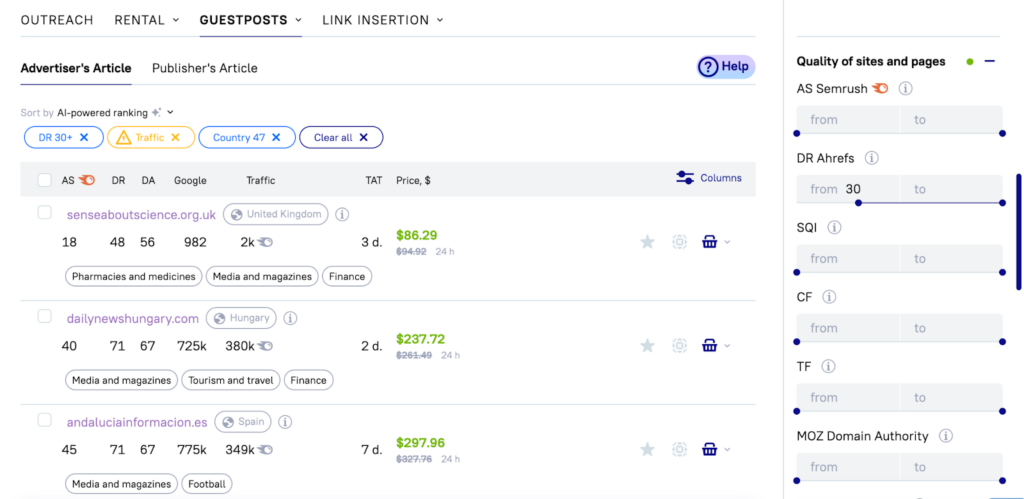
Pro tip: Serpzilla helps you see the real picture here. You can analyze traffic, domain history, and quality flags before you pay for a link, which is how professionals secure the best link-building prices instead of overpaying for empty metrics.
2. Type of link
Different link types come with different cost for link building, because the work behind them is very different:
- Rental link
- Guest post on a niche blog
- Link insertion (niche edit) into an existing article
- Editorial mention in a big publication
- PR‑driven links from news outlets
Each has a different average backlink price, which we’ll detail later.
3. Content requirements
If the site requires a fresh article, you’re not just paying for the link. You’re also paying for:
- Research and ideation
- Expert copywriting
- Editing
- Images/graphics
- Formatting to match the site’s style
So yeah, high‑end publications are picky. That editorial friction shows up in seo link building cost.
4. Outreach and relationship work
Someone has to:
- Find relevant prospects
- Vet them
- Find real contacts
- Pitch topics
- Negotiate placements
- And follow up until the link is live
If you outsource, this is a big part of SEO services link-building costs. If you do it in‑house, it’s salary time. We’ll also look into it in more detail later in the guide.
5. Niche competitiveness
The more money flows through your niche, the higher the link-building prices:
- Finance, crypto, loans, insurance: top tier
- SaaS, legal, B2B tech: very competitive
- Lifestyle, hobbies, local services: often cheaper
$8,406 is the average minimum monthly budget needed to stay competitive in high-difficulty niches.
Source: Editorial Link.
High‑value niches tend to synchronize around higher backlink prices simply because demand is high and risk is higher for publishers.
6. Geo and language
Yes, location is also a cost factor.
- US/UK/Canada: most expensive
- Western Europe: high but slightly more varied
- Eastern Europe, LATAM, Asia: more room for low-cost link building
Pro tip: If your audience is global, you can combine premium US/UK placements with more cost‑effective links from other regions.
→ Also read: Local GEO Strategy: How AI Is Transforming Local SEO
7. Guarantees and format
The stricter your requirements, the higher the link-building price you’ll see. The key points of choice here are:
- Permanent vs. 6–12‑month placements
- Dofollow vs. nofollow links
- In‑content vs. sidebar/footer placements
- Homepage vs. inner page placements
8. Brand strength
Your brand strength can also affect backlink costs. Established brands often secure backlinks more easily and at lower costs. A well-known brand attracts more link opportunities thanks to credibility. Newer or lesser-known brands might face higher costs to build similar backlinks.

Elements of brand strength.
Types of Backlinks and Their Costs (with Examples)
Now for the part everyone always scrolls to: specific numbers.
1. Guest posts (by Domain Rating tier)
Guest post pricing is one of the easiest places to overpay if you don’t know the market. As we explained above, DR alone doesn’t tell the full story, but it’s still a useful way to group pricing.
🔗 DR 30–39 sites
Typical cost: $50–$180 per link
Think of these as starter-level but perfectly usable when you’re building momentum. Many are small niche blogs with modest traffic.
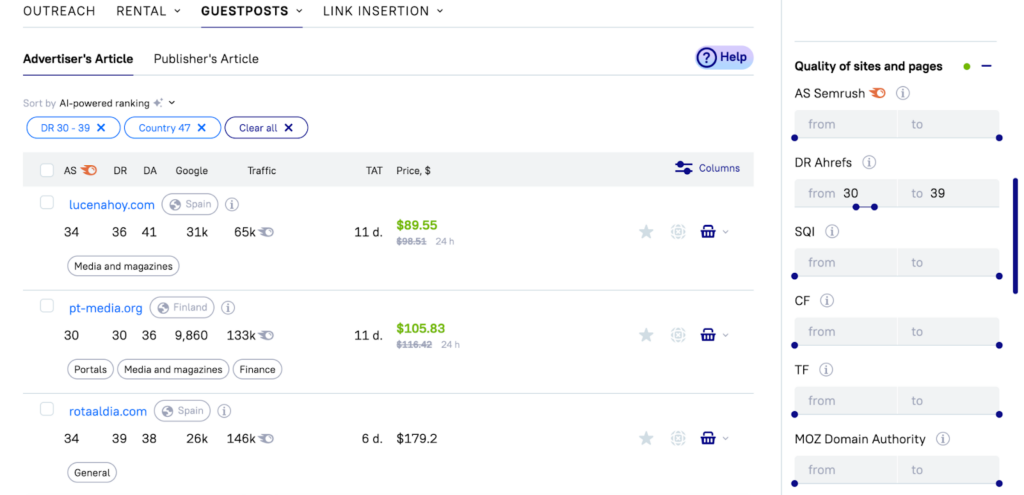
This type of guest post backlinks is best for:
- Supporting long-tail pages
- Filling in anchor diversity
- Warming up a new domain
🔗 DR 40–49 sites
Typical cost: $120–$350 per link
This is a step up with good, mid-level domains with a decent backlink profile. This is where most bread-and-butter guest posts live.
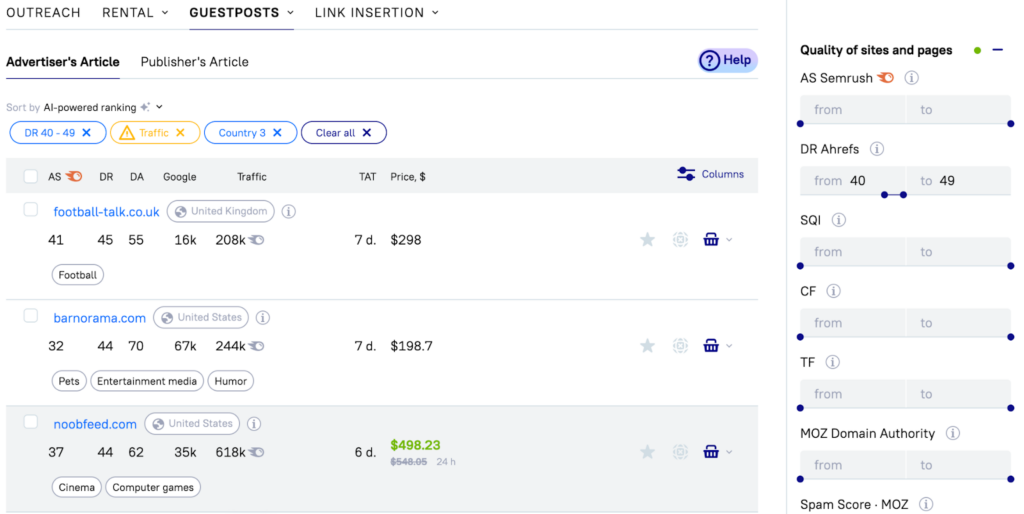
Choose these guest post links for:
- Strengthening supporting pages
- Early authority building
- Potential niche relevance and diversity
🔗 DR 50–59 sites
Typical cost: $250–$600 per link
These are your core power links. You get established, trusted domains (usually with hundreds or thousands of quality referring domains). They are well-indexed and crawling regularly, so new backlinks are discovered quickly by search engines. Besides, you’ll be benefiting from strong internal linking and audience trust.
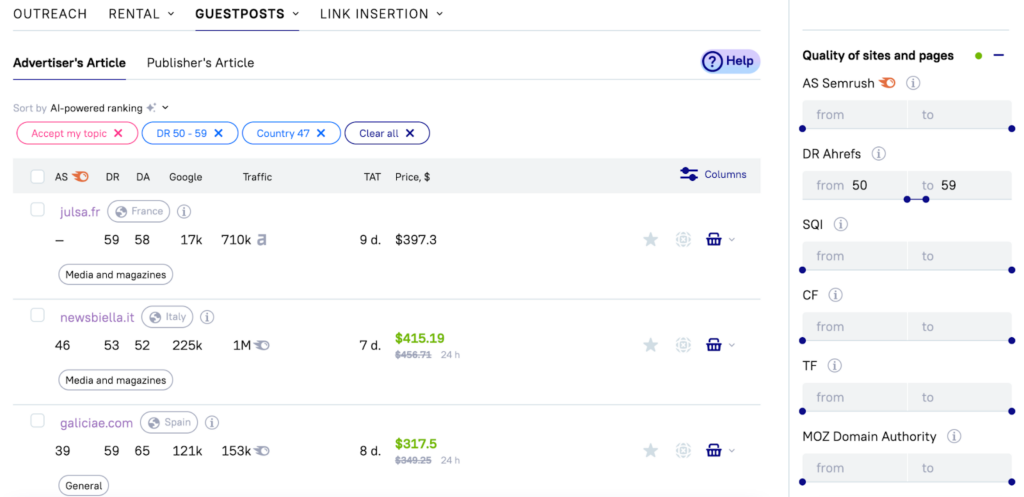
It’s best for:
- Money pages
- Competitive long-tail keyword clusters
- Strengthening key blog posts used for internal link pumping
🔗 DR 60–69 sites
Typical cost: $500–$900 per link
You’ll see high demand, tighter editorial control, and usually meaningful organic performance. It’s not luxury-tier yet, but solid and reliable nonetheless. These sites usually include:
- Well-known industry blogs and media platforms
- Established SaaS review sites
- Strong niche authorities with consistent organic traffic
- Editorial platforms with solid quality control
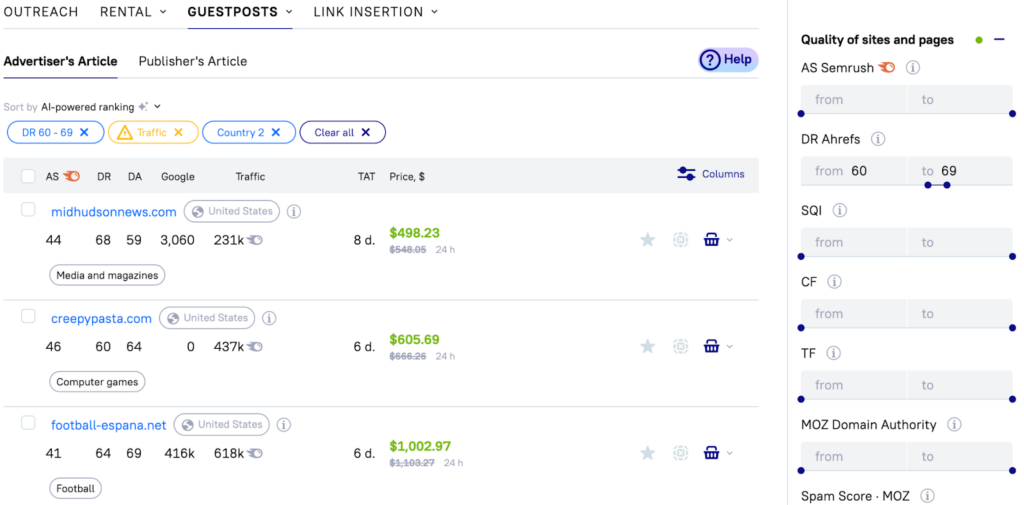
Use these backlinks for:
- Primary money pages
- Key category pages
- Strengthening topical authority
In terms of raw SEO power, one link from DR 60–69 can match two-four links from DR 40–49 sites (assuming relevance and placement quality, of course).
🔗 DR 70+ sites
Typical cost: $900–$2,000+ per link
This is the top shelf. You’ll be buying backlinks in established industry publications, big media, and reputable niche leaders. They carry real trust, real traffic, and a real name behind them.

Spend on this tier for:
- Cornerstone content (guides, benchmark studies, data-driven articles) that needs top-tier validation
- EEAT-heavy niches
- Brand-building plays
- Launch of a major product/feature when you want maximum credibility
For a balanced link-building strategy, a good mix is:
- ~ 50% mid-DR (40–49): easy, scalable supporting links
- ~ 30–40% DR 50–59: solid authority workhorses
- ~ 10–15% DR 60–69: high-impact authority boosts
- ~ 5–10% DR 70+: premium/strategic links for authority, trust, brand
This structure balances scalability, cost-efficiency, and long-term authority.
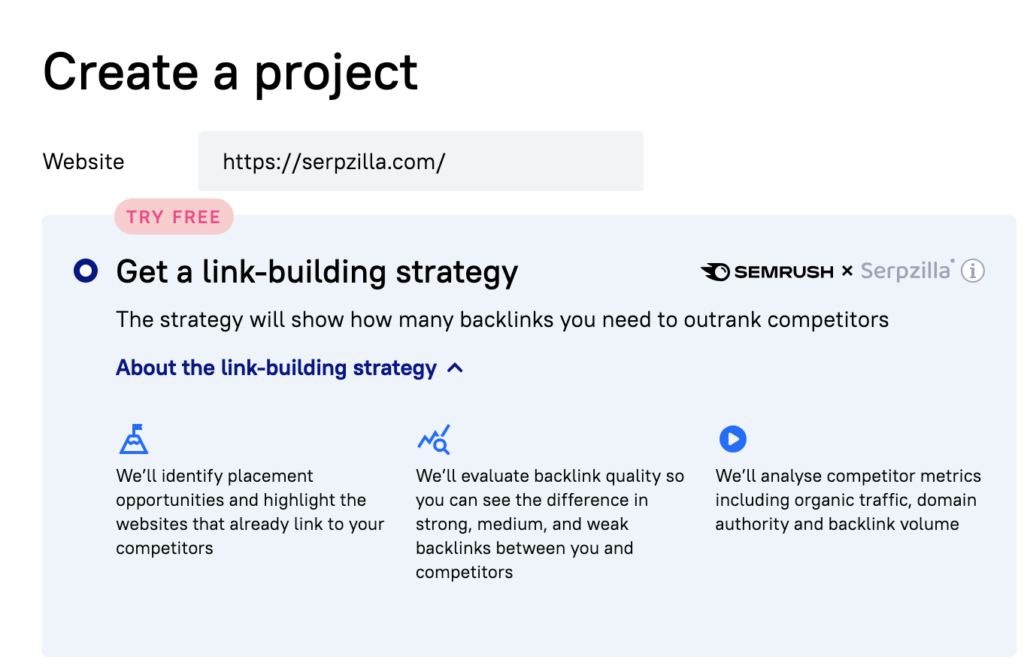
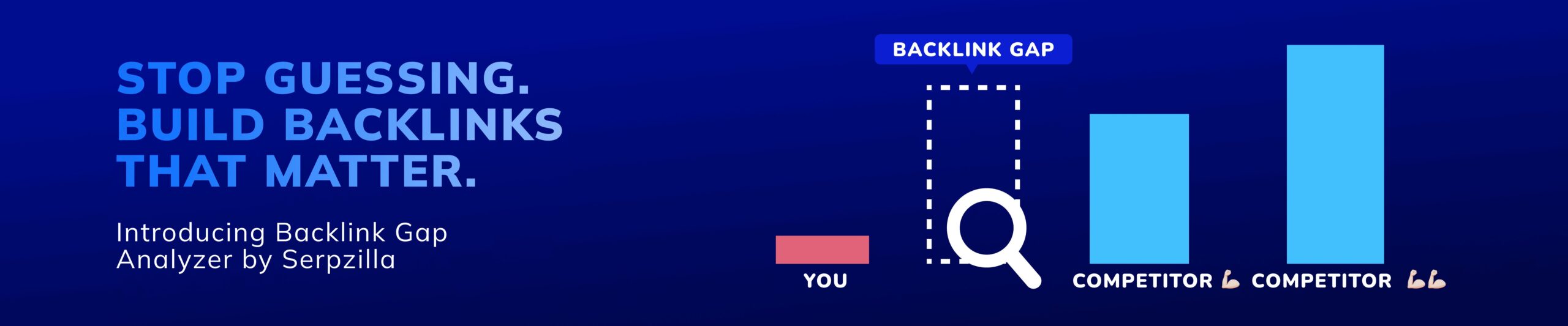
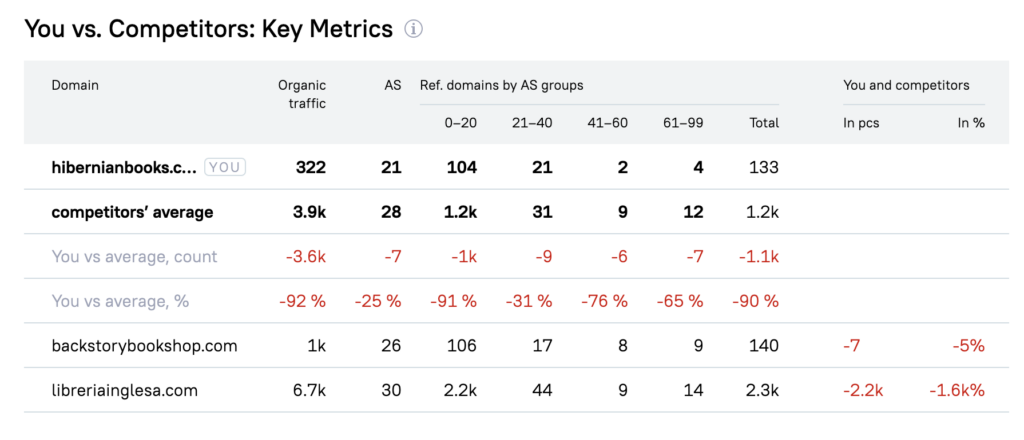
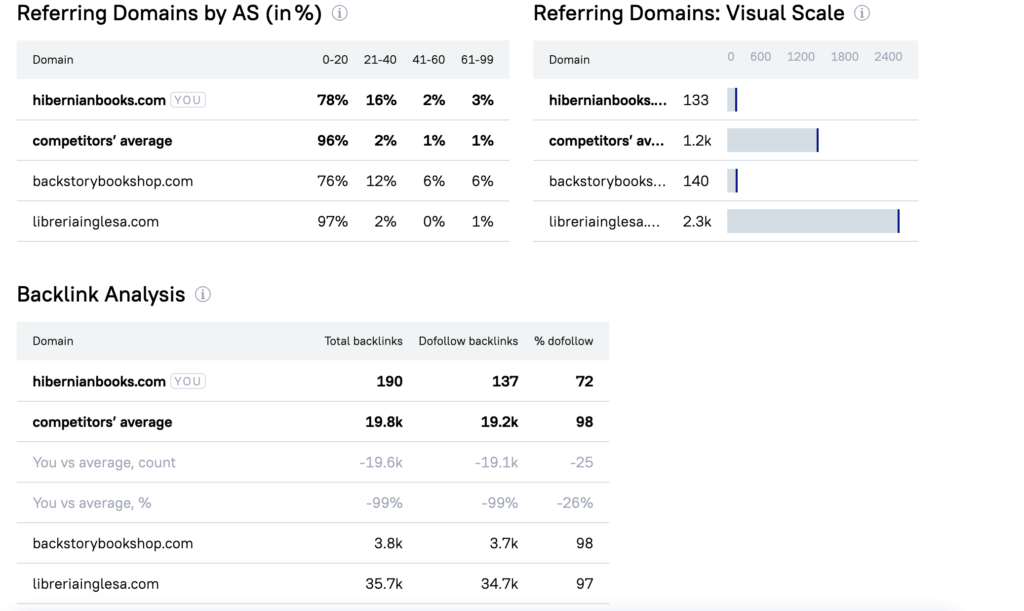
Pro tip: If you want to understand exactly how many links you need and which tiers will actually move rankings without guessing, Serpzilla has launched a new feature built in an official partnership with Semrush. It pulls competitor data directly from Semrush and builds a ready-to-execute link-building strategy for you.
- You simply enter competitor domains
- The tool analyzes their authority, tiers, and link velocity
- It tells you how many backlinks you need and in which tiers
- Your first full strategy is free (available for new users)
This is the fastest way to avoid overspending and to understand exactly where your limited budget will have the strongest impact.
2. Rental links (temporary backlinks)
Rental links stay live only as long as you keep the subscription active. They are ideal for jump-starting link building from scratch or rapidly strengthening your backlink profile to compete with stronger players in the SERPs. The price depends on where the link sits and how integrated it looks. Search engines don’t label links as “rental” or “permanent.” If the link is live, relevant, and placed on a real page, it passes value.
🔗 Contextual rental links
Typical cost: $40–$80 per link per month
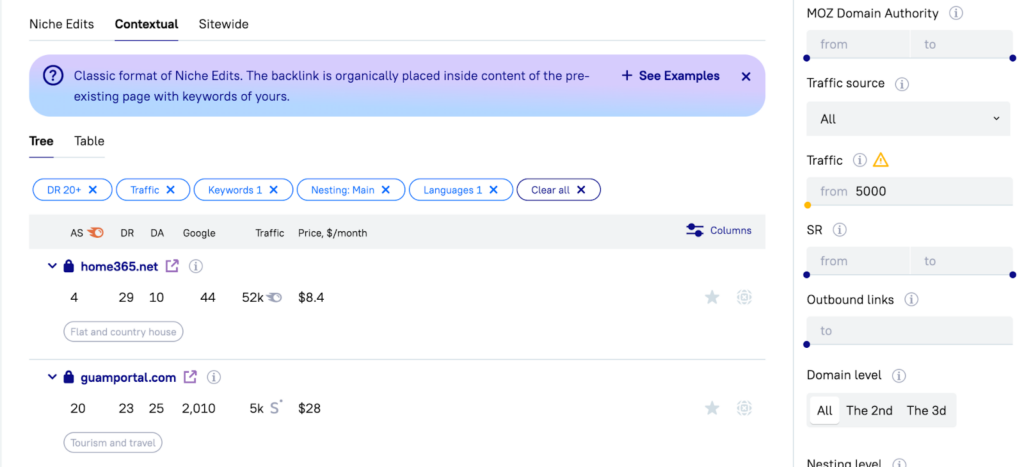
These look like normal contextual backlinks placed inside an existing article, but the placement is time-bound. They tend to perform better than sidebar or footer rentals because these are natural editorial placements.
🔗 Niche edit rentals
Typical cost: $20–$50 per link per month
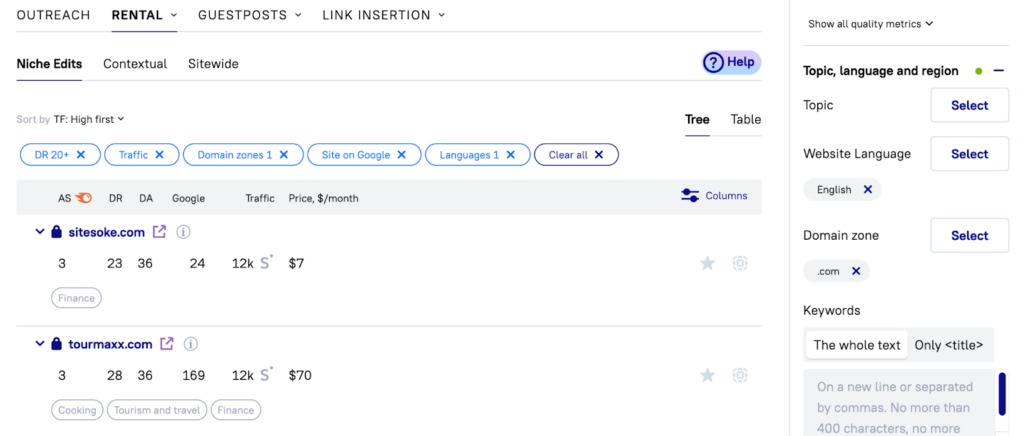
These are added to aged articles with existing authority, but instead of being permanent, the publisher charges a recurring fee.
In general, rentals are flexible, budget-friendly, and easy to scale up or down. Think of them as an on-demand boost you can tap into whenever you need momentum.
Buy and use this type when:
- You need quick indexation
- You’re supporting seasonal campaigns
3. Crowd links
Crowd links are cheap, flexible, and good at making your link profile look alive as long as you use them sparingly and keep them natural.
They live on:
- Forums
- Q&A sites
- Comment sections
- Niche communities
Typical cost: $5–$40 per link
They won’t rank your money page on their own, but they’re useful for anchor/URL variety, building a natural base, supporting branded search patterns, and giving LLMs content to quote you naturally.
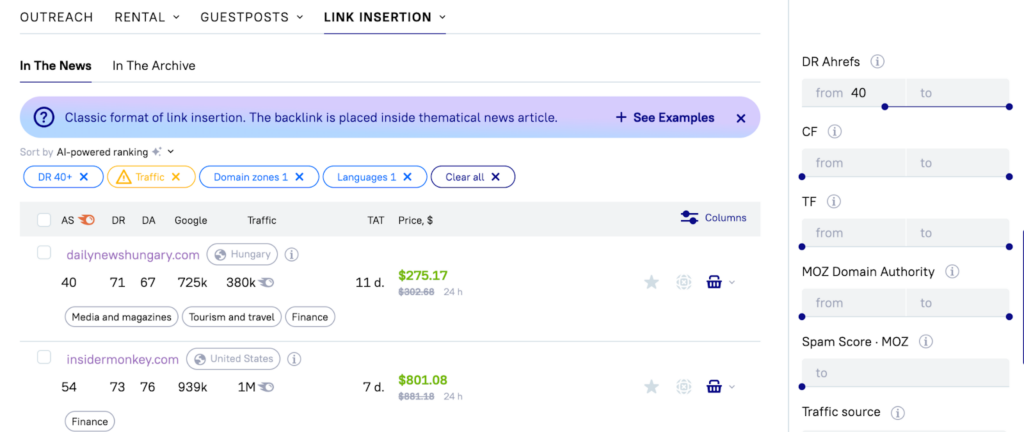
4. Link insertions/Niche edits
These are added directly into existing articles with age, links, and traffic, which is why they often outperform guest posts. You can think of them as shortcuts to existing authority.
Typical cost: $300–$1,000 per link
This type of purchase is best for:
- Product pages
- Competitive commercial terms
- Updating older campaigns with faster results
How to Tell a Fair Price from a Rip‑Off
Price alone doesn’t tell you much. A $100 link can be a fantastic bargain or a waste, just like a $1,000 link can be a smart investment or just an overpriced guest post that won’t get you far.
So let’s sort this out and see what you should be paying attention to when assessing the link prices.
Here are some red flags that often signal inflated prices:
- High DR but almost no traffic to the page
- Obvious guest post farm (every article follows the same template, but with different brands)
- 20+ outbound links per article
- No clear editorial focus or audience
On the other hand, a higher backlink cost can make sense when:
- The site has stable, high‑quality organic traffic
- The topic is tightly relevant to your business
- The article sits in a strong cluster of topical content
- The domain is a trusted source in your niche
- The link can drive real referral traffic or conversions
In other words, look at a broader context and remember that DR alone is no sign of link quality.
DIY vs. Agencies vs. Platforms: Which Link Building Model Is the Most Cost-Efficient?
There are different ways to source backlinks, but the main ones are:
- DIY link building. You and your team do everything yourselves: prospecting, outreach, writing, negotiating, and tracking.
- Agency-led link building. You hire a specialist agency to run the entire operation: strategy, content creation, outreach, and reporting.
- Marketplaces like Serpzilla. You choose the sites and anchors, and the platform handles the logistics. You pay only for the links you want, with full visibility into prices, metrics, and quality.
Each option brings with it an added cost of link-building besides the link purchases (although platforms often provide free tiers and versions). Here’s a side-by-side comparison so you can see how each model impacts budget, control, and scalability.
| Model | Typical cost | Pros | Cons | Best for |
| DIY | $0–$3,000/mo | Full controlLowest direct spendGreat for learning | Time‑heavySlow scaleHigh rejection | Early‑stage sitesLow‑competition niches |
| Agency-led | $3,000–$20,000+/mo | Hands‑offFast scaleVetted editors | ExpensiveTransparency varies | SaaS, finance, legal, enterprise |
| Marketplaces | Pay per link ($20–$1,500+) | Transparent pricesQuality filtersBudget control | Requires basic link quality understanding | Teams wanting control + efficiency |
The comparison makes the real trade-offs clear:
- DIY saves money but costs time
- Agencies save time but cost money
- Platforms like Serpzilla sit right in the middle, giving you control without the overhead
How to Estimate How Many Links You Need
Or, rather, the question you should be asking is “How many links do I need, at roughly what quality, to realistically compete for my target keywords?”
The simplest approach is a competitive gap analysis. It takes just four steps:
Step 1. Pick a target page or cluster
Choose a money page or cluster of pages you want to rank. You can also start with a single high-intent landing page and expand the cluster later on, once you understand the competitive link gap.
Step 2. Spot your top competitors
For your main keywords, list the top 5–10 ranking pages.
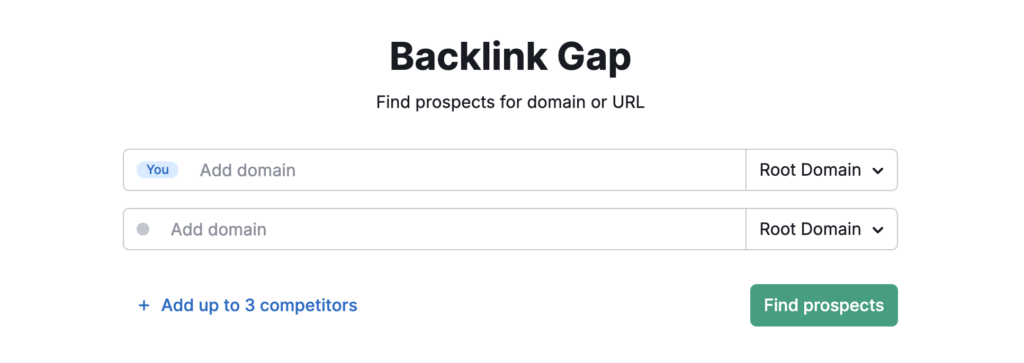
Use tools like Semrush’s Backlink Gap feature.
Step 3. Compare link profiles
For each competing page, check:
- Number of referring domains
- Authority and relevance of those domains
- Mix of anchors
- Link velocity over the last 12 months
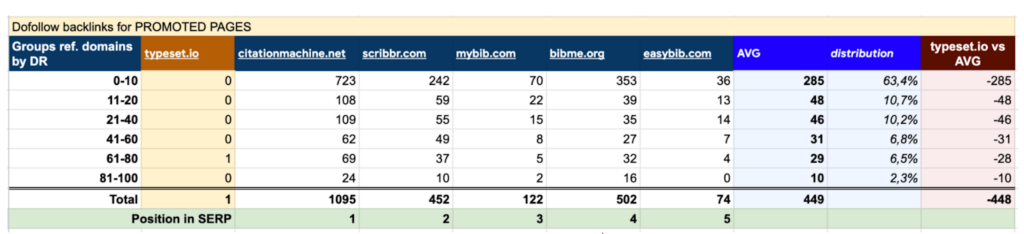
An example of a competitor comparison table with Serpzilla’s Automated Backlink Strategy.
Step 4. Define your gap
Let’s say here’s what you found during the link gap assessment:
- The top 3 competitors have 40–70 referring domains to their target pages
- While you only have 5
Realistically, you might set a goal of adding 25–40 solid links over the next 6–12 months, with a healthy mix of:
- Mid‑tier guest posts
- Some link insertions
- Rental backlinks
- A few higher‑authority placements if the budget allows
From there, you can calculate your working link-building budget based on realistic backlink prices for your niche. Once again, you can do it manually, or you can skip the math entirely and let Serpzilla’s Semrush-powered strategy builder do it for you. It pulls competitor data automatically and builds a full backlink strategy.
Pro tip: In Serpzilla, you can also simulate different mixes (for example, 20 mid‑tier + 5 insertions + 2 high‑authority) and instantly see the resulting link-building cost. This gives you instant insight into the budget expectations.
How Much to Budget per Month for Link Building in 2026
Alright, let’s put all of this into monthly numbers. Below are some realistic ranges for brands that take SEO seriously.
Local and low‑competition niches
💰 Typical monthly budget: $500–$2,000
Focus on:
- Citations and local directories
- A handful of mid‑tier guest posts
- Occasional niche insertions
Here, you can lean heavily on low-cost link building and still see steady gains.
Medium‑competition eCommerce and content sites
💰 Typical monthly budget: $2,000–$7,000
Focus on:
- Consistent mid‑tier guest posts
- Link insertions to key commercial and category pages
- Some experimentation with higher‑authority links in your main category
High‑competition SaaS, finance, legal, and health
💰 Typical monthly budget: $7,500–$20,000
Here, the cost of link-building is directly tied to how aggressive your growth plans are.
You’ll usually want to mix:
- 10–40 links/month across several quality tiers
- PR‑driven campaigns for authority
- Content + link campaigns around key pain points
Enterprise and global brands
💰 Typical monthly budget: $20,000–$100,000+
At this level, link building is fully integrated with PR, brand, and content strategy.
Across Serpzilla’s user base, a “typical” active campaign often sits in the $5,000–$20,000/month bracket, especially when link building is paired with serious content marketing.
How to Build Links When Your Budget Is Tight: Top Cost‑Saving Strategies
A tight budget doesn’t mean you can’t build links, but you need to be smarter and more selective. Here are three ways to stretch every dollar without sacrificing quality.
1. Focus on pages that move revenue
If your budget is limited, don’t spread it across random URLs. Pick the pages that directly impact your business:
- Your main money pages
- High‑intent landing pages
- Product or service pages
- Category hubs
- Content pieces already ranking in positions 5–20
A single strong link to a page at position 12 can push it into the top 5 and deliver far more ROI than ten low‑impact links to pages that don’t convert.
2. Mix a few strong links with smart supporting signals
You don’t necessarily need 30 expensive links to gain enough traction. Try a more cost-efficient structure like:
- 1–2 mid‑tier guest posts (for authority)
- 2–3 niche insertions (for faster movement)
- 5–10 rental links (for profile diversity)
You won’t blow up your budget this way, but still see some solid results.
3. Start with Serpzilla to get transparent pricing and avoid low‑quality traps
When budgets are tight, the worst mistake is overpaying for weak links or getting stuck in long agency retainers. Serpzilla is designed for efficiency, letting you:
- Filter links by DR, traffic, niche, geo, and price
- See the full price before you commit
- Check spam indicators and quality metrics
- Control your link-building spend month by month
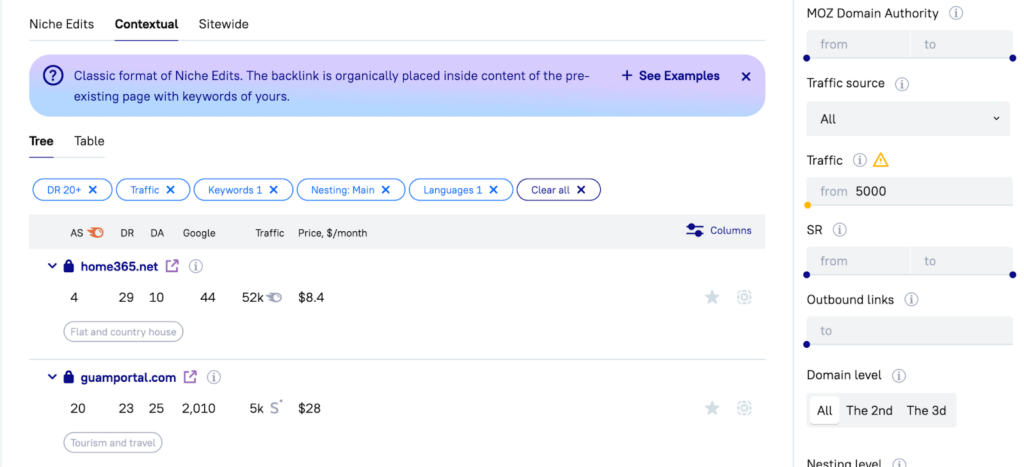
This makes it far easier to build a clean, effective link profile even with limited resources. You can book a free demo to see the platform in action.
Final Word
There’s no single universal answer to how much link-building costs. The honest answer is, it depends on your niche, goals, and standards.
But you now know what drives link building pricing up or down, which link building prices are normal for each type of link, and how to structure a realistic monthly link building budget.
Treat link building like any other investment: compare options, track performance, and insist on transparency. Your SEO link-building cost will stop being a black box and become a controllable, optimizable part of your growth engine.