Guest posting is no longer the “cheap links” tactic it once was. In 2026, it sits somewhere between digital PR, brand placement, and classic link building. And pricing reflects that shift.
If you have tried to buy guest posts recently, you have probably noticed two things. First, prices vary wildly. Second, most pricing discussions online feel outdated or detached from reality. You will see claims like “guest posts cost $50” right next to offers asking $1,500 for a single placement, often without a clear explanation of what drives the difference.
This article breaks down what guest posts actually cost in 2026 and why. We will look at real pricing data, explain how niche and Domain Rating affect cost, and show what you should realistically budget depending on your industry and SEO goals.
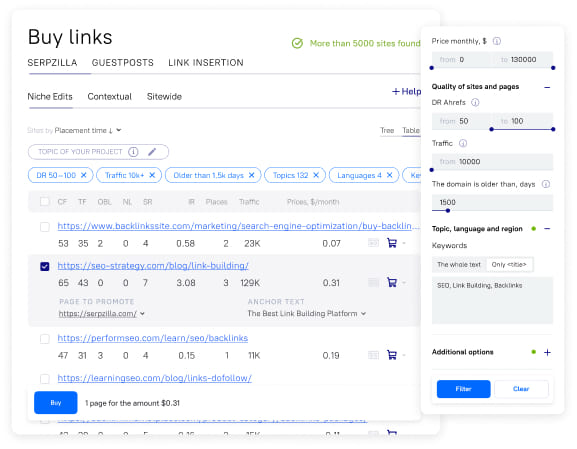
All average prices below are based on live marketplace data from Serpzilla, using thousands of guest post offers across multiple niches and DR ranges, and on data from other places where you can buy guest posts. If you want to explore the data yourself, you can browse current guest post offers directly on the platform => https://serpzilla.com/guest-posting/
Average Guest Post Costs in 2026
Let’s start with the numbers.
Based on Serpzilla marketplace data, guest posts in 2026 start at approximately $100. This is a real entry point, not a theoretical minimum. At this level, you are typically looking at lower-DR sites, smaller blogs, or less competitive niches.
From there, prices scale quickly depending on two main factors:
- The website’s Domain Rating
- The niche and its commercial value
Below is an overview of average guest post prices by niche, assuming a mid-range DR site, usually DR 30–60. These are not outliers or premium editorial placements, but realistic averages you will see when sourcing links at scale.
| Niche | Average Guest Post Price (USD) | Notes |
| General Blogs / Lifestyle | $100–180 | Entry-level placements, often multi-topic sites |
| Tech & SaaS | $180–350 | Higher editorial standards and link demand |
| Marketing & SEO | $200–400 | Saturated niche with strong competition |
| E-commerce | $180–320 | Often tied to commercial anchors |
| Business & Finance | $250–500 | Stricter moderation, higher trust requirements |
| iGaming & Gambling | $350–700 | High-risk niche with limited publishers |
| Crypto & Web3 | $300–650 | Volatile pricing, depends heavily on site history |
| Health & Wellness | $200–450 | Strong content rules, medical disclaimers required |
| Legal | $300–600 | Low supply, high editorial control |
| Real Estate | $220–420 | Strong commercial intent |
Why $100 Is the Real Starting Point in 2026
A few years ago, you could still find $30–50 guest posts that worked, at least temporarily. In 2026, that price range has almost disappeared from legitimate marketplaces.
There are several reasons for this:
- Website owners are more selective due to Google’s link spam policies
- Editorial time has become more expensive
- Many publishers now treat guest posts as a monetization product, not a favor
At around $100, you usually get:
- A real website with a publishing history
- Basic editorial review
- A contextual dofollow link placed inside content
Anything significantly cheaper often comes with trade-offs like poor indexing, recycled domains, or obvious link-selling footprints.
In the next section, we will break pricing down further by Domain Rating and show how much DR actually influences the final cost, and where paying more stops making sense.
The Main Factors That Influence Guest Post Cost
Guest post pricing is not random. In 2026, most platforms and publishers rely on a fairly consistent set of criteria when setting prices. While every site is different, almost all price differences can be explained by three core factors.
Domain Rating and Overall Authority
Domain Rating is still one of the strongest price drivers in guest posting.
In simple terms, higher DR usually means:
- The site has a stronger backlink profile
- It passes more ranking value
- It is harder to replace with cheaper alternatives
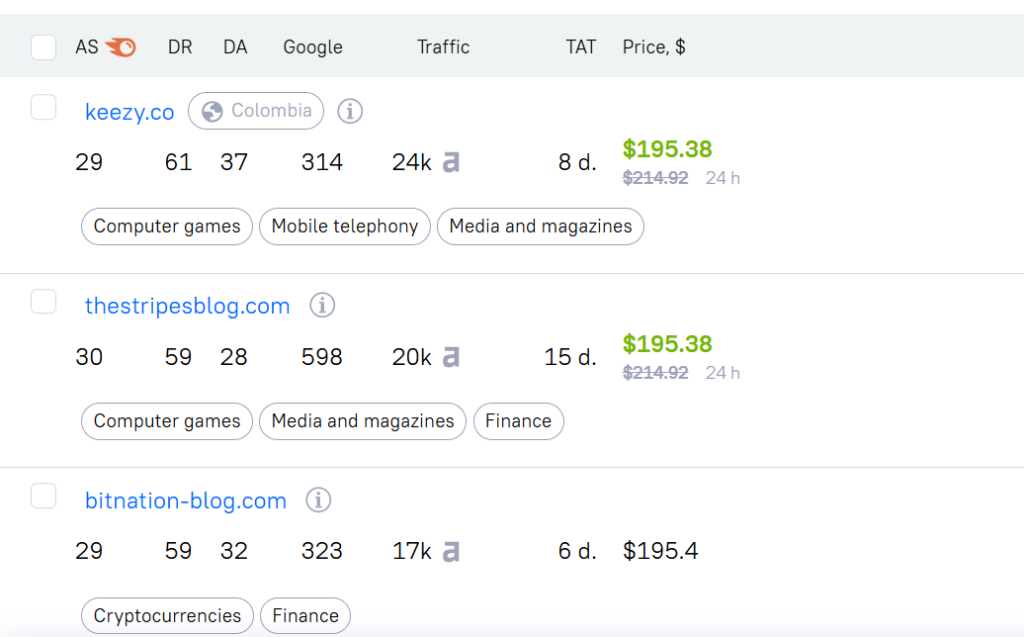
On Serpzilla, you can clearly see how pricing grows as DR increases. A DR 20–30 site may offer guest posts starting at $100–150, while DR 60–70 sites often sit in the $400–700 range in competitive niches.
That said, DR alone is not everything. In 2026, buyers are more cautious about inflated metrics. Sites with artificially boosted DR but low traffic or weak content tend to be priced lower than “clean” sites with the same DR.
In practice, publishers charge more not just for the number, but for the effort it takes to maintain authority over time.
Niche Demand and Risk Level
The niche you are operating in can double or triple the price of the same DR link.
Highly commercial or high-risk niches such as iGaming, crypto, finance, and legal consistently cost more. The reason is simple. Fewer websites are willing to publish content in these areas, and those that do take on higher moderation and reputational risk.
For example:
- A DR 50 general blog might charge around $180–220
- A DR 50 gambling or crypto site can easily charge $400–600 for the same placement
On the other end of the spectrum, lifestyle, general business, or hobby niches tend to be cheaper because supply is much higher.
This is also why niche-relevant guest posts are more expensive than generic placements. A link from a site that is already focused on your industry carries more SEO and trust value, and publishers price that in.
Traffic Quality and Editorial Standards
Traffic is becoming increasingly important for pricing in 2026.
Publishers with stable organic traffic, real readers, and visible engagement charge more because their links are harder to classify as purely SEO-driven. A guest post on a site with 20,000 monthly organic visits is usually more expensive than one on a site with similar DR but no traffic.
Editorial standards also play a role:
- Manual content review
- Topic relevance checks
- Limits on outbound links
- Requirements for original, in-depth articles
All of these increase the publisher’s workload. As a result, sites with real editorial processes rarely offer cheap placements.
On Serpzilla, this is often reflected in filters that allow you to sort by traffic and content type. In many cases, paying slightly more for a site with real traffic and editorial control leads to more stable rankings over time.
Up next, we can break down guest post pricing by Domain Rating ranges or go deeper into how pricing differs by niche with concrete DR examples, depending on where you want to take the article next.
Guest Post Pricing by DR
Domain Rating remains one of the most commonly used benchmarks when pricing guest posts. While it should never be the only metric you rely on, DR is still a convenient way to understand a site’s relative authority and link potential.
Below is an overview of average guest post prices by DR range, based on current Serpzilla marketplace data. These prices are shown without tying them to a specific niche, to illustrate how DR alone influences cost.
| DR Range | Average Guest Post Price (USD) | When These Sites Make Sense |
| DR 0–20 | $80–130 | New projects, early link velocity, tier-2 support links |
| DR 20–40 | $130–220 | Young sites, niche projects, steady authority growth |
| DR 40–60 | $220–400 | Core link building for most commercial sites |
| DR 60–80 | $400–700 | Competitive niches, authority reinforcement |
| DR 80–100 | $700–1,200+ | Brand trust, PR-style placements, long-term positioning |
These ranges reflect what buyers actually pay on Serpzilla in 2026, rather than theoretical pricing models.
How to Interpret These DR Ranges Correctly
It is important to treat DR as a relative indicator, not an absolute quality score.
What counts as “high DR” depends heavily on the industry. In some niches, a DR 40 site is already considered strong. In others, especially finance, gambling, or SaaS, DR 60 may be closer to the baseline for competitive link building.
DR also does not automatically mean high traffic.
Many niche expert blogs, academic-style publications, or B2B thought leadership sites have:
- Strong backlink profiles
- High DR
- Limited but highly targeted traffic
These sites can still be valuable for SEO, even if their traffic numbers look modest. At the same time, there are sites with decent traffic and surprisingly low DR, especially in local or trend-driven niches.
When Lower DR Guest Posts Are a Smart Buy
Lower DR ranges are often underestimated.
DR 0–20 and DR 20–40 sites can be effective when:
- You are launching a new site and need natural link growth
- You are supporting higher-DR links with contextual tier-2 placements
- You are working in a narrow niche with limited publishing options
In many cases, a diversified link profile that includes lower-DR guest posts looks more natural than a profile built exclusively on high-authority domains.
When Higher DR Is Worth the Price
Higher DR guest posts make sense when:
- You are operating in a competitive commercial niche
- You need stronger authority signals for priority pages
- You want links that also support brand credibility
That said, higher DR does not always mean better ROI. Overpaying for DR without checking relevance, traffic stability, and outbound link patterns is a common mistake.
In the next section, we can break this down further by guest post pricing by niche combined with DR examples, or move into how to avoid overpaying for guest posts in 2026, depending on your preferred flow for the article.
Buy now you should have a very solid idea about how to select potential guest posting prospects for your site. Serpzilla can help you make your own curated list of guest posting opportunities in only a few clicks. For a detailed walkthrough of how to start guest posting, select sites and place your entries, see our complete guest posting guide.
Red Flags: What you should steer clear of
Like you’ve already guessed, paid guest posting is not always unicorns and rainbows. When starting out, there are a few things to look out for. If you encounter anything of the like, it should ring a bell.
- Uneven Content Quality
When the blog author is not picky about content quality and generally posts anything that they get paid for, no matter how irrelevant or badly composed, it’s always a bad sign. This drives audiences away from the blog like little else, and even if you do see many followers, chances are, they are fake. Make sure you check the blog for authority and authenticity.
- Exorbitant prices
People usually answer your quote request with an out-of-this-world price in two cases: they don’t want to post your content and are using this means as a paywall or they really do have such high prices, but in this case, pay special attention to the value you’ll be getting for your money.
- Bad Communication
The blog author takes their precious time to answer your questions? Or instead of giving your clear answers they just slide off? Avoid discussing important details? Are they all talk and no action? Consider stepping down, chances are, you will not get what you expect.
- Unrealistic Results
While you should always hope for the best, make sure your expectations are realistic. A diligent blog author will never promise you mountains of gold in benefits and traffic for your paid guest post. Check that both of you are on the same page when it comes to your predictions of the guest post outcome.
- Unclear Guest Post Guidelines or Lack thereof
Every reputable blogger takes care that their content has integrity. Which means, it’s styled and served in the same particular way. If they don’t tell you out front about their do’s and don’t’s, it’s a sign you need to revisit point 1 of this list.
- No Digital Footprint
Usually, a good blog is multi-platform, or at least, their author maintains a transparent social network profile. Blog authors may not always choose to cover every single popular social network, and it’s fine. But if a blog is not featured anywhere except for its own site, unless it is a well-known blog with a proven history of successful guest posting and a known author personality, there’s a fair chance it could be a scam.
FAQ
Why are guest posts so expensive in some niches?
Some niches are expensive because supply is limited and risk is higher.
Industries like finance, gambling, crypto, legal services, and health face stricter moderation, higher reputational risk, and closer scrutiny from search engines. Fewer publishers are willing to accept content in these areas, and those that do usually invest more time in editorial review and compliance.
As a result, a DR 50 site in a general niche may cost $200, while the same DR site in iGaming or finance can cost $500 or more. You are paying not just for authority, but for access to a controlled publishing environment.
Are free guest posts safe for SEO?
Free guest posts are not inherently unsafe, but they are rare in 2026.
Legitimate free placements usually come from:
- Real partnerships
- Expert contributions
- Digital PR campaigns
- Industry collaborations
The risk appears when “free” posts are offered at scale with no editorial standards. These often come from low-quality sites that accept unlimited content and outbound links, which can leave a clear footprint.
If a site offers free guest posts with instant publishing, no review, and no topic restrictions, it is usually not a long-term SEO asset.
How much should I pay for my first guest post?
For a first guest post, a budget of $100–200 is realistic and sufficient.
This range allows you to:
- Secure a real website with publishing history
- Place a contextual dofollow link
- Avoid low-quality networks and obvious link farms
Starting with mid-range DR sites helps you test indexing, link placement, and anchor strategy without committing to high-risk or high-cost placements too early.
Is it better to buy one expensive link or several cheaper ones?
In most cases, several well-chosen mid-range links outperform a single expensive placement.
For example, three relevant DR 30–40 guest posts with clean link profiles often provide more stable results than one DR 70 link on a generic site. Diversification also reduces risk and creates a more natural backlink profile.
High-DR links are best used strategically, not as the only link building method.
How often should I publish guest posts to see results?
There is no universal frequency, but consistency matters more than volume.
For most projects:
- 2–4 guest posts per month is a safe and sustainable pace
- New sites may start with 1–2 placements per month
- Competitive niches may require ongoing monthly placements
Search engines respond better to steady link growth than sudden spikes. Regular publishing also allows you to adjust strategy based on early performance signals, rather than committing to large budgets upfront.
Boost your SEO results! Link building has become fast and easy with Serpzilla. Buy quality backlinks on authority websites with high DR.