SEO in 2026 is probably in for a tumultuous year and a ton of changes. AI answers everywhere, fewer clicks, new SERP layouts, and a lot of people loudly declaring that this or that SEO aspect is dead, a.k.a. “link building is dead” (again).
In reality, nothing disappeared but many things evolved. Links still matter, but how they work has changed. Authority looks different. Visibility is measured differently. And SEO teams are no longer optimizing pages in isolation; they’re shaping how brands show up across search, AI answers, and everything in between. This article breaks down 26 SEO and link building trends that will actually matter in 2026 without panic, hype, or magic tricks.
Link Building Trends (What Actually Still Works)
1. Contextual Relevance Overtakes Domain Authority
What’s happening
For years, Domain Rating was the shortcut. Higher DR meant better links. Easy. Convenient. Often wrong.
In 2026, search engines care far less about how “strong” a site looks in isolation and far more about where a link lives and why it’s there. A backlink from a smaller, tightly focused niche site now routinely outperforms a link from a massive, general-purpose publication that barely touches your topic.
AI-driven ranking systems don’t think in metrics. They think in meaning. Topic alignment, audience overlap, and editorial context matter more than a shiny number in an SEO tool.
What to expect
Expect to see:
- High-DR links that move nothing
- Low-traffic niche links that boost rankings
- Increasing volatility when links come from topically mismatched sites
- AI answers citing sources that “make sense,” not sources that look impressive on paper
What to do now
- Re-evaluate your backlink profile through a topical lens, not a numeric one
- Prioritize sites that publish consistently in your niche
- Stop treating DR as a primary decision factor; use it as a sanity check at best
- Build links where your audience actually is, not where SEO folklore says you should be
If a link wouldn’t make sense to a human reader, it probably won’t impress an AI either.
How Serpzilla can help
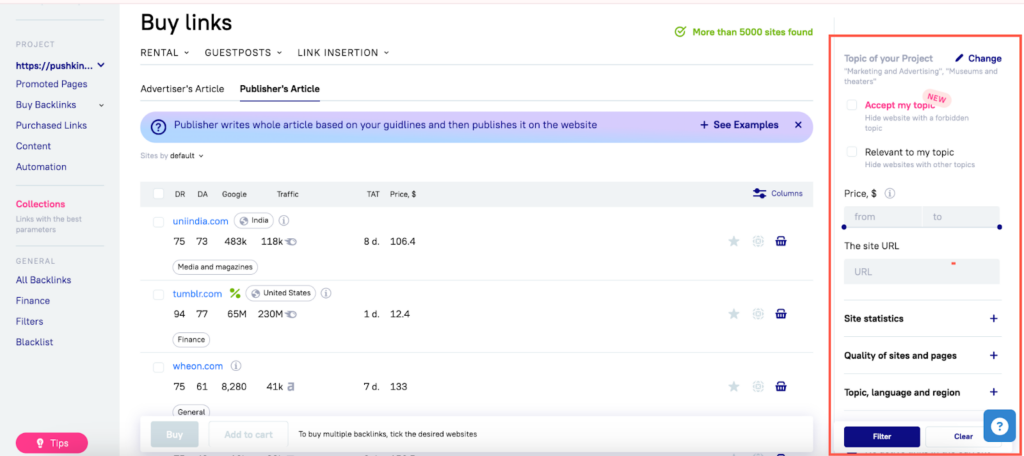
Serpzilla makes contextual relevance a first-class citizen. Instead of forcing you to chase inflated metrics, Serpzilla lets you filter and select placements based on niche alignment, content context, and editorial fit. That makes it easier to build links that reinforce topical authority — the kind that still works when algorithms stop caring about vanity numbers.
2. Links Become Semantic Signals, Not Just Votes
What’s happening
Backlinks used to work like upvotes. More links, more authority, end of story.
That mental model is officially outdated.
In 2026, a link is no longer interpreted as a simple “this page is good.” It’s read as a semantic signal, a piece of context that helps search engines understand what your page is about, how it fits into a topic, and why it deserves to be mentioned alongside certain concepts.
Anchor text, surrounding copy, page topic, and even the tone of the content now influence how much value a link passes. A backlink dropped into a random paragraph is not the same as one woven naturally into a relevant discussion.
What to expect
You’ll notice:
- Exact-match anchors losing effectiveness when context is weak
- Generic anchors (“here,” “website,” “learn more”) working just fine if the surrounding content is strong
- Links from highly relevant articles outperforming multiple links from loosely related pages
- AI answers pulling sources that are contextually aligned, not just heavily linked
In short: links are being read, not just counted.
What to do now
- Stop optimizing anchors in isolation; optimize the sentence around them
- Make sure the linking page actually discusses the topic your page is about
- Favor in-content links over bios, footers, and author boxes
- Think of every backlink as a supporting argument, not a vote
If the link doesn’t help explain something, it’s probably not helping your rankings either.
How Serpzilla can help
Serpzilla gives you control over how and where links are placed, not just whether they exist. By enabling contextual, in-content placements with flexible anchor strategies, Serpzilla helps turn backlinks into semantic signals — the kind that reinforce topical relevance instead of just inflating link counts.
3. Trafficless but Relevant Links Still Matter
What’s happening
For a long time, traffic was used as a proxy for quality. If a site had no visible traffic, it was dismissed as “useless.”
That shortcut no longer holds.
In 2026, search engines — and especially AI-driven systems — increasingly value topical expertise over popularity. Many highly specialized sites serve small audiences by design. They don’t rank for broad keywords, they don’t pull massive traffic, and yet they are deeply trusted within their niche.
AI doesn’t ask, “How many visitors does this site have?”
It asks, “Does this source know what it’s talking about?”
What to expect
You’ll see:
- Low-traffic niche sites appearing as citations in AI answers
- Small expert blogs outperforming large media sites in specific verticals
- Traffic-based link filtering becoming actively misleading
- Competitive niches quietly powered by links nobody brags about
Some of the most valuable links in 2026 won’t look impressive in dashboards.
What to do now
- Stop using traffic as a hard filter when evaluating link prospects
- Look at topic focus, publishing history, and content depth instead
- Ask whether a site would make sense as a recommendation to a real user
- Build links in spaces where expertise is concentrated, even if the audience is small
If a site speaks fluently about your niche, that’s usually enough.
How Serpzilla can help
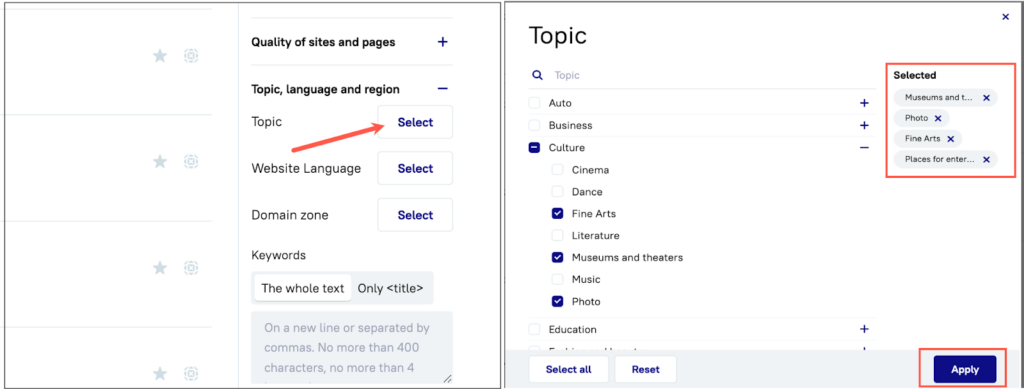
Serpzilla makes it easier to work with relevant niche publishers regardless of traffic size. Instead of forcing traffic-based thresholds, Serpzilla allows you to prioritize topical fit and editorial context, exactly the signals modern algorithms actually respond to.
4. Link Velocity Re-Emerges as a Risk Signal
What’s happening
Link velocity used to be a hot topic. Then it faded into the background.
In 2026, it’s quietly back.
Search engines don’t expect links to appear in isolation anymore. They expect them to correlate with real-world signals: content growth, brand mentions, product launches, PR activity. When links spike without anything else changing, it looks suspicious — not because growth is bad, but because unexplained growth is.
AI systems are especially good at spotting patterns that don’t line up.
What to expect
Expect:
- Sudden link spikes triggering closer scrutiny
- Aggressive campaigns delivering diminishing returns
- Safer performance from gradual, consistent acquisition
- Stronger correlation between brand activity and link growth
Fast growth isn’t the problem. Context-free growth is.
What to do now
- Align link building with content and brand activity
- Avoid “all at once” campaigns unless there’s a clear external reason
- Build links continuously instead of in bursts
- Think in quarters, not weeks
If your backlink graph looks like a heart monitor, algorithms will notice.
5. Link Diversity Outranks Link Volume
What’s happening
At some point, everyone learns the same lesson: one tactic working really well doesn’t mean it should be the only tactic.
In 2026, link profiles that rely on a single source type, format, or publisher pattern stand out, and not in a good way. Search engines expect links to come from different places, in different forms, over time. A perfectly “optimized” but repetitive profile looks manufactured. A slightly messy, diverse one looks human.
And human now always beats perfect.
What to expect
Expect:
- Diminishing returns from repeating the same placement type
- Safer performance from mixed link profiles
- More scrutiny on networks that scale too cleanly
- Fewer penalties maybe, but more quiet devaluation
Volume still matters, but only after diversity is in place.
What to do now
- Mix link sources: blogs, resources, mentions, reviews, expert pieces
- Vary anchor styles naturally across placements
- Spread links across different sections of your site, not one URL
- Build links gradually instead of in bursts
If your link profile could be generated by a script, it’s probably too clean.
How Serpzilla can help
Serpzilla supports controlled diversification across domains, content types, anchors, and placements. Instead of scaling one pattern endlessly, Serpzilla helps you build a link profile that looks organic, varied, and resilient as algorithms keep evolving.
AI, Search Experience & Google’s Direction Trends
6. AI Mode Becomes a Monetized Search Surface
What’s happening
Google’s AI Mode is no longer a shiny experiment. It’s a product. And products get monetized.
Recent Google signals make one thing clear: AI-generated answers are becoming new real estate — with ads, sponsored placements, and commercial visibility baked in.
This mirrors what already happened with classic SERPs. First came organic results. Then ads. Then shopping blocks. Now the same lifecycle is unfolding inside AI answers.
AI Mode isn’t replacing search. It’s becoming another layer of it — with its own economics.
What to expect
Be ready for:
- Sponsored visibility inside AI answers
- Clear separation between organic citations and paid placements
- Increased competition for being “the cited source”
- Fewer neutral answers on commercial queries
AI answers will still look conversational. Behind the scenes, they’ll be very strategic.
What to do now
- Treat AI visibility as part of your search strategy, not a bonus
- Invest in content that deserves to be cited, not just ranked
- Watch how Google labels paid vs organic AI content
- Prepare stakeholders for fewer clicks, but higher-stakes visibility
If classic SERPs taught us anything, it’s this: the earlier you adapt, the cheaper it is.
7. AI Overviews Expand Beyond Informational Queries
What’s happening
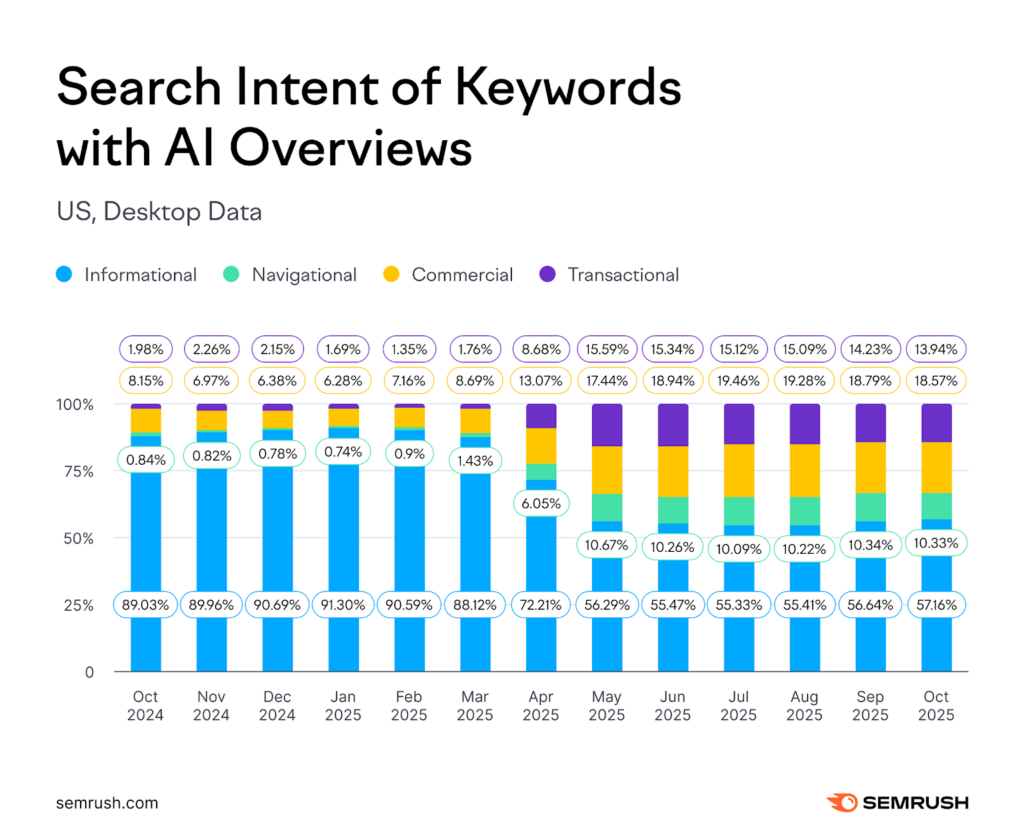
AI Overviews started politely. Definitions, explanations, harmless “what is” queries.
That phase is over.
In 2026, AI Overviews increasingly appear for commercial and comparison-driven searches. Product categories, software comparisons, “best tools,” even early transactional queries now trigger AI-generated summaries. Instead of ten blue links, users get a synthesized answer — with a short list of cited sources.
This changes where the real competition happens. You’re no longer just trying to rank. You’re trying to be selected.
What to expect
Expect to see:
- Fewer organic clicks for mid-funnel keywords
- AI summaries shaping user opinions before they scroll
- “Winner-takes-most” visibility inside AI answers
- Sources being cited for fragments of content, not entire pages
Ranking #1 matters less if the AI answer already told the story.
What to do now
- Optimize content for extraction, not just ranking
- Use clear definitions, comparisons, and structured explanations
- Make your expertise obvious within the first few paragraphs
- Stop hiding insights behind intros that take 800 words to get going
If your content can’t be summarized accurately, it probably won’t be cited at all.
8. Query-Adaptive SERPs Become the Default
What’s happening
The idea that a keyword has a “normal” SERP is officially outdated.
In 2026, Google builds the results page on the fly, based on how complex the query appears to be.
Simple queries get simple answers.
Nuanced queries trigger AI Overviews, videos, forums, comparisons, and classic links — all at once.
Search results are no longer standardized. They’re context-aware.
What to expect
Expect:
- The same keyword showing different SERP layouts across users and sessions
- AI blocks appearing and disappearing depending on intent signals
- More volatility in rankings that isn’t caused by penalties or updates
- Confusion when “nothing changed,” but traffic did
You’re not losing rankings but you may be losing screen space.
What to do now
- Track SERP features, not just positions
- Analyze which intent variations trigger AI answers
- Create content that works in multiple formats: snippets, long-form, comparisons
- Stop assuming one page can dominate every variation of a query
In 2026 you may want to focus on appearing in more places instead of ranking higher in just one.
9. Answer Engines Compete — and Cross-Pollinate
What’s happening
Search is no longer a single ecosystem. Google, ChatGPT, Perplexity, and other answer engines are watching each other closely, and borrowing ideas freely from one another.
Citations, trust scoring, freshness signals, and even UI patterns now travel between platforms. What works for visibility in one system increasingly influences how others select sources.
The result: optimization is no longer Google-only. It’s cross-engine by default.
What to expect
Expect:
- Similar sources appearing across different AI tools
- Citation logic becoming more consistent between platforms
- Brands gaining visibility even without classic rankings
- SEO strategies bleeding into “AI optimization,” whether you like the term or not
If your content works for one answer engine, it’s likely helping you in others too.
What to do now
- Stop treating AI platforms as side projects
- Focus on clarity, authority, and explainability
- Build content that answers questions completely, not vaguely
- Monitor where your brand appears outside Google
If before you optimized for search engines, now you’re optimizing for selection.
10. AI Answers Normalize Selective Citations
What’s happening
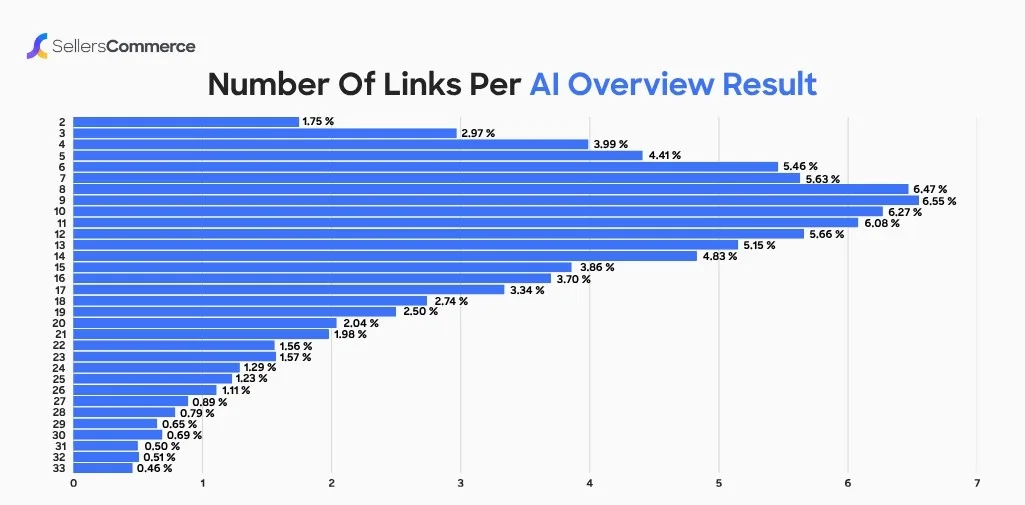
AI answers don’t cite everyone. They cite a few. And that’s a big shift.
In classic search, ten results could coexist peacefully. In AI-generated answers, only a handful of sources get mentioned, and for a very specific question it could be just one. Visibility is no longer shared evenly. It’s curated.
AI systems filter aggressively, favoring sources that are clear, authoritative, and contextually aligned with the question. Being “one of many decent pages” is no longer enough.
What to expect
Expect:
- Fewer cited sources per query
- Repeated citations of the same trusted domains
- Strong bias toward clarity over cleverness
- Pages ranking well but never being cited
You can rank and still be invisible.
What to do now
- Make your expertise obvious early in the content
- Write like you expect your page to be quoted, not just read
- Use clear statements, definitions, and conclusions
- Reinforce topical authority across multiple related pages
AI is becoming increasingly selective in its sources.
11. Entity-First Indexing Replaces Keyword-First Thinking
What’s happening
Keywords still exist. They’re just no longer the main character.
In 2026, search engines and AI systems increasingly organize information around entities — brands, people, products, organizations — and then evaluate how content relates to them. Pages don’t stand alone anymore. They’re interpreted as part of a broader identity graph.
This is why two pages targeting the same keyword can perform very differently, even if they’re equally well-optimized. One belongs to a trusted entity. The other doesn’t.
What to expect
Expect:
- Brands with consistent topical focus outperforming keyword-stuffed sites
- Strong sites ranking faster for new content
- AI answers favoring recognizable names and repeat sources
- “Who is behind this?” becoming a silent ranking question
Authority compounds. Anonymity doesn’t.
What to do now
- Build recognizable authorship and brand presence
- Publish consistently within a defined topical scope
- Connect related content into clear thematic clusters
- Stop treating every page as an independent ranking experiment
SEO in 2026 is moving from targeting keywords to earning trust as an entity.
Content, Authority & Editorial Evolution SEO Trends
12. Guest Posting Evolves into Expert Contribution
What’s happening
Classic guest posting followed a simple formula: write an article, drop a link, move on.
That formula is wearing thin.
In 2026, search engines, and AI systems in particular, are much better at spotting content that exists only to host a backlink. Generic guest posts still get published, but they rarely move rankings or visibility in any meaningful way.
What does work? Expert contribution.
Opinionated takes. First-hand experience. Commentary that adds something new to the conversation instead of repeating what’s already ranking.
What to expect
Expect:
- Generic “write for us” pages losing SEO impact
- Expert-led content outperforming templated articles
- Opinion pieces and commentary getting cited more often in AI answers
- Editorial standards rising quietly across decent publishers
Links still matter, but why you’re being linked matters more.
What to do now
- Shift from mass guest posting to fewer, higher-quality contributions
- Lead with expertise, not keywords
- Share real insights, examples, or contrarian viewpoints
- Choose publishers where your voice actually fits the audience
If the article could have been written by anyone, it probably shouldn’t exist.
How Serpzilla can help
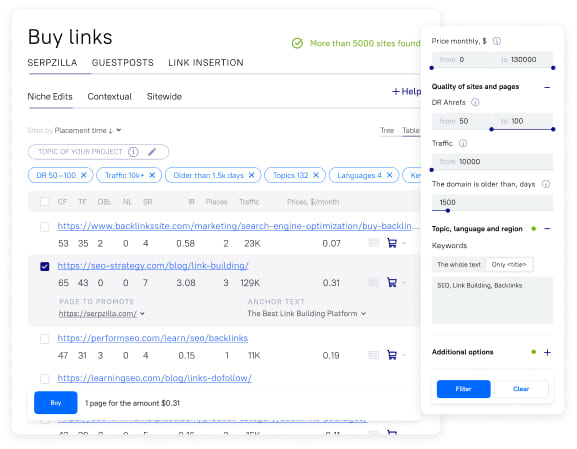
Serpzilla supports a move away from templated guest posts toward editorial-style placements and expert contributions. Instead of scaling generic content, Serpzilla helps brands place meaningful, context-rich articles on relevant platforms — the kind that build authority, not just links. If you want to know more about elevating your guest posting with Serpzilla, we’ve got a complete guest posting guide for you.
13. Human Editing Becomes a Competitive Advantage
What’s happening
AI content is everywhere now. That’s no longer the scandal, it’s the baseline.
The real issue in 2026 is that a lot of content sounds the same. Same structure. Same phrasing. Same safe conclusions.
Search engines don’t penalize AI-written content. They quietly devalue undifferentiated content. Pages that add nothing new, say nothing clearly, or avoid taking a position fade into the background — even if they’re technically “well optimized.”
Human editing isn’t about fixing grammar anymore. It’s about adding intent, judgment, and perspective.
What to expect
Expect:
- AI-generated content performing fine at first, then stalling
- Edited, opinionated pages aging better in rankings
- Clear structure and strong conclusions outperforming long-form fluff
- AI answers favoring pages that actually say something
Sameness is the new spam.
What to do now
- Treat AI output as a draft, not a finished product
- Edit for clarity, flow, and original thought
- Add examples, opinions, and conclusions that reflect real experience
- Cut aggressively — shorter, sharper content wins
If your content reads like it was designed not to offend anyone, it probably won’t impress algorithms either.
14. AI Tools Shift from Writing to Strategy
What’s happening
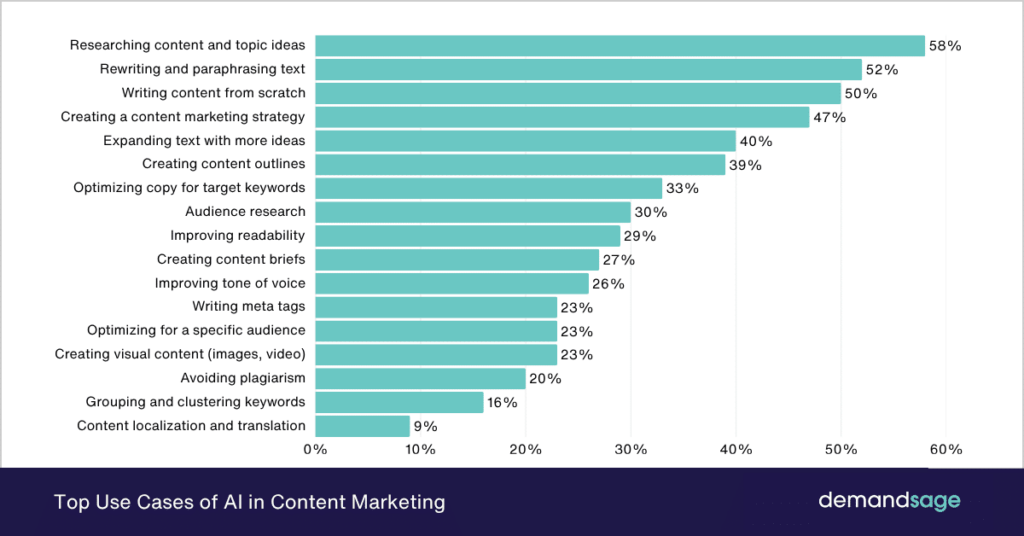
AI writing tools have hit saturation. Everyone has access to them, and everyone uses them. As a result, the competitive advantage has moved upstream.
In 2026, the real value of AI in SEO isn’t generating paragraphs. It’s planning: mapping intent, structuring topic clusters, identifying gaps, and understanding how content fits into a broader narrative.
Writing is cheap. Strategy is not.
What to expect
Expect:
- AI-written content becoming table stakes
- Strategic planning separating strong sites from average ones
- Better-performing content with simpler language and clearer structure
- AI tools being used more for research than prose
The teams that win won’t publish faster. They’ll publish smarter.
What to do now
- Use AI to analyze SERPs, not just rewrite them
- Focus on intent mapping and topic relationships
- Plan content as part of a system, not a calendar
- Let humans handle judgment calls and prioritization
If AI writes everything and decides nothing, you’re using it backwards.
15. Content That Trains AI Gets Reused
What’s happening
AI systems don’t read content the way humans do. They extract it.
In 2026, pages that are easy to parse, summarize, and quote are reused far more often in AI answers than pages that are merely well-written. Clear definitions, structured explanations, comparisons, and step-by-step logic give AI something solid to work with.
Messy brilliance loses to clear usefulness.
This doesn’t mean “dumb it down.” It means make your expertise legible.
What to expect
Expect:
- Structured content appearing more often in AI citations
- Pages with clear sections being reused across multiple queries
- Lists, tables, and comparisons outperforming narrative-only content
- Vague thought-leadership pieces being ignored by AI systems
If AI can’t extract a clean answer, it won’t try very hard.
What to do now
- Write with extraction in mind, not just engagement
- Use clear headings, definitions, and summaries
- Explicitly answer questions instead of circling them
- Break complex ideas into digestible components
If your content teaches a human clearly, it usually teaches an AI even better.
16. AI Search Rewards Opinionated Content
What’s happening
Neutral, perfectly balanced content used to feel “safe.”
In 2026, it often feels invisible.
AI search systems increasingly favor content that takes a clear stance. Not hot takes for the sake of it, but reasoned opinions backed by experience, data, or logic. When AI systems decide what to summarize or cite, they lean toward sources that actually say something specific.
If everything sounds the same, the system has no reason to pick you.
What to expect
Expect:
- Opinionated content being cited more often in AI answers
- “Pros and cons” pages losing ground to clear recommendations
- Brands with a defined point of view gaining repeat visibility
- Safe, generic content quietly falling out of rotation
AI doesn’t reward controversy. It rewards clarity.
What to do now
- Encourage writers and experts to take defensible positions
- Replace vague conclusions with clear recommendations
- Use evidence, experience, or examples to support your stance
- Stop trying to please every possible reader
If your content never risks being wrong, it’s probably too easy to ignore.
17. Old Content Becomes a Growth Lever
What’s happening
In 2026, creating new content is often not the fastest way to grow.
Improving existing content is.
Search engines and AI systems increasingly reward updated, consolidated, and re-positioned pages. Older URLs already have history, links, and trust signals. When they’re refreshed with clearer structure, better insights, and current context, they often outperform brand-new pages with far less effort.
Old content isn’t dead weight. It’s stored authority.
What to expect
Expect:
- Updated pages jumping rankings faster than new ones
- Consolidated articles outperforming multiple thin posts
- AI answers preferring refreshed content with recent signals
- “Quick wins” coming from content you already own
In many cases, the fastest growth comes from work you’ve technically already done.
What to do now
- Audit older content for relevance, accuracy, and overlap
- Merge similar articles into stronger, more complete resources
- Update introductions, conclusions, and examples to reflect 2026 realities
- Re-promote refreshed content internally and externally
Before publishing something new, ask whether an existing page could do the job better.
Trust, Brand & Authority Signal Trends
18. Brand Mentions Without Links Gain Weight
What’s happening
For a long time, unlinked brand mentions were treated as a nice bonus. Good for PR. Irrelevant for SEO.
This has changed dramatically.
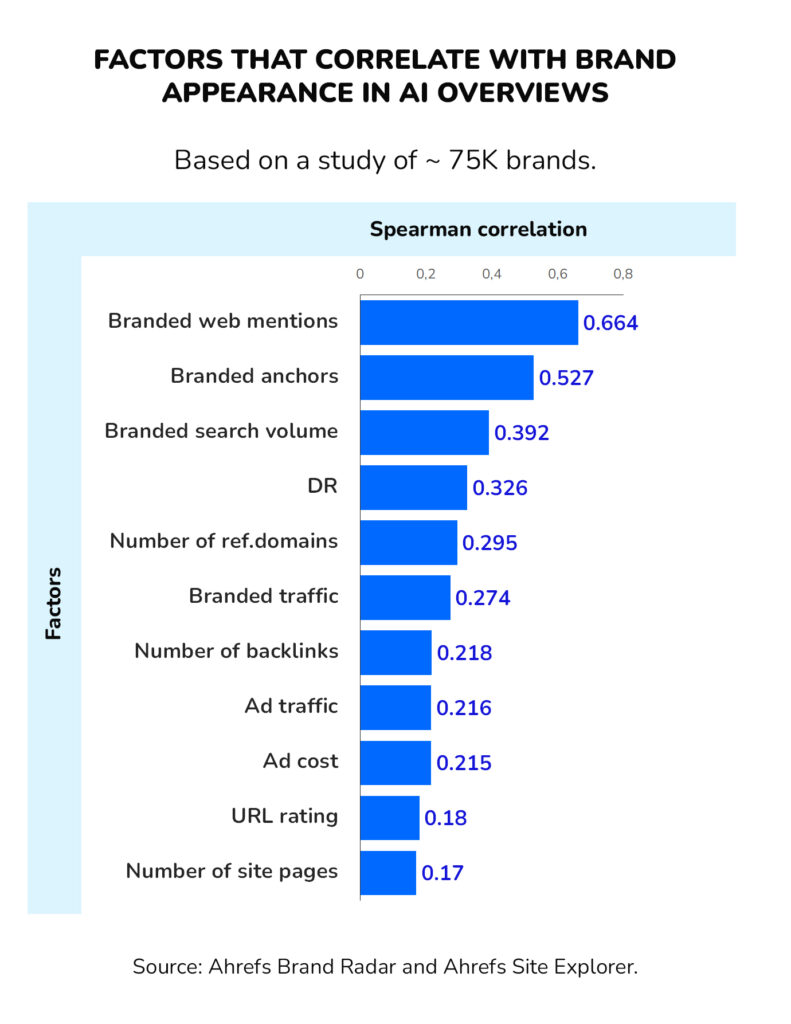
In 2026, search engines and AI systems increasingly treat brand mentions as signals of authority, even when no clickable link is present. Mentions help reinforce that an entity exists, is discussed, and is relevant within a topic, which matters a lot in an entity-first world.
Links still matter. But silence matters too.
What to expect
Expect:
- Brand mentions influencing visibility even without referral traffic
- AI answers referencing brands based on frequency of discussion
- Less correlation between “number of links” and perceived authority
- PR-style exposure quietly supporting SEO performance
You won’t see this in most dashboards. You’ll feel it in rankings.
What to do now
- Monitor brand mentions, not just backlinks
- Encourage citations in expert discussions, reviews, and commentary
- Align PR and SEO efforts instead of treating them as separate tracks
- Focus on being talked about in the right contexts
If people mention you in a heated Reddit argument, algorithms start believing you’re very legit.
19. Author Credibility Becomes Machine-Readable
What’s happening
Authorship is no longer just a trust badge for humans. It’s a signal for machines.
In 2026, search engines and AI systems increasingly evaluate who is behind the content, not just what the content says. Consistent bylines, recognizable expertise, and a clear topical focus help algorithms understand whether an author is knowledgeable or just publishing at scale.
Anonymous content still exists. It just doesn’t travel very far.
What to expect
Expect:
- Authors with a clear niche gaining visibility faster
- Repeat citations of the same experts in AI answers
- Strong author profiles reinforcing entire domains
- Generic “Editorial Team” bylines carrying less weight
When everything sounds similar, who said it becomes a shortcut for trust.
What to do now
- Build visible, consistent author profiles
- Keep authors focused on a limited set of topics
- Connect author bios to real expertise and experience
- Avoid rotating bylines just to publish more content
If your site speaks with many voices, make sure they sound like they know what they’re talking about.
20. First-Party Data Becomes a Ranking Asset
What’s happening
The internet has no shortage of opinions. What it does lack is original data.
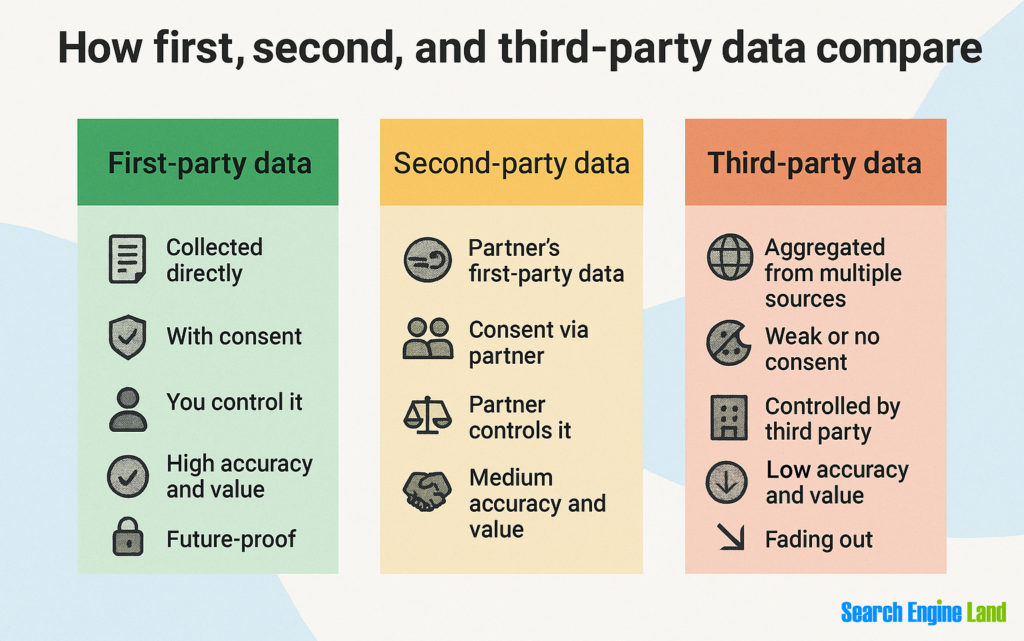
In 2026, search engines and AI systems increasingly favor content backed by first-party insights: internal statistics, proprietary research, surveys, benchmarks, and real case studies. Not because the data is flashy, but because it’s verifiably unique.
AI models are trained on a lot of the same public information. New data stands out.
What to expect
Expect:
- Original research getting cited disproportionately often
- AI answers referencing “according to [brand] data” more frequently
- Summary-style content losing ground to evidence-backed pages
- Smaller brands competing with larger ones through unique insights
When everyone repeats the same sources, the source becomes the differentiator.
What to do now
- Publish internal data where possible, even if it’s imperfect
- Turn case studies into standalone reference content
- Use numbers, trends, and observations you can actually defend
- Stop waiting for “enough data” — directional insights still matter
If your content can only exist on your site, it already has an advantage.
21. Topical Depth Beats Publishing Frequency
What’s happening
For years, SEO rewarded volume. Publish more, rank more, repeat.
That math no longer holds.
In 2026, search engines and AI systems favor depth over pace. Covering a topic thoroughly, from multiple angles, across a connected set of pages now delivers more value than publishing endless standalone articles that barely scratch the surface.
One strong topic cluster beats ten loosely related posts.
What to expect
Expect:
- Slower content production outperforming fast publishing
- Topic hubs gaining visibility across multiple queries
- AI answers pulling from clusters, not isolated pages
- Thin content quietly losing ground without penalties
The sites winning in 2026 don’t publish less because they’re lazy. They publish less because they’re focused.
What to do now
- Audit your content for coverage gaps, not just keyword gaps
- Consolidate overlapping articles into stronger resources
- Build topic clusters instead of chasing individual keywords
- Update existing content before creating something new
If your site talks about everything, it probably owns nothing.
22. Affiliate SEO Moves Toward Brand Authority
What’s happening
The era of disposable affiliate sites is fading fast.
In 2026, affiliate SEO increasingly rewards brands, not templates. Search engines and AI systems are far more selective about who they trust with recommendations. Sites that look anonymous, interchangeable, or purely transactional struggle to maintain visibility — even if their on-page SEO is solid.
Affiliates are no longer just traffic intermediaries. They’re expected to act like publishers with opinions.
What to expect
Expect:
- Generic “best X” sites losing long-term visibility
- Affiliate projects with strong branding outperforming thin competitors
- AI answers citing recognizable sites instead of individual review pages
- Trust signals outweighing aggressive monetization
Being useful is no longer enough. You have to be believable.
What to do now
- Invest in brand identity, not just monetization pages
- Publish experience-based, opinionated reviews
- Focus on a narrow topical scope instead of endless categories
- Treat affiliate content like editorial content, not landing pages
If your site looks like it exists only to convert, algorithms will treat it that way.
Measurement, ROI & SEO Strategy Trends
23. SEO Traffic Declines, but SEO Influence Doesn’t
What’s happening
SEO traffic is no longer the main scoreboard.
Between AI Overviews, zero-click answers, and richer SERPs, fewer users need to click to get what they want. That doesn’t mean SEO stopped working. It means it stopped behaving the way we’re used to measuring.
In 2026, SEO influences decisions before the click happens. Brands shape perception inside AI answers, comparisons, and summaries, often without a visit ever being logged.
Traffic is shrinking. Influence is spreading.
What to expect
Expect:
- Flat or declining organic traffic, even as visibility improves
- Stakeholders questioning “what SEO is doing”
- AI answers mentioning brands users later search for directly
- SEO contributing to conversions without being the last touch
SEO is still working. It’s just harder to screenshot.
What to do now
- Stop treating traffic as the sole KPI
- Track impressions, visibility, and branded search growth
- Align SEO reporting with revenue and pipeline impact
- Educate stakeholders early, not after traffic dips
If SEO only “counts” when someone clicks, you’re measuring the wrong thing.
24. Visibility Metrics Replace Click Metrics
What’s happening
Clicks used to be the currency of SEO. They were easy to track, easy to explain, and easy to optimize for.
They’re also becoming less representative of real impact.
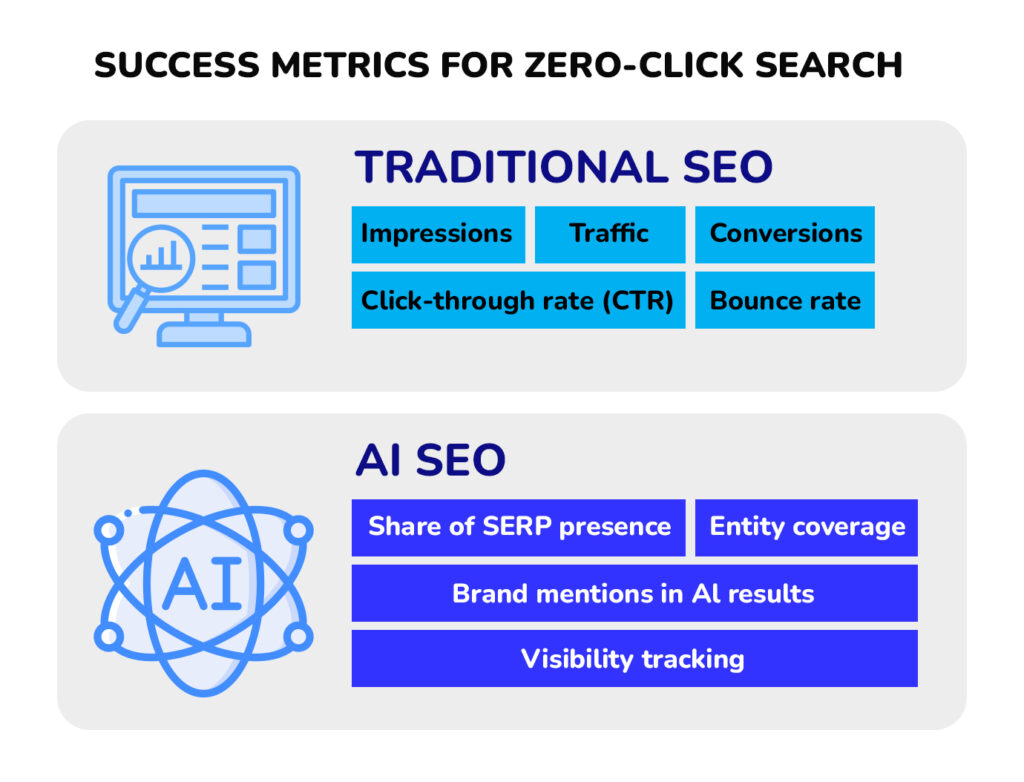
In 2026, brands gain value simply by appearing — in AI answers, comparison summaries, featured explanations, and citation blocks. Users see the brand, remember it, and act later. Often elsewhere.
Visibility now does the job clicks used to do.
What to expect
Expect:
- Growing impressions with flat click-through rates
- Brand lift without obvious attribution paths
- AI citations driving demand you can’t neatly trace
- Friction between SEO teams and old-school reporting frameworks
If your dashboard only counts visits, it’s missing half the story.
What to do now
- Track impressions, citations, and SERP presence
- Monitor branded search as a downstream signal
- Combine SEO data with analytics from sales and paid channels
- Reframe SEO reports around influence, not just visits
You may no longer alwayst need a click to win a customer. You need to be remembered.
Technical & Strategic SEO Trends
25. Index Bloat Becomes a Ranking Risk
What’s happening
For years, the default SEO move was “publish more.” More pages, more keywords, more chances to rank.
In 2026, that strategy often backfires.
Large sites accumulate thin pages, outdated posts, duplicate angles, tag archives, parameter URLs, and other “index clutter.” Search engines don’t just ignore this. They use it as a quality signal. Too much low-value inventory can drag down how the whole domain is assessed.
Think of it as content debt. The interest rate is going up.
What to expect
Expect:
- Big sites with massive archives struggling to move rankings
- More pages getting crawled but not indexed (or indexed, then dropped)
- “Nothing changed, but performance fell” moments caused by overall site quality signals
- Stronger winners among leaner sites with tighter topical focus
In 2026, a smaller site can punch above its weight simply by being cleaner.
What to do now
- Run a content and index audit: identify pages that are thin, outdated, duplicated, or pointless
- Consolidate overlapping posts into stronger, more complete resources
- Remove or noindex pages that don’t serve users (or your business)
- Tighten internal linking so your best pages receive most of the attention and authority
The goal isn’t fewer pages for the sake of it. The goal is fewer weak pages.
26. Programmatic SEO Gets Smarter — or Penalized
What’s happening
Programmatic SEO hasn’t disappeared. It just lost its invisibility cloak.
At scale, search engines now clearly see when pages are generated from templates with minimal differentiation. In the past, that could still work. In 2026, it’s a liability. Scaled pages are no longer judged individually, instead they’re evaluated as a system.
If the system adds value, it wins.
If it produces variations without substance, it quietly collapses.
What to expect
Expect:
- Template-heavy page sets getting indexed slower — or not at all
- Partial deindexing of large page groups
- Strong programmatic sites dominating entire SERP segments
- Weak ones disappearing without a manual penalty in sight
Programmatic SEO is no longer neutral. It’s either impressive or invisible.
What to do now
- Audit programmatic pages as groups, not one by one
- Add genuine differentiation: data, logic, comparisons, or insights
- Kill pages that exist only to capture a keyword variation
- Invest more in the model behind page creation than the output
If you wouldn’t trust one of those pages as a user, neither will an algorithm.