
If you care about link quality, Trust Flow (TF) and Citation Flow (CF) are two metrics you can’t skip. They help you instantly understand whether a website can pass real authority or if it’s just adding noise to your backlink profile.
This article will help you understand how TF/CF work, how to use them for smarter link building, how to check Trust Flow and Citation Flow the right way, and which TF CF checkers are worth your time.
What Are Trust Flow (TF) And Citation Flow (CF)
Both metrics were created by Majestic, one of the oldest backlink crawlers in the industry. They built their own independent web index separate from Ahrefs or Google, and TF/CF are calculated based on the trustworthiness and quantity of links discovered in that index. They’re popular in SEO because they reveal the quality and strength of a site’s backlink profile, something raw link counts can’t show.
Now let’s take a closer look at each metric.
| Metric | Trust Flow | Citation Flow |
| What it measures | Quality + trustworthiness of backlinks | Link quantity or raw link power |
| What it doesn’t show | Volume + strength of link juice | Whether those links are clean, authoritative, or safe |
Trust Flow (TF)
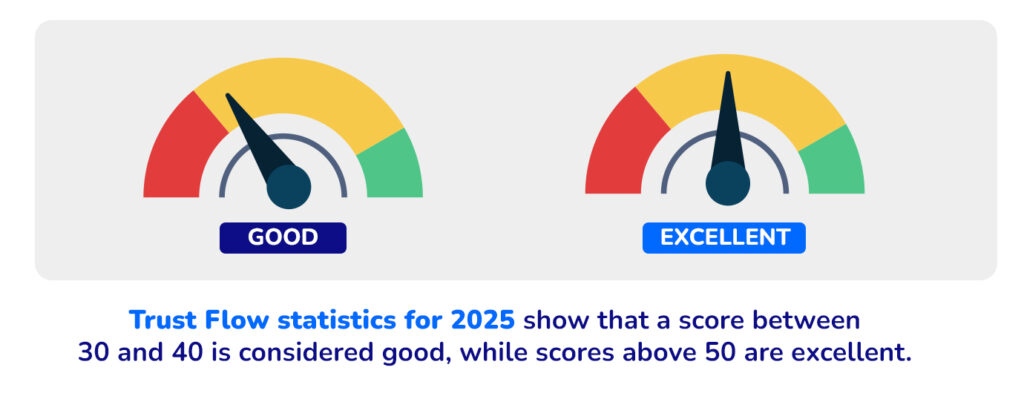
Trust Flow measures how many high‑trust, authoritative sites link to a domain. In other words, this metric shows the level of “purity” of your links. It’s very simple: if a site’s backlinks come from editorial, topic‑relevant, well‑established websites, TF goes up.
Here’s what high TF usually means:
- The domain is part of a strong, clean link neighborhood
- Its backlinks were earned naturally or selected carefully
- A link from this domain can pass real SEO value
Citation Flow (CF)
Citation Flow measures link volume and the raw ability of a domain to pass link juice, regardless of quality. CF doesn’t care if links come from strong or suspicious sources. That’s the key difference from Trust Flow: TF only increases when links come from vetted, high-authority, topic-relevant sites, while CF can rise even if the site is getting links from low-quality directories, comment spam, or random blogs.
This means that:
- High CF + low TF = lots of links, but questionable quality
- High TF + balanced CF = trustworthy, healthy link profile
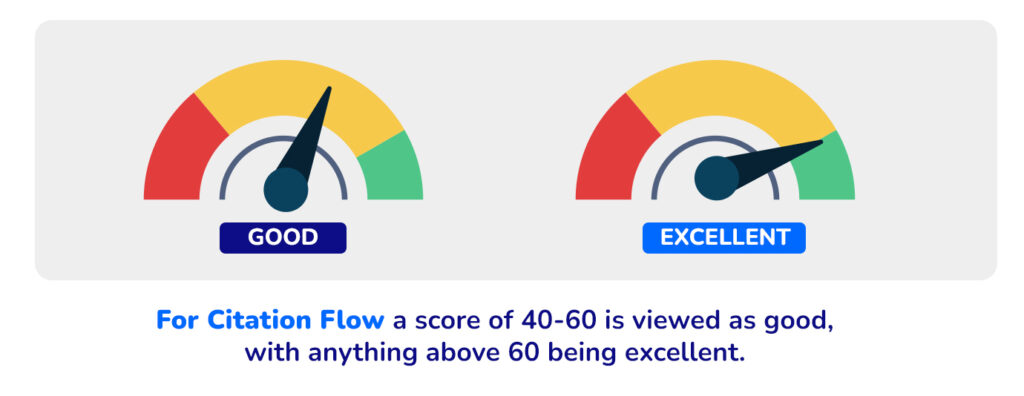
Both metrics matter, but they must be interpreted together because each one covers the blind spots of the other. TF alone can’t tell you whether a site has enough link power to influence rankings, and CF alone can’t tell you whether those links come from solid sources. When you look at them together, you instantly see both the strength of a site’s backlink profile and the quality of the sites feeding it.
How Trust Flow And Citation Flow Impact Your SEO Performance
TF and CF influence link‑building decisions because they help you quickly filter out risky, spam‑heavy sites. The metrics can point to your SEO outcomes in several ways:
1. TF predicts link safety
Domains with high Trust Flow rarely link out to spam. Links from them tend to:
- Strengthen your authority
- Improve trust signals for search engines
- Support long‑term ranking stability
2. CF shows link power
A domain with high CF has strong link juice potential (but only if TF isn’t drastically lower). High CF + decent TF means:
- Your link can pass a measurable ranking strength
- You can use the site for competitive anchors
3. TF/CF ratio is your shortcut to spotting spam
A clean domain usually has TF/CF ratios around 0.3–0.6. That’s because healthy backlink profiles tend to grow in both strength and trust at the same time. This balance signals that the site isn’t artificially inflating link volume.
Problems appear when TF and CF grow out of sync. That’s a clear sign that the site’s backlink profile is being inflated artificially rather than growing naturally. Major red flags include:
- Massive CF with almost no TF
- TF:CF ratio below 0.1
- TF < 5 on a site claiming to be authoritative
4. The combo helps avoid harmful backlinks
Even one placement on a toxic domain can drag your trust signals down and invite unnecessary algorithmic attention.
That’s why TF/CF remains a core filter in professional link building: it’s the fastest way to avoid wasting budget on placements that look fine on the surface but quietly weaken your authority and dilute your link profile. When TF and CF are off, you know the domain isn’t worth touching.
How To Use TF And CF In Your Link Building
Most people misuse TF/CF by treating them as absolute scores. They’re not. They’re relative indicators that help you choose better sites.
Here’s how professionals use them:
1. Build tiers of link quality
Instead of treating all prospects equally, split them into clear TF/CF tiers so you always know what type of anchor and page each site is safe for.
- High TF + balanced CF = premium tier. Use these for core pages, money pages, and competitive anchors.
- Mid-range ratios = supportive tier. This is good for branded anchors, authority building, and topical context.
- Low TF + low CF = low quality overall. Avoid these or reserve them for experimental campaigns.
2. Use TF as your safety gate before paying for a placement
Before you even look at traffic, DR, or publisher pricing, check TF/CF first. If the trust profile looks off, you can instantly skip the domain and move on. This saves you from negotiating with the wrong sites, reviewing low-quality content, and spending money on links that will never help you rank. Basically, it’s the fastest filter you have.
3. Use CF to understand link impact
CF is useful when you’re choosing between two safe enough sites and need to know which one will give you better SEO results.
When you’re targeting harder keywords, CF helps you pick:
- Pages with stronger internal link grids
- Domains with more link equity to pass
- Sites that can support exact-match anchors without looking suspicious
4. Improve anchor text distribution using TF/CF signals
Anchor text gets risky when mixed with low-trust domains. So SEOs often use a TF check to make anchor decisions:
- High TF = can handle more aggressive anchors
- Medium TF = keep it partial-match or branded
- Low TF = only generic anchors (if used at all)
This alone keeps your link profile looking natural.
5. Use TF/CF to protect your site during scale
When buying links at scale (50–500+ placements), risk compounds fast. A TF/CF check can act as a risk control system:
- Remove spammy domains automatically
- Keep ratios consistent across large batches
- Ensure your link velocity doesn’t spike with low-trust sources
Bottom line: scaling without TF/CF is more similar to gambling than to strategy.
Best TF CF Checkers
Now for the tools. Here are the best tools to check TF and CF scores, starting with the most comprehensive one.
1. Serpzilla: Best all‑in‑one TF/CF checker built into your link-building system
Serpzilla is a platform where you can check Trust Flow, Citation Flow, and Topical Trust Flow directly inside your link‑building dashboard without switching between tools or getting additional subscriptions.
Inside, you’ll find:
- Built‑in Trust Flow checker for any domain you evaluate
- Instant TF CF check for every site in the marketplace
- Bulk TF CF checker when importing domains
- Topical Trust Flow checker to confirm niche relevance
- Automatic filtering by TF/CF to shortlist high‑trust domains
- Spam‑filtering engine that hides toxic sites by default
And the functionalities of Serpzilla go far beyond these checks. The features that make it top 1one are:
- You can instantly buy links from domains with the right TF/CF
- All metrics are shown automatically in the listings
- You can sort and filter by TF, CF, topic category, and ratio
- You can run bulk TF CF checker uploads for competitor domains
So you’re getting a TF/CF checker + domain marketplace + safety filters + bulk analytics all in one place. If you’re serious about TF‑driven link building, nothing beats having the checker integrated directly into your SEO workflow.
2. Majestic: The original TF/CF source
Of course, we can’t skip Majestic. After all, it’s the birthplace of Trust Flow and Citation Flow, and its data is still the industry reference. Its index is massive, refreshed frequently, and built specifically to evaluate link trust and link strength.
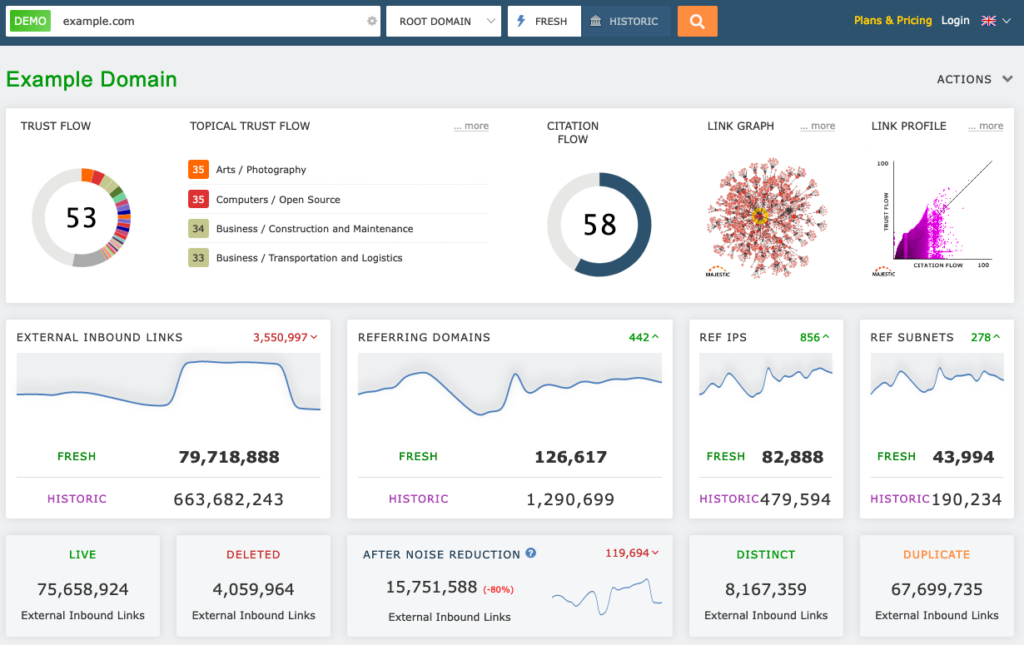
The top features include:
- TF CF checker
- Topical Trust Flow checker
- Bulk trust flow and citation flow checker in higher-tier plans
Since Majestic has the most accurate TF/CF numbers and strong topical categorization, this tool is best for SEOs who need raw, granular data and historical link insights.
However, it has a couple of cons:
- Paid plans only
- No link placement marketplace
- Limited workflow (you must switch back to your link‑building tool afterward)
3. SEO SpyGlass: Budget-friendly TF/CF alternative
SEO SpyGlass (part of SEO PowerSuite) doesn’t use Majestic’s TF/CF, but it provides close equivalents. These include a trust-based metric and a citation-based strength metric. It’s a desktop app, which some agencies prefer.
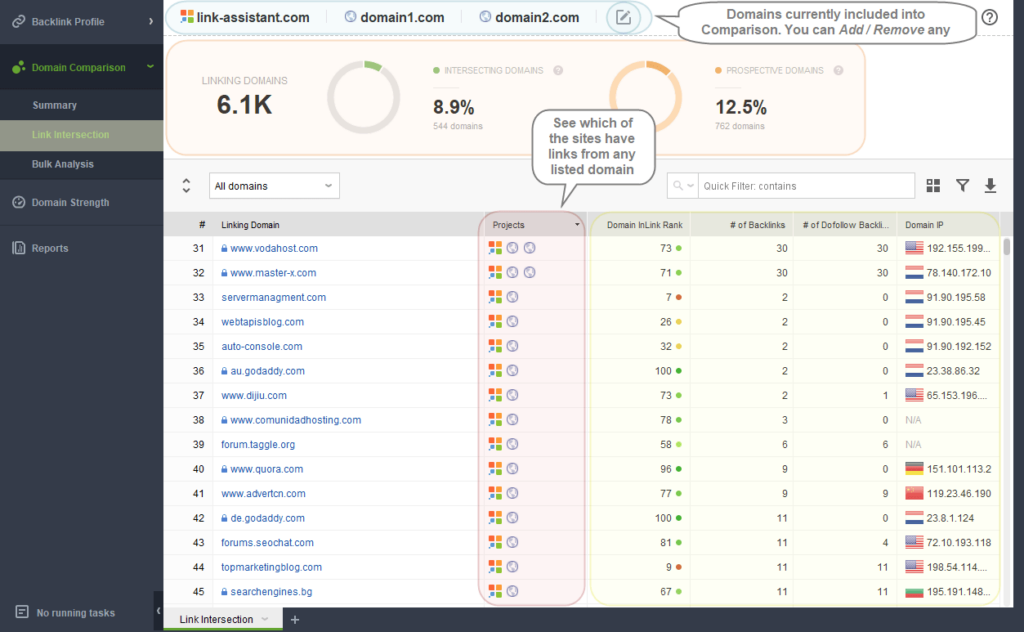
You’ll get:
- Trust-like and citation-like metrics based on its own index
- Bulk checking
- Deep backlink audits for your own site
- One-time license option instead of subscriptions
This tool is a solid choice for users who need a lower-cost alternative to Majestic for backlink audits.
But keep in mind that these aren’t original TF/CF, and accuracy depends on an independent index. Also, being desktop software means slower workflows, limited automation, and no direct link-buying environment.
4. SiteChecker: Simple online TF/CF snapshot tool
SiteChecker has a clean, fast interface for checking TF/CF for single domains. It’s great for quick snapshots when you don’t need deep, heavy prospecting.

You’ll get:
- Quick trust flow and citation flow check for a single URL
- Easy-to-read charts and metrics
- Free and paid tiers
So when you need a quick opinion on a domain, SiteChecker is your go-to source. But it’s not a good choice for larger projects, since there’s no bulk TF CF checker, no marketplace, and TF/CF scores are approximations.
FAQ
What is a good Trust Flow score?
There’s no single “good” TF that fits every niche. TF is relative, and the best way to judge it is together with CF + topical relevance.
That said, these benchmarks work well for quick filtering:
- TF 0–9: new, weak, or low-trust sites (usually not worth paying for)
- TF 10–19: acceptable for lower-tier/support links if the ratio looks healthy
- TF 20–29: solid authority for contextual placements
- TF 30+: high-trust domains
- TF 50+: premium territory (rare outside strong brands/media)
The real shortcut: TF is only “good” when it’s not isolated — check the ratio and topical category before making a decision.
Is Trust Flow more important than Citation Flow?
For link safety, yes.
- TF is your trust and quality signal (clean link neighborhood).
- CF is raw link power (how much link equity the domain can potentially pass).
A high CF with low TF often means the site is powered by quantity, not quality — and those are the domains most likely to dilute your profile or create risk. Use TF as the safety gate, then CF as the tie-breaker between safe options.
What is a good TF/CF ratio?
A healthy domain usually sits around 0.3–0.6.
Why? Because in real link profiles, trust and link strength tend to grow together. Problems show up when CF inflates without TF keeping up.
Common red flags:
- TF/CF below 0.1
- CF is high but TF is single digits
- The domain claims authority, but TF < 5
Ratios aren’t absolute rules, but they’re the fastest way to spot a backlink profile that doesn’t look natural.
What is a good Citation Flow score?
CF has no universal “good” number — it’s only useful in context.
A simple way to read it:
- Decent CF + decent TF = useful link power
- High CF + low TF = inflated strength / questionable neighborhood
- Low CF + high TF = trustworthy but may not move rankings much
Use CF when you’re choosing between two already safe domains and want to estimate which one can pass stronger impact.
How often should I check TF and CF for my site (or prospects)?
Check TF/CF when it can change your decisions:
- After any link-building campaign (to see if your trust profile stayed clean)
- Monthly if you’re actively building links or buying placements
- Weekly if you’re scaling aggressively (50+ placements/month) or competing in a tough niche
For prospect lists, re-check TF/CF before paying — metrics drift as sites gain or lose backlinks.
Are Trust Flow and Citation Flow used directly by Google?
No. TF and CF are third-party metrics created by Majestic.
But they reflect real backlink patterns that search engines care about:
- link neighborhood quality
- link profile naturalness
- spam risk signals
- topical relevance (via Topical Trust Flow)
That’s why TF/CF remain a practical “decision layer” for SEOs, even if Google doesn’t use them as ranking factors.
Should I use TF/CF alone to judge link quality?
No — TF/CF are fast filters, not the whole audit.
Use TF/CF to eliminate obvious risk, then sanity-check:
- topic match (Topical Trust Flow / site content)
- indexation (pages actually in Google)
- outbound link behavior (does the site link out to everything?)
- content quality and publishing consistency
TF/CF tell you what a site’s backlink profile looks like. A quick manual check tells you whether the site is actually a good placement.
What does “TF” mean in SEO marketing?
In this context, TF = Trust Flow, Majestic’s metric for backlink trust/quality.
Outside SEO tools, “TF” can mean other things — but in link building and domain vetting, TF almost always refers to Trust Flow (paired with CF = Citation Flow).





![GEO Strategies for AI Search Visibility [2026]](https://serpzilla.com/blog/wp-content/uploads/2025/08/GEO-Strategies-for-AI-Search-Visibility-540х360.jpg)