Why AI Overviews Change SEO
AI Overviews change how attention is distributed in search results.
In a traditional SERP, visibility was spread across multiple positions. A top-three ranking brought consistent traffic, but even lower positions could still capture clicks. Users compared sources, skimmed different pages, and built their own understanding.
This behavior is now compressed into a single interaction. The user reads a synthesized answer and often stops there. At best, a few sources are cited alongside it.
The result is a much narrower visibility layer. What used to include ten potential winners now only includes a handful, or sometimes just one. Everything outside that layer becomes significantly less relevant, even if it technically ranks well.
| Factor | Traditional SERP | AI Overviews |
| Number of visible winners | 5–10 meaningful positions | 1–3 cited sources |
| User behavior | Compares multiple pages | Consumes one synthesized answer |
| Role of ranking | Directly drives clicks | Only qualifies for consideration |
| Click distribution | Spread across top results | Concentrated or zero-click |
| Content competition | Compete for position | Compete for inclusion in answer |
| Value of position #5–10 | Still brings traffic | Often invisible |
In other words, ranking is no longer the finish line. It’s just the entry point into a second, more selective system of LMM citations.
Visibility Stages: From Ranking to Selection
Visibility now works in three stages:
- Retrieval: your page is identified as relevant
- Selection: the system decides if your content adds value to the answer
- Citation: your page is actually referenced
According to research by AirOps (548K retrieved pages across 15K prompts), roughly 85% of retrieved content never gets cited. So while most pages make it through retrieval, far fewer make it into the final answer.
Bottom line: you’re no longer fighting for position alone. You’re fighting for inclusion in a limited answer space.
What Happens to Traffic
AI Overviews don’t kill traffic, but they do reshape it. The biggest losses happen on simple informational queries. When a user asks for a definition, a basic explanation, or a straightforward comparison, the answer is often fully resolved inside the overview. There’s no reason to click further.
At the same time, more complex queries still drive engagement. When decisions involve nuance (pricing, trade-offs, implementation, or risk) users continue to explore multiple sources.
You can think of it like this:
- Low-complexity queries → fewer clicks, higher zero-click rates
- High-complexity queries → fewer impressions, but stronger intent
The net effect is not just a drop in traffic, but a change in its quality. If your content is built purely for top-of-funnel visibility, performance will decline. If it supports decision-making, it becomes more valuable.
What Gets Cited in AI Overviews
The selection layer is strict and highly specific. Pages that get cited tend to have:
- Clear, extractable answers. Information is presented directly, without long build-ups or vague phrasing.
- Tight topical alignment. The content matches the query precisely, not just broadly.
- External validation. Backlinks, mentions, and brand signals reinforce credibility.
- Distinct contribution. The page adds something not already covered elsewhere.
That last point is the most important. If your content looks like every other page on the topic, it becomes interchangeable, and interchangeable content doesn’t get selected.
The Power of Information Gain
A lot of SEO content is still built around coverage, making sure all subtopics are included, all keywords are addressed, and nothing is missing. This approach doesn’t work as well when answers are synthesized across many sources.
AI systems don’t need another version of the same explanation. They need inputs that expand the overall understanding of a topic.
Information gain can take different forms:
- Original data or analysis
- A clearer breakdown of a complex idea
- A practical example that makes abstract advice usable
- A perspective based on real experience
Example:
| Page Type | What it does | AI outcome |
| Generic guide | Covers standard advice | Ignored |
| SEO listicle | Well-optimized but repetitive | Retrieved, not cited |
| Data-backed article | Adds new insights | Cited |
| Experience-based content | Provides perspective | Sometimes cited |
| Original research | Introduces new information | Frequently cited |
Even small additions matter. A page needs to contribute something that isn’t already obvious from existing sources.
Do Backlinks Still Matter? (Yes)
There’s a growing narrative that links are becoming less important. However, they are still very much part of the equation, but in a different way
Links now function less as a ranking shortcut and more as a trust signal during selection.
When two pages provide similar information, the system needs a way to decide which one is more reliable. External validation helps resolve that.
What matters is not just the presence of links, but their pattern:
- Are they coming from relevant contexts?
- Do they reflect real expertise?
- Are they consistent across a topic, not random placements?
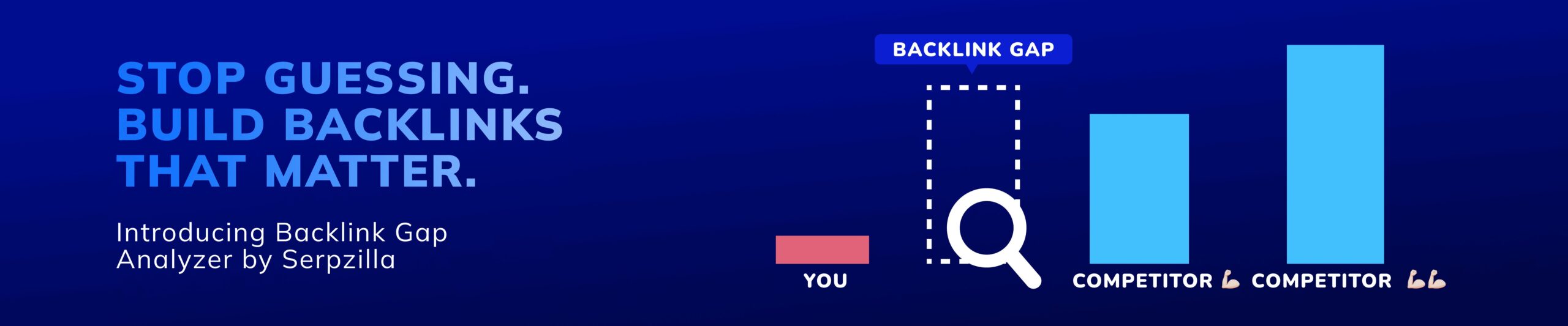
This is why analysis is becoming more useful than acquisition. Looking at competitors’ link profiles in isolation doesn’t tell you much, but understanding what layers of authority you’re missing does.
How to Adapt Your SEO Strategy
Adjusting to AI Overviews requires a different set of priorities.
- Write for extraction. Make key points easy to identify and reuse. Avoid burying answers under long introductions.
- Add something that wasn’t there before. Before publishing, ask what your content contributes beyond existing results.
- Build topical depth. Focus on owning a narrow subject area rather than spreading efforts too thin.
- Strengthen external signals. Invest in visibility outside your own site: mentions, collaborations, and relevant placements through platforms like Serpzilla.
- Optimize for post-click value. If a user clicks through, your page should go deeper than the AI summary. Otherwise, there’s no reason for people to stay.