Link building has always been one of the most time-consuming parts of SEO. Prospecting, outreach, negotiations, placements, tracking, reporting. Doing all of this manually does not scale, especially once you manage more than one site or work in competitive niches.
That is why automated link building tools have become a core part of modern SEO workflows. Not tools that “build links for you overnight”, but platforms that automate repetitive, operational tasks so teams can focus on strategy, relevance, and quality control.
In this guide, we will break down what automated link building really means in 2026, and review the best tools that help automate specific parts of the process. We start with Serpzilla, then cover other tools that are not direct competitors, but solve individual link building tasks.
What Is Automated Link Building?
Automated link building does not mean pressing a button and getting hundreds of backlinks.
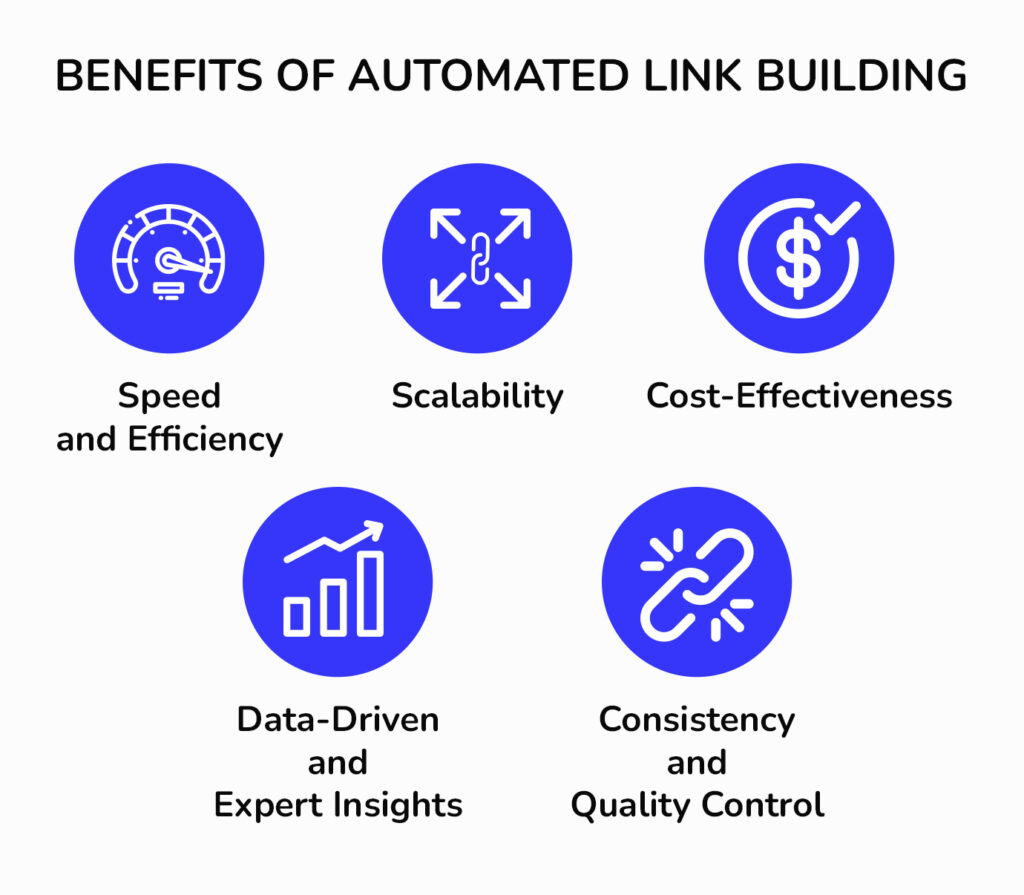
In practice, automation in link building usually covers:
- Finding link opportunities
- Filtering sites by metrics and risk signals
- Managing placements at scale
- Monitoring link status and indexing
- Reporting and budget control
The actual editorial decision making still requires human input. Google has been very clear in public documentation and spam updates that links created purely for manipulation, without editorial judgment, carry risk. This is why modern automation focuses on process efficiency, not link generation shortcuts.
For example, instead of manually emailing hundreds of site owners, SEOs now:
- Use marketplaces with pre-vetted publishers
- Automate filtering by DR, traffic, niche, and price
- Track live and lost links automatically
- Control anchor distribution programmatically
According to multiple industry surveys, including Aira’s State of Link Building reports and Ahrefs usage data, teams that automate prospecting and tracking spend up to 40–60% less time on operational tasks compared to fully manual workflows. That time is usually reinvested into content quality and strategic placements.
Automation does not replace SEO expertise. It multiplies it.
Best Automated Link Building Tools
Below are ten tools that automate different parts of the link building process. They are not all marketplaces, and most of them solve a single task very well. That is intentional. In real workflows, link building is usually powered by a stack, not one universal tool.
We start with our own tool, Serpzilla.
Serpzilla
What it does:
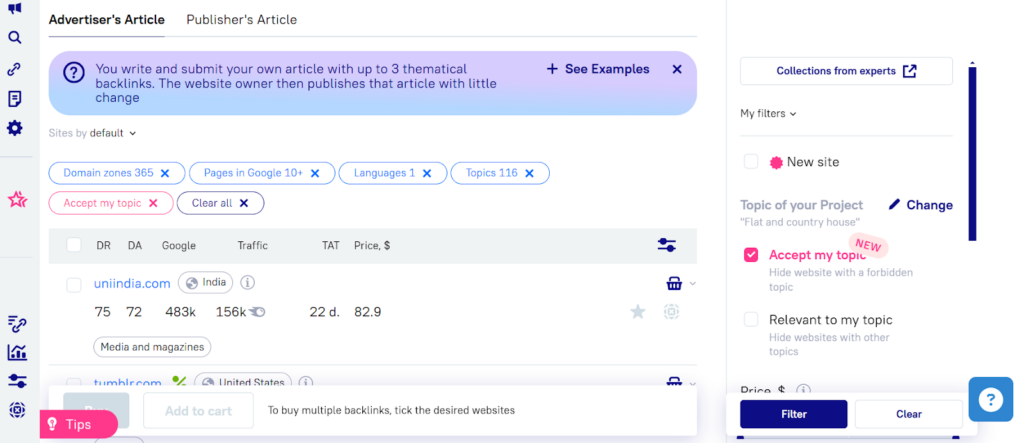
Serpzilla is a link building automation platform that focuses on scalable, controlled link placement across guest posts, niche edits, and contextual links.
Inside Serpzilla, you can automate:
- Prospecting across thousands of publishers
- Filtering by DR, traffic, niche, country, and price
- Bulk link placement and scheduling
- Anchor text distribution
- Link status monitoring and reporting
Instead of manual outreach and negotiations, you work with a live marketplace where pricing, metrics, and placement conditions are transparent. This removes a large operational layer from link building.
Why it deserves your attention:
Serpzilla is especially strong for teams that need predictable scaling. Agencies, in-house SEO teams, and affiliate projects use it to build links steadily without relying on cold outreach.
You can explore available sites and register directly on the platform to see live pricing and filters in action.
But:
Serpzilla does not replace strategy. You still need to decide which pages to promote, how to structure anchors, and which niches make sense. Automation speeds execution, but it does not define your SEO goals for you.
Ahrefs
What it does:
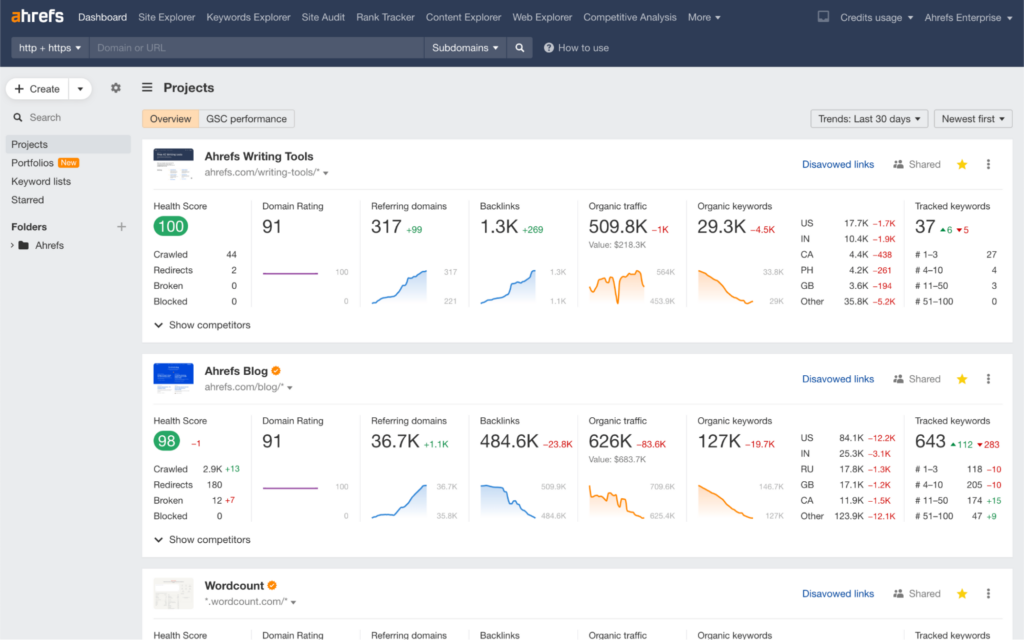
Ahrefs is not a link building tool in the classic sense, but it automates backlink analysis and competitor research better than almost anything else on the market.
It helps you:
- Analyze competitors’ backlink profiles
- Identify link gaps
- Monitor new and lost backlinks
- Evaluate link quality signals
Most automated link building workflows start with Ahrefs data to decide where links are actually needed.
Why it deserves your attention:
Ahrefs provides one of the largest and most frequently updated backlink indexes available publicly. It gives you data-driven direction before you start spending money.
But:
Ahrefs does not build links. It tells you where links exist and where you are missing them. You still need other tools or platforms to execute placements.
Pitchbox
What it does:
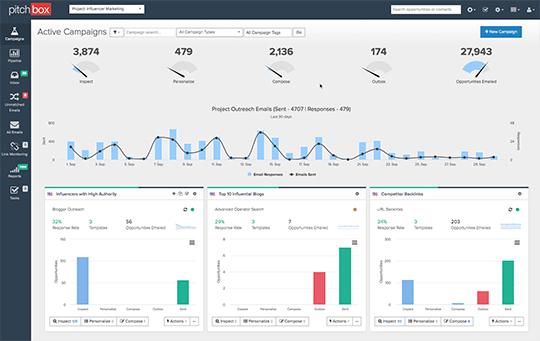
Pitchbox automates link outreach and follow-ups.
It helps with:
- Outreach campaign management
- Automated email sequences
- Prospect tracking
- Team collaboration
For SEOs who still rely on manual guest posting and relationship-based links, Pitchbox removes a lot of repetitive work.
Why it deserves your attention:
If you run large outreach campaigns, Pitchbox saves significant time on follow-ups and campaign organization.
But:
Outreach automation still depends on email deliverability, response rates, and publisher interest. Pitchbox does not guarantee placements, only workflow efficiency.
BuzzStream

What it does:
BuzzStream is a CRM-style tool for link building outreach.
It focuses on:
- Contact management
- Outreach tracking
- Relationship history
- Team workflows
It is commonly used by agencies that value long-term publisher relationships.
Why it deserves your attention:
BuzzStream helps teams stay organized when managing hundreds or thousands of contacts across campaigns.
But:
It does not automate prospect discovery or placement. You still need to source opportunities manually or via other tools. It is also pretty costly.
Hunter.io
What it does:
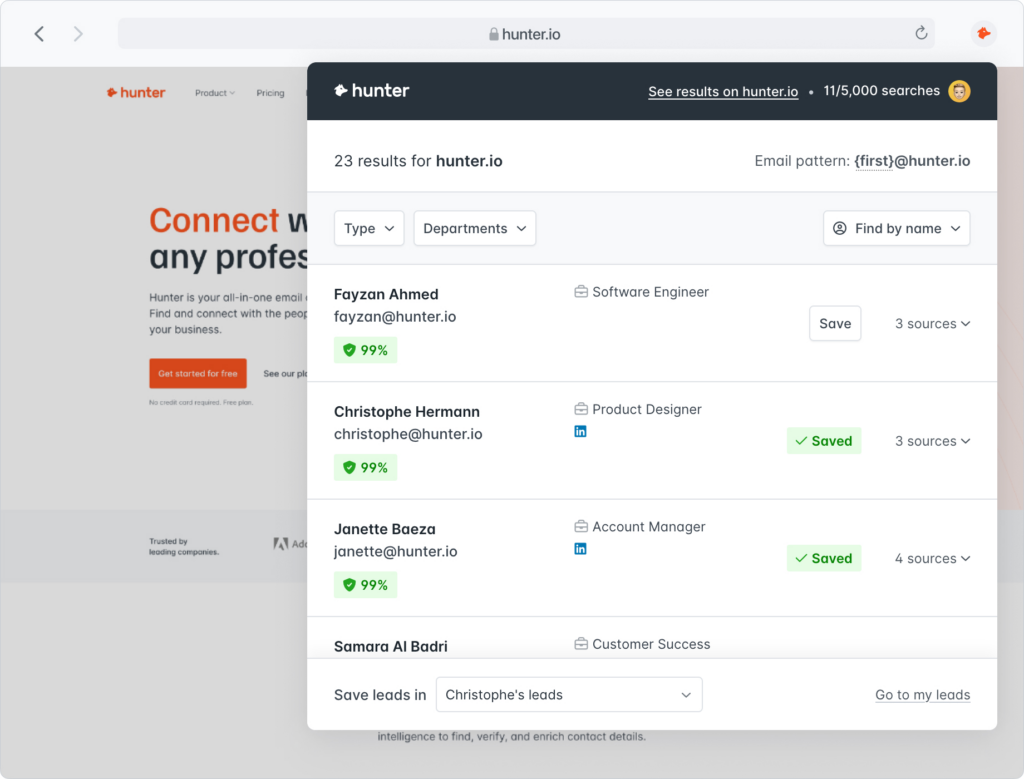
Hunter automates email discovery.
It is used to:
- Find contact emails for domains
- Verify email addresses
- Reduce bounce rates in outreach campaigns
Why it deserves your attention:
Clean email data improves outreach success and protects sender reputation.
But:
Hunter only solves one part of the process. Finding an email does not mean the site is willing to place a link or publish content.
Screaming Frog SEO Spider
What it does:
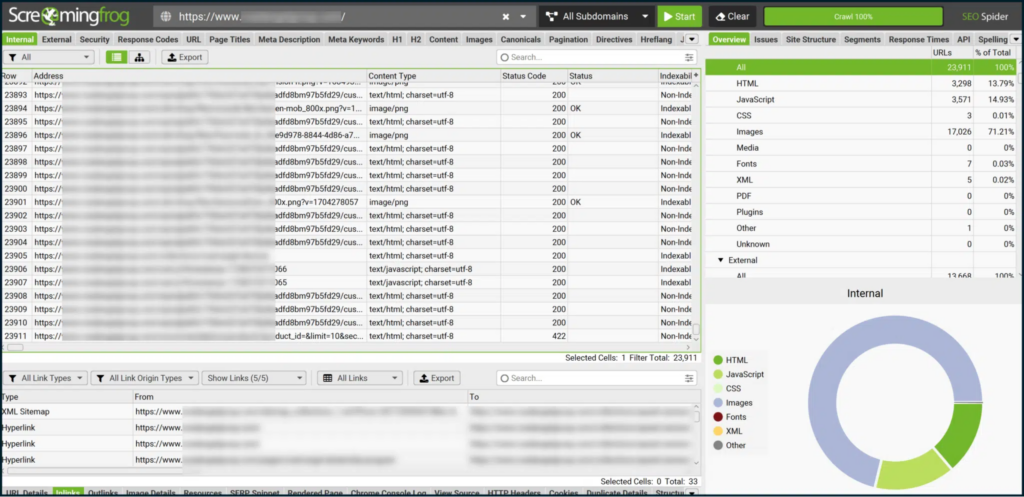
Screaming Frog automates technical site crawling.
For link building, it is often used to:
- Analyze outbound link patterns
- Identify broken links
- Find resource pages
Why it deserves your attention:
It allows SEOs to quickly assess whether a site looks like a link farm or a real publication.
But:
It requires technical knowledge and manual interpretation. It does not automate decisions or outreach.
Google Search Console
What it does:
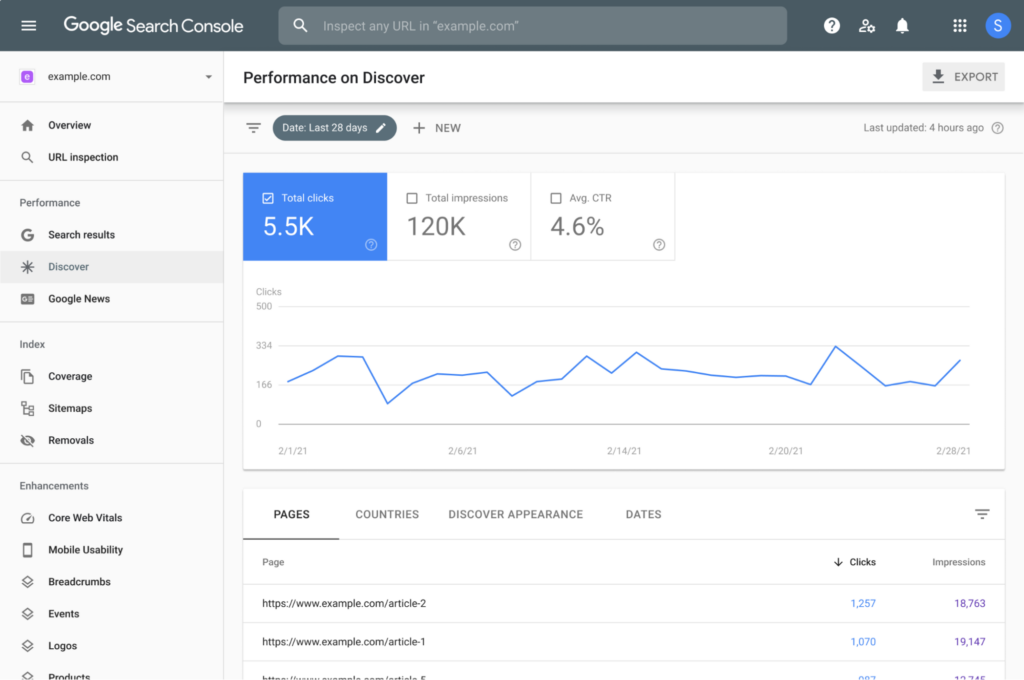
Search Console provides first-party data directly from Google.
It helps you:
- Monitor which pages gain links
- Identify pages that need authority support
- Track indexing and visibility changes
Why it deserves your attention:
It shows how Google actually sees your site, not how third-party tools estimate it.
But:
Search Console is reactive. It shows results of link building, not opportunities to acquire links.
Majestic
What it does:
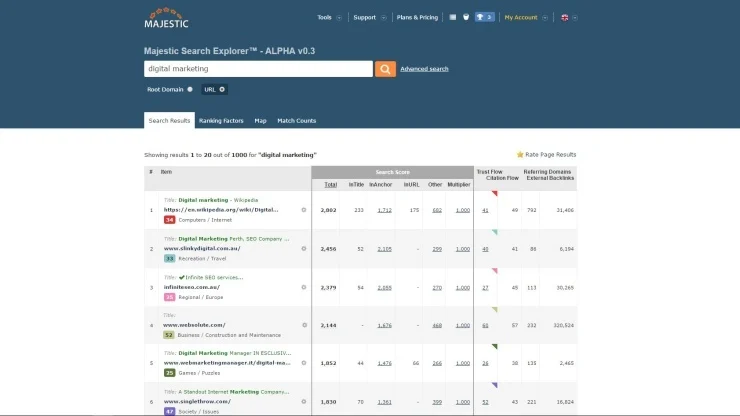
Majestic focuses on link graph analysis and trust metrics.
It is often used to:
- Evaluate topical relevance
- Analyze link neighborhoods
- Spot risky backlink patterns
Why it deserves your attention:
Its topical trust flow metrics are useful for niche relevance analysis.
But:
Majestic’s interface and data are less intuitive for beginners, and it does not automate placements.
Linkody
What it does:
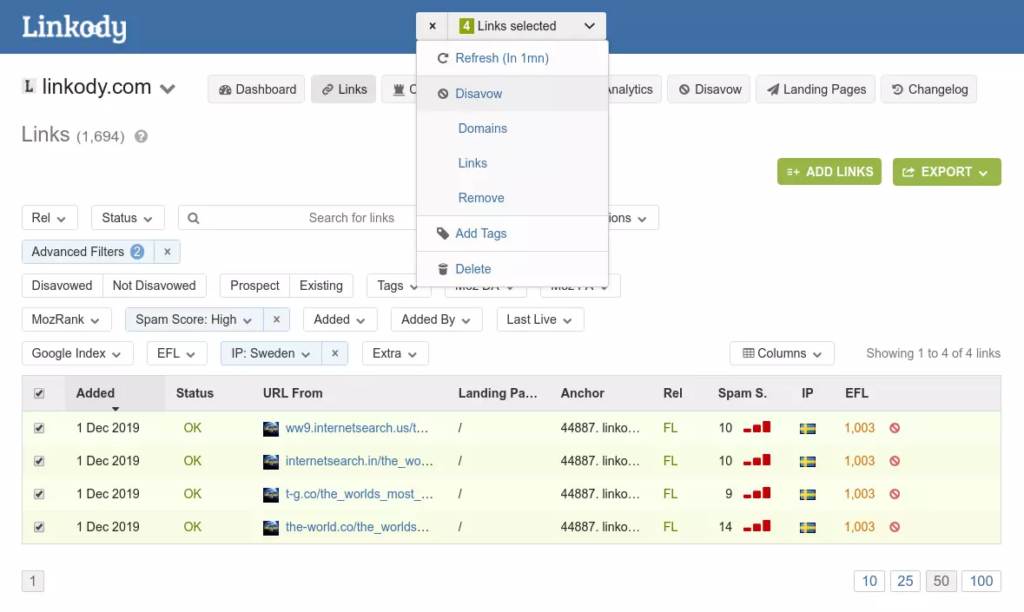
Linkody automates backlink monitoring.
It tracks:
- New and lost links
- Anchor text changes
- Link status
Why it deserves your attention:
It helps ensure you actually get what you paid for and notice link removals early.
But:
It does not help you acquire links, only monitor them after the fact.
Google Sheets with Automation
What it does:
Many teams automate link tracking using Google Sheets combined with scripts, APIs, or tools like Zapier or n8n.
This setup can automate:
- Budget tracking
- Placement status
- Anchor distribution
- Reporting dashboards
Why it deserves your attention:
It is flexible and customizable to your workflow.
But:
It requires setup time and maintenance. It also depends on external data sources to be useful.
Practical Automated Strategies That Work
Automation works best when it supports editorial logic instead of replacing it. In 2026, the most effective link building teams automate execution and quality control, while keeping strategy and final decisions in human hands.
Here are practical automation strategies that consistently deliver results.
AI-Assisted Content Generation Inside Serpzilla
One of the most time-consuming parts of guest posting is content creation. Even when publishers accept external content, preparing unique articles for dozens of placements quickly becomes a bottleneck.
Serpzilla addresses this with built-in AI-assisted content generation designed specifically for link placement. Instead of producing generic articles, the system helps generate:
- Contextual articles aligned with the target site’s topic
- Natural anchor integration based on your settings
- Content that matches editorial length and structure requirements
This allows teams to scale guest posting without sacrificing relevance or uniqueness. In practice, this reduces content preparation time by several hours per placement, especially for large campaigns.
The key advantage is control. You define the topic, anchors, and link placement logic, while automation handles the repetitive drafting process.
Automated Filtering and Risk Control
Another strategy that works well is automated pre-filtering of link opportunities.
Modern link building platforms, including Serpzilla, allow you to filter sites by:
- Domain Rating and traffic thresholds
- Niche and language
- Price ranges
- Outbound link density
- Historical placement behavior
This eliminates a major source of risk: buying links from sites that look good on paper but have poor publishing practices. Automated filters reduce human error and speed up decision making, especially when managing hundreds of placements.
According to agency case studies shared publicly by several large SEO teams, automated filtering alone can cut link vetting time by 30–50%.
Scheduled and Gradual Link Placement
One common automation use case is scheduling.
Instead of placing links in bursts, teams automate:
- Monthly or weekly link publication
- Gradual anchor distribution
- Controlled page-level promotion
This creates a more natural link velocity pattern. Search engines respond better to consistent growth than sudden spikes, especially for new domains. With Serpzilla, you can use rental links to make your entire link portfolio far more flexible and mobile.
With scheduling automation, you can plan link building several months ahead while keeping execution smooth and predictable.
Automated Link Monitoring and Alerts
Links disappear. Pages get edited. Sites change ownership.
Automated monitoring ensures you catch these changes early. Most modern workflows include:
- Link status checks
- Anchor text verification
- Indexing status tracking
- Alerts for removed or nofollowed links
This turns link building into a managed asset rather than a one-time action. Without monitoring, a portion of your link budget slowly erodes without visibility.
Common Automation Mistakes and How to Avoid Them
Automation saves time, but it also amplifies mistakes. The most common failures happen when teams automate without clear rules.
Automating Without Relevance
The fastest way to waste budget is automating link placement without niche alignment.
Buying links at scale from unrelated sites creates weak authority signals and increases the risk of link pattern detection. Automation should narrow relevance, not expand randomness.
How to avoid it:
Always define niche and topic constraints before launching automated campaigns.
Over-Optimizing Anchors
Automation makes it easy to repeat the same anchor text across dozens of placements. That is also a classic footprint.
How to avoid it:
Use diversified anchor rules. Mix branded, partial match, URL, and contextual anchors. Most platforms allow this to be automated safely.
Chasing DR Without Context
High DR is attractive, but it is not always meaningful.
Some high-DR sites have:
- Low editorial standards
- Excessive outbound links
- Minimal topical focus
How to avoid it:
Combine DR filters with traffic, niche relevance, and outbound link checks.
Ignoring Manual Review Completely
Full automation without any human oversight often leads to quality drift over time.
How to avoid it:
Review a sample of placements regularly. Automation works best with periodic manual validation.
Ready to Automate? Start with Serpzilla
Automation in link building is no longer optional. It is how modern SEO teams scale without burning time and budget.
Serpzilla brings together:
- Automated prospecting
- AI-assisted content creation
- Controlled placement and scheduling
- Transparent pricing and live metrics
- Ongoing link monitoring
All in one workflow designed for real-world SEO, not shortcuts.
Test automation with Serpzilla and see how scalable link building works in practice.