For years, SEO revolved around one idea: rank higher than everyone else. The goal was simple: get into the top ten blue links and win the click.
Looking back on the last year or so, there’s only one thing that can be said: oh, how the tables have turned.
In 2025, search has evolved into a complex ecosystem where AI actively mediates how people discover information. ChatGPT, Claude, Gemini, Perplexity, Google AI Overviews — they don’t just point users to websites. They summarize, recommend, compare, and cite sources directly inside the answer.
Just take a look at this graph illustrating user behavior for AI overviews:
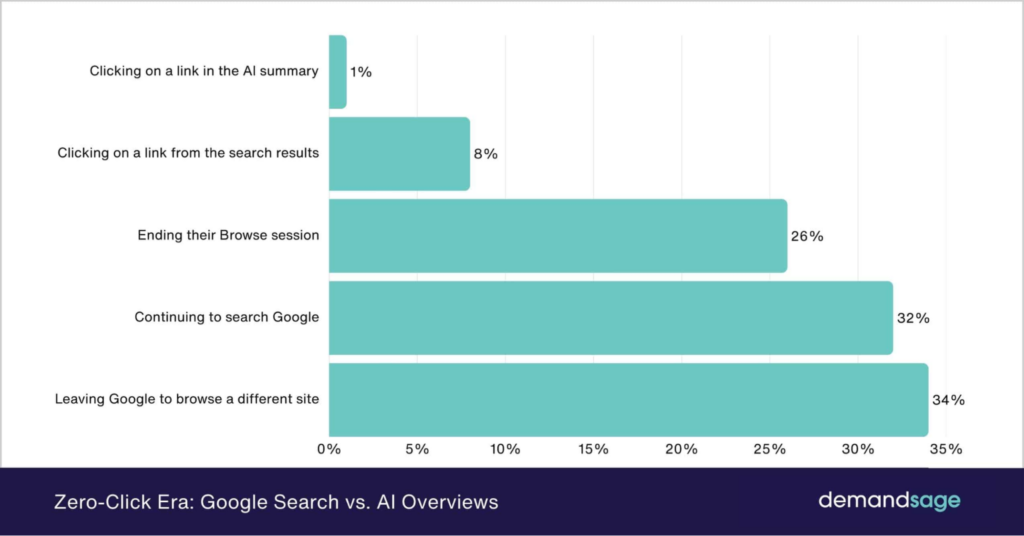
And the impact is already visible in the data.
A couple of weeks ago we discussed this subject at the SEO Recipe podcast. Here are my answers to some of the most acute questions that bother fellow SEO professionals today.
ChatGPT launched in late 2022. By 2025, it reached 800 million weekly active users, becoming the fastest-growing app in history. Google’s AI Overviews expanded from appearing in roughly 1% of queries to more than 23% of U.S. searches. AI search is no longer experimental — it’s the new norm.
It’s a moment that oddly mirrors Schopenhauer’s idea that truth passes through three stages: ridicule, opposition, and acceptance. SEO and AI are now firmly in that third stage.
The key shift is this:
ranking is no longer enough.
You can rank number one and still lose visibility because AI answers absorb clicks before users ever reach your page. The real question in 2025 is how often does AI cite your brand?
From Rankings to Trust: What SEO Really Means in 2025
Modern SEO has also to be about earning trust from AI systems.
AI models don’t “optimize” in the traditional sense. They select sources they believe are reliable, authoritative, and useful for answering a specific question. If your brand becomes one of those sources, you gain visibility even when clicks disappear.
That means SEO today is about:
- Strong brand presence
- Solid technical foundations
- Authoritative backlinks
- Content that adds new information instead of recycling what already exists
In other words, brands need to become the kind of source AI trusts to give the right answer.
Where AI Actually Pulls Its Answers From
AI doesn’t care about page one the way Google once did.
Large language models behave more like a curious intern than a strict search engine. They read everything: top-ranking pages, niche blogs, help centers, Q&A sites, Reddit threads, YouTube transcripts — even long-forgotten blog posts from 2017 if they answer the question well.
The data confirms this behavior.
A Semrush study shows that:
- Reddit is the number one citation source, accounting for over 40% of AI references
- Wikipedia, YouTube, and Google follow with roughly 23–26%
- Platforms like Yelp, Facebook, and Amazon also appear frequently — despite never being traditional SEO priorities
What AI systems consistently favor comes down to four things:
- Clear structure
FAQs, definitions, step-by-step guides, and how-tos are easy to parse and quote. - Strong authority
Sites with credible backlinks and demonstrated expertise across a topic. - Unique insight
First-party data, original examples, experiments, expert commentary. - Strong brand presence
If you ask an AI about the best video game in 2025, it names AAA titles and award-winning indies — not unknown projects with aggressive SEO but no reputation.
The takeaway is simple:
Make content that machines can understand and humans want to quote.
Content Types AI Loves to Quote
AI has clear content preferences — and they’re surprisingly predictable.
- FAQs
Q&A formats map perfectly to how users phrase prompts. - How-tos and step-by-steps
Clear explanations with logical progression are easy for AI to extract. - Expert commentary
Short, direct insights supported by experience, data, or examples. Social proof matters — known experts get extra weight. - UGC with strong signals
Reddit threads, YouTube transcripts, Quora answers, Medium posts, niche blogs. If real people discuss it, AI pays attention.
The winning formula is consistent:
structured, practical, original, and socially validated content.
Backlinks, Authority, and the AI Trust Threshold
Backlinks absolutely still matter in AI search — arguably more than before.
Research by Kevin Indig provides one of the clearest explanations. After analyzing 35,000 backlinks across 1,000 websites, he found that AI systems don’t reward small, incremental authority gains.
Instead, there’s a trust threshold.
Below it, AI barely notices you. Cross it, and suddenly your content starts appearing in answers.
Think of it like a video game: before Level 10, the boss doesn’t spawn. Once you hit it, the game changes.
Several important patterns stand out:
Variety beats volume
One link from ten different sites is more valuable than a hundred from the same domain. AI favors natural, diverse backlink profiles — not repetition.
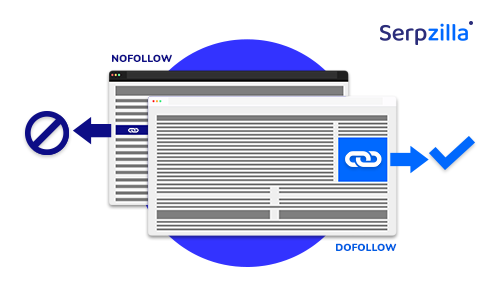
Nofollow links still matter
AI treats nofollow links, mentions, forum references, and even unlinked citations as meaningful signals. They all contribute to a believable brand footprint.
Image links work — but only after authority
Image and infographic backlinks perform just as well as text links once authority is already strong. They’re a multiplier, not a shortcut.
Quality always wins
Websites in the top ten percent of authority were cited four times more often than lower-tier sites.
The conclusion is clear:
AI trusts brands that look trustworthy across the web — not those with the most links, but those with the right ones.
What an AI-Ready SEO Strategy Looks Like
An effective AI-ready strategy in 2025 rests on three pillars: authority, clarity, and originality.
- Strong technical foundations
If your site is slow, messy, or hard to crawl, AI models won’t engage with it. It’s like cleaning the kitchen before cooking — not exciting, but essential. - Real authority signals
Not “more links,” but better, more diverse, relevant ones that help you cross the trust threshold. - Original insights
AI actively avoids copy-paste SEO content. First-party data, opinions, experiments, and real-world stories are what get selected.
On top of that:
- Structure content clearly (FAQs, tables, definitions)
- Distribute insights across UGC platforms like Reddit, Quora, and Medium
Clean site. Strong authority. Original insights. Clear structure. Right platforms.
That’s the AI-ready starter pack.
Using Serpzilla to Earn AI Citations
AI systems tend to develop “favorite” sources — sites they quote repeatedly because they’re authoritative, structured, or rich in real user insight.
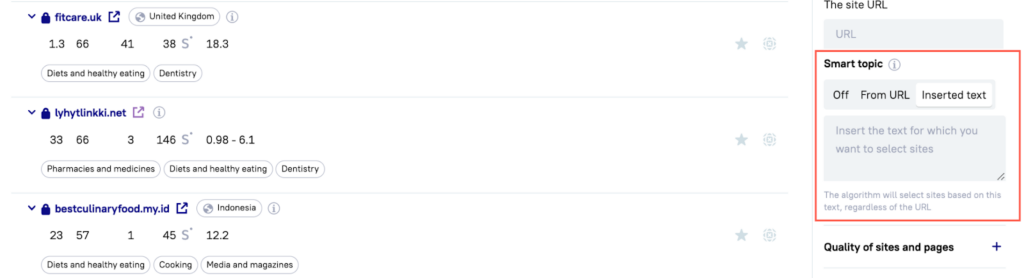
Platforms like Serpzilla allow marketers to reverse-engineer those patterns.
You can identify which sites consistently appear in AI Overviews or Perplexity answers and place your content exactly where AI already pays attention.
This matters because AI still leans heavily on Google rankings. Ahrefs found that 76% of AI Overview citations come from pages already ranking in Google’s top ten. Strengthening your backlink profile directly increases your chances of being quoted.
With Serpzilla, brands can filter placements by relevance, domain authority, language, niche, and content type not just buying links, but placing content inside sources AI already trusts.
That’s the real game now:
get cited by the sites that get cited by AI.
Structured Data, UGC, and the Rise of Citations
Structured data has become more important, not less.
It acts like labels on jars — helping AI instantly understand what your content contains: products, prices, reviews, authors, FAQs. While it won’t magically boost rankings, it dramatically increases AI’s confidence in quoting you.
User-generated content is also having a moment. AI systems love authentic discussion — Reddit threads, niche blogs, YouTube comments. The key for brands is participation without control.
Don’t dominate the room. Join it.
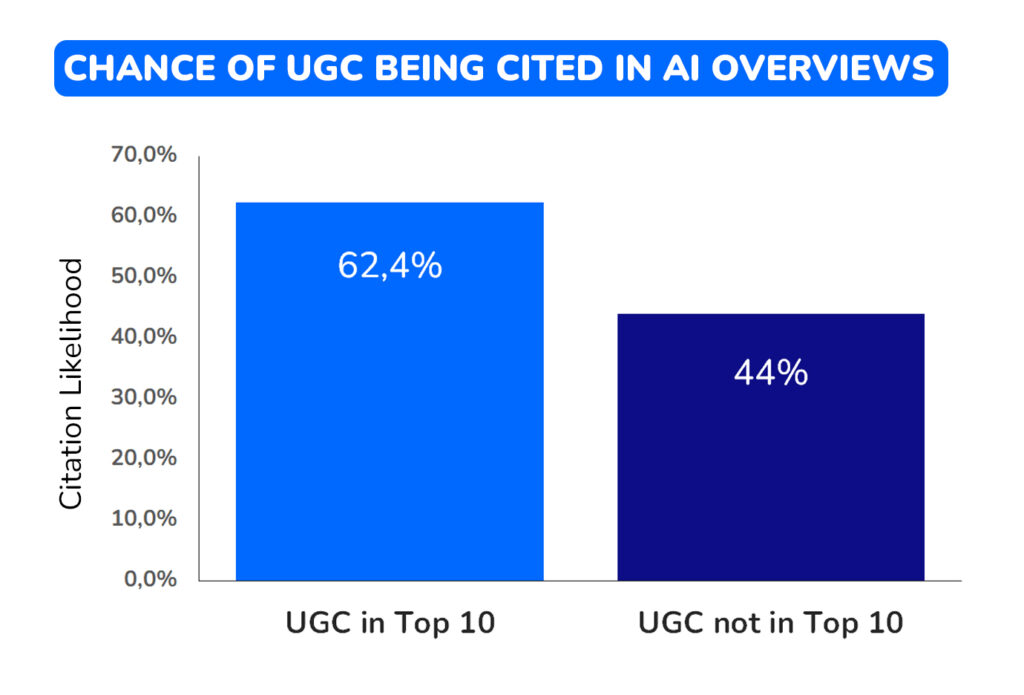
Finally, citations are emerging as a new visibility metric. They don’t replace backlinks but rather they reflect what backlinks already enabled.
Backlinks build authority.
Authority earns AI trust.
Citations show that AI actually used that trust.
You can’t skip the first step.
The Future: Who Wins and Who Disappears
Over the next few years, the gap will widen. Some brands will dominate AI answers everywhere. Others will vanish.
The difference comes down to:
- Real authority
- Original insights
- Clear entity signals
- Strong E-E-A-T
- Reference-ready content
- Natural, diverse link profiles
- Actual differentiation
AI rewards brands that are trustworthy, original, and easy to understand — and ignores everything else.
That future isn’t coming.
It’s already here.